Two hundred and fifty thousand dollars.
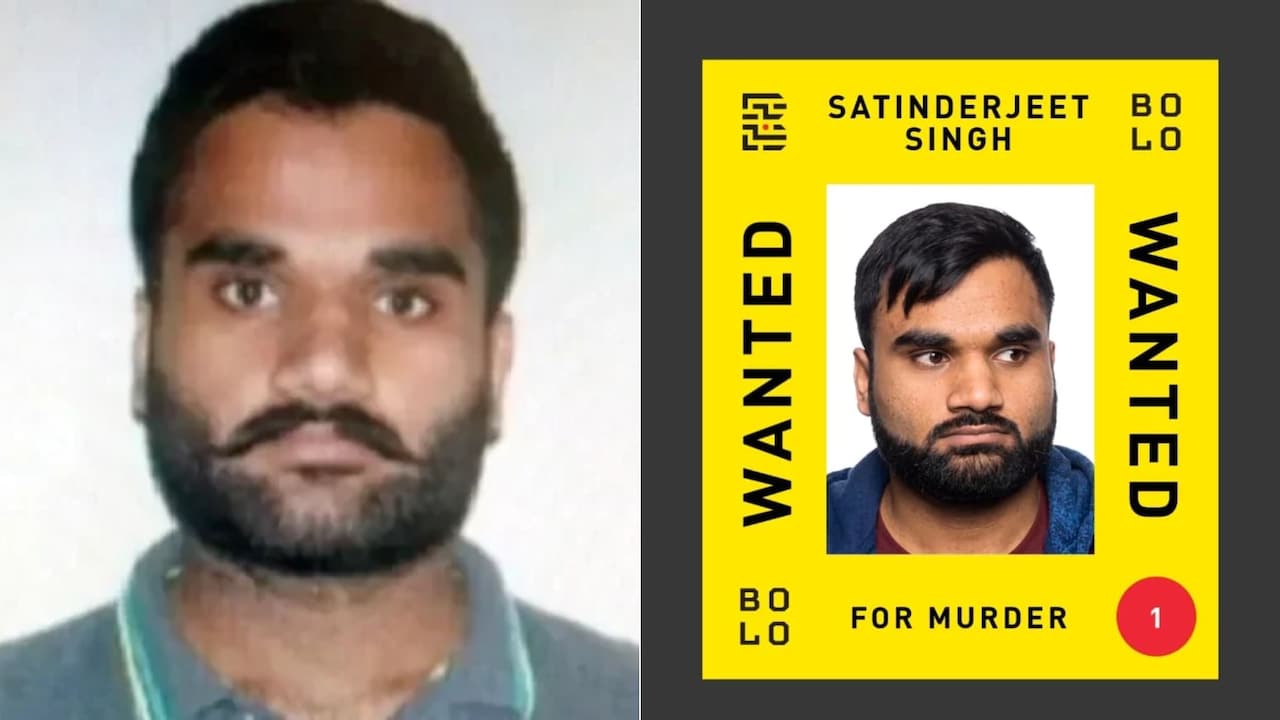
In the fluorescent-lit quiet of a suburban Brampton kitchen, or behind the scratched plexiglass of a late-night convenience store in Surrey, that number hangs in the air like static before a summer storm. It is the exact price tag the Bolo Program—Canada’s high-profile campaign to amplify the country’s most urgent fugitive cases—has placed on the head of Satinderjit Singh Brar. To the millions who have watched the headlines bleed across borders over the last few years, he is known simply as Goldy Brar.
He sits at the very top of Canada’s 25 Most Wanted list. Number one. Above murderers whose crimes unfolded in broad daylight on Toronto sidewalks, above drug kingpins who moved metric tons of fentanyl across provincial lines, sits a man who, by most accounts, rules through a screen.
To understand why a quarter-million-dollar bounty feels both massive and strangely insufficient, you have to step away from the police press releases and look at the people who actually carry the weight of that number.
The Architecture of Fear Across an Ocean
Consider a hypothetical scenario, grounded in the real, documented testimonies of business owners across Ontario and British Columbia over the past three years. Imagine a man named Harpreet. He owns a mid-sized trucking company outside Mississauga. He came to Canada twenty years ago with two suitcases and a cousin’s phone number, spent a decade driving eighteen-wheelers through January blizzards on the Trans-Canada Highway, and finally bought his own fleet.
On a Tuesday evening, Harpreet’s phone buzzes. It is a WhatsApp message from an unfamiliar international number. No greeting. Just a video of his youngest daughter walking out of her high school, followed by a voice note spoken in calm, unhurried Punjabi. The voice demands five hundred thousand dollars by Friday. If Harpreet calls the police, the voice explains, the next video will not be recorded from across the street.
Harpreet does not sleep that night. He sits at his dining table, staring at the faint reflection of the streetlight on his hardwood floor, trying to calculate how to liquidate his retirement savings without alerting his wife.
This is the invisible reality behind the cold statistics of extortion and transnational gang warfare. When law enforcement agencies in Canada and India speak of Goldy Brar, they often use the language of organizational charts—describing him as a key lieutenant in the Lawrence Bishnoi syndicate, an orchestrator of targeted killings, a fugitive wanted for murder and criminal conspiracy. Those words are accurate, yet they sanitize the terror. They make it sound like a boardroom dispute rather than a psychological siege waged through fiber-optic cables.
How a Student Visa Became a Blueprint for Infamy
To trace how Goldy Brar reached the summit of Canada’s most-wanted list, we have to look back at a trajectory that started quietly enough. Born in Punjab, India, Brar arrived in Canada in 2017 on a student visa. Like tens of thousands of young men before him, he landed in a country that promised stability, upward mobility, and distance from the political and economic friction of home.
For a brief window, his life resembled that of any other newcomer navigating part-time shifts and cramped basement apartments. Then came the fracture. In October 2020, Brar’s cousin, Gurlal Brar—a former student leader—was gunned down outside a nightclub in Chandigarh, India.
Grief, when weaponized by entrenched criminal networks, moves fast. Within months, authorities allege, Goldy Brar had pivoted from an immigrant student into a transatlantic shot-caller, aligning himself closely with Lawrence Bishnoi, an Indian gangster operating out of high-security prisons. The dynamic between them became a study in modern criminal delegation: Bishnoi provided the ideological branding and deep-rooted Indian network, while Brar, operating from the relative anonymity of North America, managed logistics, recruitment, and digital command.
The turning point that etched Brar’s name into global consciousness occurred on May 29, 2022. In the Mansa district of Punjab, assailants ambushed and killed Sidhu Moose Wala, a 28-year-old Punjabi singer whose music had become an anthem for a generation of diaspora youth from Chandigarh to Toronto. Moose Wala was not merely a musician; he was a cultural titan, a voice that articulated the pride, anger, and contradictions of modern Punjab.
Hours after the gunfire stopped, a Facebook post appeared. It claimed responsibility for the murder on behalf of the Bishnoi gang. The name signed at the bottom was Goldy Brar.
I remember the days immediately following that killing. Even thousands of miles away from Punjab, the air in South Asian neighborhoods felt heavy, almost bruised. Vigils sprang up in parking lots and parks. Young men sat in parked cars with Moose Wala’s tracks playing on repeat, their faces illuminated by the dashboard glow, trying to reconcile how an artist so fiercely alive could be erased on a dusty rural road—and how the order could allegedly be traced back to someone living among them in Canada.
The Illusion of Distance
Why does a murder in rural India put a man at the top of a Canadian wanted list? Because borders, in the twenty-first century, are largely administrative conveniences.
Canadian investigators and intelligence officials eventually connected the dots between overseas assassinations and domestic bloodshed. The same networks allegedly directing hits in Punjab were simultaneously fueling a surge of violent extortion, drive-by shootings, and targeted homicides across British Columbia, Alberta, and Ontario. In Peel Region alone, police formed a dedicated extortion task force after dozens of South Asian business owners reported receiving threats demanding exorbitant sums of money, often accompanied by gunfire aimed at their homes or storefronts.
Brar became the focal point of this convergence. Wanted in India on charges ranging from murder to arms smuggling—with Interpol issuing a Red Notice for his arrest—he also drew the intense scrutiny of Canadian federal authorities. When the Bolo Program updated its Top 25 list and placed Brar at number one with a $250,000 reward for information leading to his arrest, it was an admission of scale. Law enforcement was signaling to the public that this was no longer a localized street-gang issue. It was a national security concern masquerading as organized crime.
Yet, if you talk to people on the ground—police officers working the beat in Surrey, community advocates in Brampton, journalists who have spent years tracking these syndicates—you encounter a quiet, persistent frustration. Catching a man like Goldy Brar is nothing like kicking down the door of a traditional mob boss.
Think of traditional organized crime like an old-growth oak tree: massive, visible, anchored to a specific piece of ground. If you cut the trunk, the canopy falls. Modern transnational gangs operate more like a mycelium network beneath the forest floor. There is no single headquarters. Communications happen over encrypted apps routed through servers in three different countries. Foot soldiers are recruited online—often vulnerable, recently arrived international students drowning in debt and tuition fees, offered a few thousand dollars to fire a gun at a house or deliver a threatening note, without ever meeting the person who issued the order.
Brar is rumored to have slipped across the border into the United States, moving between safe houses, changing burner phones with clinical discipline. Rumors of his death have even circulated online—false alarms that flare up on social media for forty-eight hours before dissolving into silence. He has become a phantom, an avatar of dread whose actual physical location matters almost less than the certainty that he is watching.
The Quiet Cost of Silence
When the Bolo Program unveiled that $250,000 reward, the press conference was crisp, authoritative, and designed to project confidence. Posters went up on digital billboards along major highways. Social media feeds flooded with Brar’s mugshot—a young man with a neatly trimmed beard, dark eyes, and an expression that gives away nothing at all.
But a reward only works if someone is willing to trade information for cash, and cash cannot buy immunity from terror.
Walk down a commercial strip in Brampton or Abbotsford and ask a shopkeeper about the posters. Most will glance toward the front window before answering. Some will shake their heads and say they don’t follow the news. Others will lower their voices and tell you the truth: two hundred and fifty thousand dollars is a lot of money, yes, unless you have to spend the rest of your life looking over your shoulder every time a black sedan slows down outside your house.
This is the core dilemma that keeps investigators awake at night. For a bounty to break a criminal network, the public has to trust that the state can protect them faster than the syndicate can punish them. Right now, in communities caught in the crossfire, that trust is fragile.
There is also a deeper, generational wound that rarely makes it into crime reports. When headlines repeatedly link Punjabi names to gang violence, extortion, and international bounties, an entire diaspora feels the collateral damage. Parents who sacrificed decades of backbreaking labor to build honest lives watch their community’s hard-won reputation get flattened into a caricature of crime. Young immigrants trying to secure work permits or rent apartments feel the subtle shift in how strangers look at them.
The tragedy is that the victims of these gangs—the murdered artists, the extorted business owners, the terrified families—come from the very same community as the perpetrators. It is a cycle of extraction where fear is the primary currency.
Cracking the Digital Fortress
So how do you dismantle a ghost?
You stop looking at the fugitive as an isolated villain and start dismantling the ecosystem that makes him useful. Over the past two years, law enforcement agencies in Canada, the United States, and India have begun shifting their posture. Intelligence sharing between the RCMP, the FBI, and Indian security agencies has intensified, recognizing that a gang operating across three jurisdictions cannot be defeated by a single municipal police department.
Financial investigators are following the digital exhaust—tracing cryptocurrency wallets, hawala money-transfer networks, and shell companies used to launder extortion proceeds back across the Pacific. Simultaneously, community leaders in Canada have begun breaking the taboo of silence, organizing town halls where victims of extortion are encouraged to step forward together rather than suffer in isolation. When fifty business owners refuse to pay at the same time, the syndicate’s leverage begins to erode.
Even the $250,000 bounty serves a psychological purpose beyond simply buying a tip. In the paranoid world of fugitive life, a quarter-million-dollar price tag changes the math inside a criminal’s inner circle. Every associate who brings food to a safe house, every driver who rents a car under a fake name, every low-level courier suddenly has to weigh loyalty against a life-changing sum of money. Paranoia slows operations down. It forces mistakes.
What Remains After the Headlines Fade
Late at night, long after the evening news broadcasts move on to weather reports and sports scores, the digital billboards along Highway 410 still cycle through their advertisements. Sandwiched between ads for mortgage brokers and injury lawyers, Goldy Brar’s face flashes against the dark Ontario sky for six seconds at a time.
Down below, headlights stream past in an endless, humming river. Inside those cars are nurses heading home from twelve-hour shifts, truck drivers starting overnight hauls, students cramming for morning exams, and fathers quietly checking their phones at red lights to make sure their kids made it home safe.
The poster asks them to look closely, to remember a face, to make a phone call that could finally close a file stretching from the fields of Punjab to the suburbs of Toronto. Until someone makes that call, the ghost remains at large—and the silence he relies on stays intact.