Midnight in Beirut rarely smells like peace. It smells like diesel exhaust clinging to damp limestone, sweet cardamom coffee cooling in small glass cups, and the salt wind coming off a Mediterranean that has carried too many secrets.
Disappearances.
In the Levant, a person does not simply walk out of a room and stop existing; they are pulled sideways into a shadow that already had a name for them.
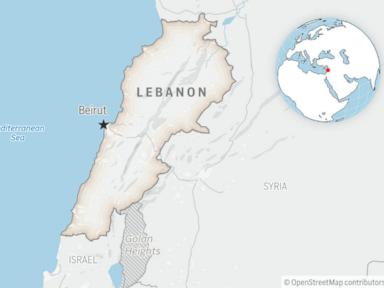
I have sat across from enough families in the eastern suburbs and the Bekaa Valley to recognize the exact moment hope curdles into dread. It happens when a phone rings once and goes to voicemail. It happens when a neighbor says they saw dark windows idling near a corner bakery and then suddenly remembers they need to lock their shutters. By the time a formal inquiry is opened in Beirut, the physical trail has usually already crossed an invisible line into Syria, where jurisdiction melts like wax near an open flame.
When news breaks that Lebanese authorities have opened an investigation into the abduction of a Syrian militia leader and his transfer across the border into Syria, most readers skim the headline and move on. Another faction. Another score settled in the dark. Another file folder pushed across a desk in a ministry building where the air conditioning rattles louder than the ceiling fans.
Yet a formal probe into an abduction and cross-border transfer is never just about one man. It is a test of whether a state has a spine or merely a ledger.
The Anatomy of a Midnight Grab
To understand what an inquiry like this actually means on the ground, strip away the diplomatic phrasing. A "transfer" without a court order, an extradition hearing, or a stamp from an authorized crossing is not a transfer at all. It is a kidnapping with logistics.
Think of a border not as a neat line drawn with a ruler on a map, but as a frayed rope. Along the rugged ridges where Lebanon meets Syria, smugglers, armed factions, and local brokers have spent years learning every hollow, every unlit track, and every shift change. Moving someone across that terrain requires coordination, local knowledge, and nerves that do not flinch when headlights cut through the scrub.
Let me offer a hypothetical scenario to show how a quiet disappearance turns into a high-stakes legal and political puzzle. Imagine a fictional mid-level commander—let's call him Tariq—who has spent years operating inside a Syrian militia network with tangled ties across the border. One evening, he steps out of an apartment building in a contested neighborhood. Minutes later, a vehicle pulls away without hazard lights. Within hours, word filters back through informal channels that he is no longer in Lebanon at all, having been moved swiftly eastward into Syrian territory.
In a tidy world, a detective pulls camera footage, interviews witnesses, and hands a clean dossier to a magistrate. Here, the reality is messier, slower, and far more hazardous. Cameras might be angled toward a storefront rather than the street. Witnesses might fear retaliation from actors who answer to no courtroom. And the moment a detainee crosses into another jurisdiction, Lebanese investigators lose physical reach over the person at the center of the case.
I have watched investigators wrestle with that exact wall. You can feel the frustration in the room—not theatrical anger, just the heavy, quiet weight of people trying to assemble a clock out of gears that keep moving while they reach for them. Opening an investigation is the easy part on paper; forcing truth out of silence is the real work.
Why Sovereignty Bleeds at the Edges
A state's authority is measured not by its grandest speeches in parliament, but by what happens when someone is seized on its soil without permission.
When an armed group or foreign actor abducts a figure in Lebanon and moves him into Syria, two wounds open at once. The first is immediate and human: a man is held outside the reach of transparent law, and his family is left guessing whether he is alive, injured, bargaining chip, or already buried. The second wound is institutional. Every unpunished abduction tells residents that sovereignty is conditional, depending on which faction holds sway on a given street at a given hour.
Consider what happens next: once a case becomes official, every institution involved has to decide how far it is willing to go. Security agencies gather intelligence. Prosecutors weigh what can be proven in court versus what is merely whispered in back rooms. Politicians calculate whether pushing too hard will trigger street tension or blow back on fragile alliances.
People often ask a deceptively simple question: why bother investigating a militia figure who may have blood on his hands himself?
Fair question. Honest question. And one I have heard more than once from folks exhausted by years of instability.
The answer is not sentimentality for armed actors. The answer is precedent. If a shadowy group can snatch a militia leader off a street and spirit him across a border today, there is nothing stopping a different group from snatching an ordinary shopkeeper, a journalist, or a rival political organizer tomorrow. Rule of law is like a fence around a garden: if you let people tear down one section because you dislike the neighbor on the other side, soon the goats are eating your tomatoes too.
The Invisible Stakes Behind Closed Doors
Behind every headline about a cross-border abduction sits a web of motives that rarely make it into the first paragraph of a wire report.
A militia leader is rarely just a lone gunman. He is often a node in a wider network—someone who knows supply routes, financial intermediaries, safehouses, or internal rifts among rival commanders. Seizing such a figure and moving him into Syria can serve multiple purposes at once: settling an internal score, silencing someone who knows too much, extracting leverage in a broader political dispute, or pulling a troublemaker back under the control of patrons who want him quiet.
Let's use a metaphor to make that clear. Picture a complex electrical panel inside an old building. You do not always cut a wire because you hate the copper; sometimes you cut it because you want the lights in another room to go out, or because you are afraid of a short circuit before an inspection arrives.
Investigators have to trace those wires without getting burned. That means looking at phone metadata where available, checking border-area movements, questioning people who may lie to protect themselves, and separating rumor from hard evidence. In a region where disinformation is used like cheap gravel to fill potholes, separating fact from fabrication takes patience that borders on stubbornness.
There is also the quiet human toll that rarely gets measured in press briefings. A mother waiting for news. A spouse checking every unfamiliar number. Children asking why an uncle or father hasn't come home, and getting answers that sound like fog. Even when the person taken is a hardened militant, the ripple hits households that had no vote in the larger power struggle.
What an Investigation Can—and Cannot—Do
I will admit something that can sound uncomfortable to anyone hoping for overnight justice: an investigation in a place like Lebanon is rarely a straight line to a neat verdict.
Sometimes probes stall because witnesses refuse to speak. Sometimes political pressure slows files down until momentum leaks out of them. Sometimes the trail stops cold at a frontier where cooperation from across the border is nonexistent or selective. Anyone who promises quick, effortless answers in this environment is selling an illusion.
Yet writing off an investigation before it runs its course is its own mistake.
A serious inquiry creates a record. It forces agencies to document timelines, preserve evidence, and put names and movements into an official log that cannot be wished away as easily as a rumor in a tea shop. Even when arrests are difficult or transfers cannot be reversed immediately, an active investigation signals that someone is watching, counting, and building a case.
And sometimes, pressure from an investigation changes calculations in ways the public only sees weeks later. A detainee's whereabouts become harder to hide when scrutiny rises. Allies grow nervous when their fingerprints start showing up in official questioning. Silence becomes slightly more expensive.
Standing Watch Over a Fragile Line
The border between Lebanon and Syria has seen empires rise, armies march, families split, and smugglers grow rich. It has seen ceasefires hold for a week and shatter in an afternoon. A single inquiry will not rewrite decades of geography and faction politics overnight.
Still, every time authorities step into the gray zone between abduction and cross-border transfer and insist on asking who took whom, how they moved them, and under whose authority, a small flame is held up against the dark.
Think of a lone lantern carried down a narrow alley at night. It does not flood the whole city with daylight, and the wind can make the glass flicker. Yet for the few steps right in front of you, it shows where the stones are loose—and it reminds everyone watching from the windows that someone is still walking the path with their eyes open.