The salt air off the Straits of Florida does something to paper. It softens the edges, turns crisp white pages into a yellowed, damp blur, until the official seals of government offices look less like symbols of absolute power and more like fading ink. For decades, the documents crossing the ninety miles of ocean between Miami and Havana have carried this exact weight. They are heavy with history, dense with grievance, and usually, entirely predictable.
Then came the federal indictment.
When news broke that a grand jury in Miami had indicted former Cuban President Raúl Castro, the reaction inside the standard newsrooms was immediate and mechanical. Wire services spat out the cold facts. Dates were verified. The legal mechanisms of charging a ninety-four-year-old former dictator with conspiracy to murder—stemming from the infamous 1996 shootdown of two unarmed Brothers to the Rescue planes—were dissected by legal analysts who viewed the world through the narrow lens of statutes and precedent.
But legal statutes do not capture the sudden silence that fell over Calle Ocho. They do not describe the way an elderly man in a Little Havana cafeteria gripped his plastic coffee cup a little tighter, staring at a static-heavy television screen, remembering the exact shade of the Atlantic Ocean on the day those four young pilots never came home.
To understand what just happened, you have to look past the dry text of the indictment. You have to look at the human cost of a seventy-year geopolitical standoff that has outlived its architects, shaped millions of lives, and suddenly found itself thrust into the center of a modern American political arena.
The Ghosts in the Room
Imagine sitting in a courtroom where the defendant is an empire, or at least the last surviving titan of one. Raúl Castro is not just a name on a legal brief. He is the younger brother who stood in the shadow of Fidel, the pragmatist who outlasted the ideologue, the man who wore military fatigues for so long they seemed fused to his skin.
For the families of Armando Alejandre Jr., Carlos Costa, Mario de la Peña, and Pablo Morales—the four men killed when Cuban MiG fighters blew their Cessna aircraft out of the sky nearly thirty years ago—the passage of time has not diminished the roar of those jet engines. For them, justice has always been an abstract concept, a word spoken by politicians during election cycles but never delivered in a court of law.
The indictment changes that abstraction into something concrete. It represents a moment of profound validation for an exile community that has often felt ignored, used as a voting bloc rather than treated as victims of a brutal regime.
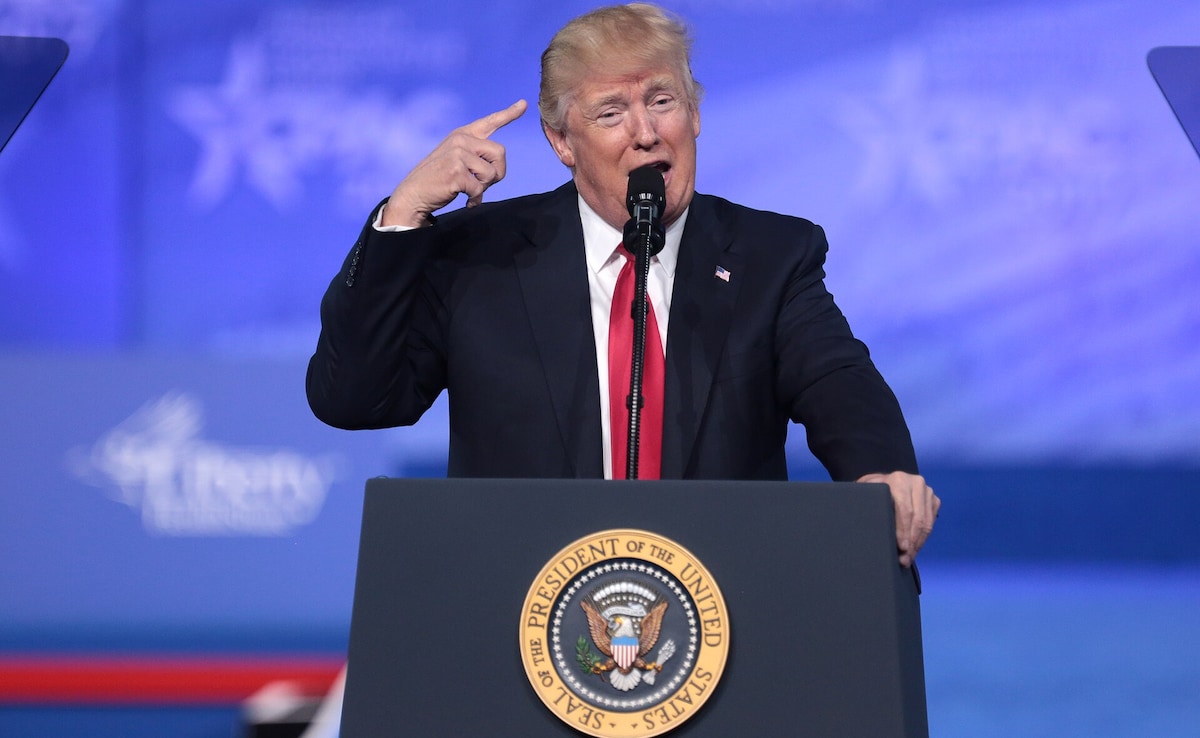
The current American administration lost no time in sizing up the moment. Donald Trump called the indictment a "very big moment." It was a phrase delivered with typical theatricality, designed to reverberate through the Cuban-American enclaves of South Florida. To the crowd listening, it felt like a thunderclap.
Yet, almost in the same breath, a crucial boundary was drawn. The administration ruled out any military escalation against Cuba.
This contradiction is where the real story lives. It is the delicate, dangerous tightrope of modern diplomacy. On one hand, you have the full, fierce application of American rule of law, branding a foreign leader a criminal on the global stage. On the other, you have a calculated, deliberate refusal to let that legal declaration spark a physical conflict.
It is a high-stakes game of chess played with emotional pieces.
The Strategy Behind the Symbolism
Why now? That is the question echoing from the faded balconies of Havana to the glass towers of Washington. Raúl Castro is in the winter of his life, largely retired from the daily operations of the Cuban state, though his influence still hovers over the Communist Party like a lingering fog.
The timing is not accidental. International law is rarely just about law; it is about leverage.
Consider the mechanics of an indictment against a foreign leader who will almost certainly never set foot inside an American courtroom. Cuba does not extradite its leaders. Raúl Castro will not be standing in a federal dock in Miami, listening to a judge read his rights. The document is, in practical terms, unenforceable.
But symbols possess an entirely different kind of power.
By formalizing the charges, the American legal system has essentially codified the historical memory of the regime’s actions. It ensures that whenever future diplomats sit down to discuss the normalization of relations, lifting the embargo, or economic aid, this document will sit on the table between them. It is a permanent roadblock built out of legal truth.
For Cuba, a nation currently buckling under the weight of severe economic hardship, blackouts, and a historic exodus of its youth, the indictment is a psychological blow. It reminds the current leadership in Havana that the past cannot be neatly buried under new economic reforms or appeals for tourism. The ledger remains open.
But the decision to rule out military escalation is the quiet, crucial detail that prevents this historic announcement from turning into a tragedy.
The Fear of the Fire
There is a specific kind of anxiety that lives in the hearts of those who have family split across the Florida Straits. It is a dual existence. You want justice, you want accountability, you want the regime that broke your family apart to face the consequences of its actions.
But you also know who pays the price if words turn into weapons.
If the United States were to use this indictment as a pretext for military action, the bombs would not fall on the retired elite in their guarded compounds. They would fall on the crumbling streets of Central Havana. They would disrupt the fragile lives of ordinary Cubans who are already waiting hours in line just to buy bread.
By explicitly ruling out an escalation, the administration signaled that this is a battle of legitimacy, not a war of attrition. It decouples the pursuit of legal justice from the threat of violence.
This distinction matters immensely. It allows the indictment to be viewed not as an act of war, but as an act of memory. It shifts the battlefield from the physical world to the moral one.
The Language of the Sea
Walk down to the water in Miami on any given evening. Watch the tide pull away from the shore, reaching back toward the south.
The people who gathered in the wake of the announcement did not celebrate with fireworks or wild carnivals. The mood was too heavy for that. Instead, there was a quiet, solemn gathering of generations. Grandfathers who had arrived in the 1960s on freedom flights spoke with grandchildren who had only known Cuba through stories and faded photographs.
The younger generation often looks at the Cuba issue with a certain detachment. To them, the Cold War is a chapter in a textbook, a collection of dates and names like Khrushchev, Kennedy, and Castro. They wonder why their elders are still consumed by a conflict that began before their parents were born.
This indictment bridges that generational divide. It takes a historical event—the 1996 shootdown—and reframes it not as an old political dispute, but as an active federal murder case. It tells the younger generation that the pain of their families is not just a relic of the past, but something the highest levels of the American government still recognize as an unhealed wound.
But what does it change on the island itself?
In Havana, the state media will paint the indictment as another act of imperialist aggression, a desperate move by a hostile neighbor to distract from its own internal problems. The official narrative will harden. The current government will use it to justify their continued grip on power, telling their citizens that the enemy is still at the gates.
Yet, beneath the official rhetoric, the ordinary people of Cuba know the truth. They know that the old guard is fading. They see the daily struggle for survival, and they know that no amount of political theater can fix a broken economy. For them, the indictment is a distant rumble of thunder from a storm raging across the water. It changes nothing about their immediate search for food, electricity, or freedom, but it signals that the world has not forgotten how they got here.
The real power of this moment does not lie in the potential for a trial that will never happen, or in the political speeches that will fade by the next news cycle. It lies in the simple, undeniable fact that a line has been drawn in the sand.
The past is a stubborn thing. It refuses to stay buried, no matter how many decades pass, no matter how many miles of ocean lie between the crime and the courtroom. The indictment of Raúl Castro is a reminder that the wheels of justice, however slow, however imperfect, still turn.
And as the sun sets over the Atlantic, casting long shadows across the water, the names of four young pilots are spoken once again in the warm Florida breeze, their memory kept alive not by weapons or war, but by the quiet persistence of the law.