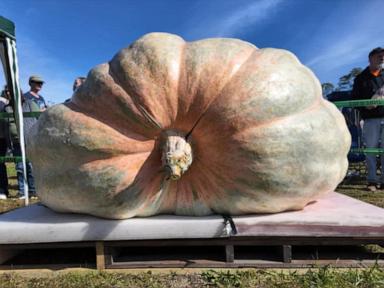
A Rhode Island grower hauls a two-thousand-pound gourd onto a scale. The internet cheers. Another headline screams about the world's biggest pumpkin.
Clap if you want. Cheer for the spectacle. Just do not confuse a freak show with farming.
Every autumn, the same lazy consensus rolls out across feeds and broadcasts. A grower hits a new weight record, and the narrative defaults to a fairy tale about grit, magic soil, and pure horticultural glory. Look closer at what actually happens inside a giant pumpkin patch, and the romance evaporates fast. A two-thousand-pound Cucurbita maxima is not a victory for food production, sustainable agriculture, or even traditional plant breeding. It is a hyper-specialized, high-maintenance horticultural stunt engineered to win weigh-offs under organizations like the Great Pumpkin Commonwealth.
The competitor coverage treats a record-breaking pumpkin like a prize steer or a bountiful harvest. That misses the entire point of what is going on under the canopy. Real agriculture measures yield per acre, nutritional density, disease resistance, shelf life, and economic viability. Giant pumpkin growing throws almost all of those out the window to chase one narrow metric: sheer mass in a single fruit.
I have spent years watching growers pour fortunes into patches that produce zero edible value and plenty of heartbreak. I have seen people spend five-figure sums on custom soil mixes, drip irrigation rigs, shade cloth canopies, temperature-controlled tunnels, and imported seeds with bloodlines tracked like racehorses. Then a late-summer heatwave hits, a vine borer sneaks past the spray schedule, or a split opens up three weeks before weigh-off day, and months of obsessive labor turn into wet compost.
Defining What a Giant Pumpkin Actually Is
Let us clear up the terminology before we go any further. When people hear "biggest pumpkin," they picture the bright orange jack-o'-lantern sitting on a porch step. Those belong to standard Cucurbita pepo or smaller Cucurbita maxima varieties.
Giant pumpkins almost exclusively belong to Cucurbita maxima, specifically selections descended from the Dill's Atlantic Giant lineage introduced by Howard Dill in Nova Scotia in the late 1970s. Modern record-setters trace their pedigrees back through well-documented crosses—names like Wallace, Wolf, Kent, and Van Kooten show up repeatedly on weigh-off sheets across North America and Europe.
Botanically, a pumpkin is a fruit—specifically a pepo, a type of berry with a hard rind and fleshy interior. In giant pumpkin cultivation, that fruit is treated less like a crop and more like a high-stakes athletic project attached to a sprawling vine system.
Growers prune aggressively. They bury vine nodes so secondary roots anchor into the soil and pull up extra water and nutrients. They hand-pollinate female blossoms early in the morning, slip bags over them to prevent unwanted cross-pollination from bees carrying stray pollen, and cull almost every fruit on the plant except one—or occasionally two—chosen candidates.
That single fruit becomes a metabolic sink. The plant channels sugars, water, and minerals into one massive swelling orb while the grower micromanages every variable around it. Calling that "just growing a pumpkin" is like calling a Formula 1 pit crew "changing tires."
Why Record Weights Fool Casual Observers
Every time a grower from Rhode Island, California, Minnesota, or anywhere else breaks a record, the coverage follows a predictable script. Focus on the number. Show the crane or forklift lifting the gourd. Mention how many pies it could theoretically make.
That pie calculation is one of the silliest tropes in seasonal journalism. Giant pumpkins are notoriously watery, fibrous, and bland compared to culinary squashes like buttercup, kabocha, or sugar pie pumpkins. Feeding a giant gourd to livestock or turning it into puree happens occasionally, yet nobody in commercial food production wants a one-ton squash that requires heavy machinery just to move across a field.
The lazy consensus assumes bigger equals better in plant science. In reality, pushing a single fruit to extreme size creates severe structural and physiological trade-offs.
Consider water management alone. A pumpkin weighing well over two thousand pounds is mostly water, and it expands rapidly during peak summer growth—sometimes gaining dozens of pounds in a single twenty-four-hour stretch. If soil moisture swings wildly between bone-dry and waterlogged, or if internal pressure spikes faster than the rind can stretch, the fruit can split. A split is not a minor cosmetic flaw at a sanctioned weigh-off; it can disqualify a specimen or trigger rapid rot from the inside out.
Then there is the myth of the secret potion. Casual readers love imagining a hidden fertilizer recipe or a mysterious backyard trick behind a record gourd. Serious growers know better. While soil testing, organic matter management, balanced nutrition, and pest control matter enormously, genetics sets the ceiling and daily environmental discipline determines how close you get to it.
A giant pumpkin does not succeed because the plant wants to feed the world. It succeeds because a human spent hundreds of hours overriding normal plant survival instincts.
What People Actually Ask About Giant Pumpkins
When people type questions into search bars after seeing a headline about a record pumpkin in Rhode Island or another state, they usually start from flawed assumptions. Let us strip those assumptions down.
How do farmers grow a pumpkin that big?
They do not do it casually, and most of them are not traditional commercial farmers. Serious competitors treat the patch like a precision laboratory.
They start with high-potential seeds from proven parents, often sourced through grower clubs or auctions. They prepare deep, well-draining soil rich in compost and aged organic matter, guided by soil tests rather than guesswork. Once the vine takes off, they train runners neatly so they do not tangle or get crushed when the grower walks the patch to spray fungicides and insecticides.
They pollinate deliberately, often using multiple male flowers on the same morning to maximize seed set inside the developing fruit, since higher seed counts are widely observed by growers to correlate with stronger growth drive. They shield the growing gourd from scorching sun with shade cloth or umbrellas to prevent sunburn and rind hardening, which can restrict expansion.
And they watch the weather like hawks. Extreme heat slows growth or stresses vines; cool nights and steady, controlled moisture keep momentum going.
Why are giant pumpkins so expensive or hard to move?
Because physics does not care about your hobby. A two-thousand-pound-plus gourd has a wide, awkward footprint and no convenient handles. You cannot toss it in the back of a pickup truck without risking damage or injury.
Growers build custom pallets, sling harnesses, and padded cradles. They hire or borrow tractors, skid steers, or cranes just to load it onto a trailer and lower it onto a certified scale. If the weigh-off is hours away, transport itself becomes a high-stakes logistics operation. Bumps, shifting weight, or heat buildup inside a trailer can ruin months of work on the final day.
Is it even safe or good to eat a record-breaking pumpkin?
Technically edible? Often yes, assuming it has not rotted or been treated with non-food-safe chemicals. Culinary gold? Hardly.
If you are chasing rich flavor, dense flesh, and sweet caramelization when roasted, look at smaller heirloom winter squashes instead. A giant pumpkin grown for exhibition weight prioritizes cell expansion and mass over culinary quality. Eating a slice of record-breaking gourd for the novelty is fine; building a recipe around it is settling for mediocrity.
Can a regular gardener grow a thousand-pound pumpkin?
If you have space, sun, time, and a willingness to learn from failure, you can certainly grow a much larger pumpkin than you ever thought possible. Growing a thousand-pounder is a serious milestone that separates dabblers from dedicated growers.
Growing a world-record contender is another stratosphere altogether. That takes elite seed stock, dialed-in soil biology, relentless pest and disease management, favorable regional climate, and years of trial and error. Most people quit after their first vine borer strike or powdery mildew outbreak.
The Heavy Hitters and Real Mechanics Behind Extreme Growth
If you want to understand how extreme size happens in Cucurbita maxima, look at the people who actually pushed the boundaries rather than the television clips that show up for thirty seconds in October.
Howard Dill laid the foundation by selecting for massive fruit size and sharing seeds widely, creating the genetic starting point for the modern giant pumpkin world. Later generations of growers refined selection criteria, tracking exact weights, parentage, and growing conditions across hundreds of competitions. Organizations like the Great Pumpkin Commonwealth standardized rules and weigh-offs so results could be compared with credibility rather than backyard bragging rights.
Still, biology imposes hard limits. Every plant is a balance sheet of energy capture and energy allocation. Leaves capture sunlight through photosynthesis and convert carbon dioxide and water into carbohydrates. Those carbohydrates fuel root maintenance, vine extension, leaf replacement, defense against pests, and fruit growth.
When a grower prunes secondary vines and removes extra pumpkins, they redirect photosynthates toward one dominant sink. That boosts individual fruit size, yet it also shrinks the total photosynthetic factory supporting the fruit. Push pruning too far and you starve the engine; leave too many vines and pumpkins and you dilute the energy supply. Finding that sweet spot is where real horticultural judgment comes in.
Climate adds another layer of reality. New England—including states like Rhode Island—has long been a hotspot for giant pumpkin culture, alongside regions in the Pacific Northwest, Midwest, and Europe. Milder summer temperatures in coastal or northern zones can help avoid brutal heat stress during peak mid-summer growth, though short seasons and autumn frosts create their own pressure cooker.
Thought Experiment: What Happens When You Chase Weight at Any Cost?
Imagine a scenario where a grower decides to ignore every rule of balanced plant health and pump maximum nitrogen and water into a patch all summer long to force explosive growth.
At first, the leaves look lush and dark green. The vine races across the soil. The young pumpkin swells fast, and the grower feels like a genius.
Then reality collects its bill. Soft, over-pushed tissue attracts aphids and invites fungal diseases like powdery mildew and vine rot. Excess moisture without proper aeration suffocates roots or promotes fruit rot where the gourd rests on the ground. Worse, rapid internal expansion against a rind that has not kept pace can cause catastrophic cracking right when the fruit should be peaking.
Even if the pumpkin survives to weigh-off day, pushing one variable to an extreme without respecting plant physiology often backfires. Sustainable mass comes from steady momentum, healthy roots, clean foliage, and controlled stress—not panic-feeding at the finish line.
The Downsides Nobody Likes to Admit
My contrarian stance on giant pumpkins comes with plenty of caveats, and pretending otherwise would be dishonest.
First, dismissing giant pumpkins as "not real farming" can sound overly harsh to people who pour genuine love into their patches. Growing a massive gourd teaches real lessons about soil health, plant pathology, water management, and patience. Many serious gardeners and small growers sharpen their observational skills through giant pumpkins and carry those habits into the rest of their growing.
Second, giant pumpkin weigh-offs bring communities together. Local festivals, small towns, and family-friendly autumn events draw crowds because a giant squash is inherently fun to look at. There is real social value in getting people outside and excited about something growing out of the dirt.
Third, my own skepticism carries a blind spot: I value efficiency, practicality, and measurable output. Human beings do not do everything for efficiency. We climb mountains that produce no crops, restore vintage cars that cost more than they are worth, and haul two-thousand-pound squashes across state lines just to see how heavy they get.
What You Should Actually Do Instead
If you are reading about a record-breaking pumpkin in Rhode Island because you want to grow something impressive yourself, stop obsessing over world records on day one.
- Start with proven seeds, not mystery packets. Buy seeds from reputable giant pumpkin growers or clubs with documented lineage so you are working with genetics capable of big size rather than fighting uphill from seed one.
- Fix your soil and drainage before planting. Test your soil, build organic matter, and make sure water drains well so roots get oxygen instead of sitting in mud.
- Protect the vine like your life depends on it. Scout daily for squash vine borers, squash bugs, and mildew. Early intervention beats heroic rescue attempts every single time.
- Measure progress in milestones, not headlines. Aim to keep a healthy vine alive through August, set one strong fruit cleanly, and learn how your specific microclimate behaves.
And if you are a media consumer or marketer watching the annual circus roll by, stop falling for the lazy "biggest ever" hook without asking what it actually took to get there. A giant pumpkin is a masterclass in specialized obsession, not a blueprint for feeding the world.
Put the crane away, check the soil moisture, and stop mistaking a circus act for a harvest.