The blueprint unrolled across the mahogany table in Riyadh smells faintly of expensive toner and ozone, its edges held down by heavy crystal ashtrays that nobody uses anymore. Look closely at the rendering of The Line—that mirrored, hundred-mile-long vertical city slicing through the Tabuk desert—and you will see tiny, digital silhouettes of people strolling beneath manicured palm trees. They are drinking espresso. They are smiling. They are entirely oblivious to the fact that less than eight hundred miles to the south, a modified Iranian-designed drone packed with ball bearings and high explosives is screaming low over the Red Sea coastline, aimed squarely at the economic heart of the kingdom that dreamed them into existence.
Trapped.
That is the word nobody in the glittering glass towers of the King Abdullah Financial District will utter aloud, yet it hangs in the air-conditioned chill of every boardroom from Jeddah to Dammam. For years, the global financial press treated the war in Yemen and the ambitious economic transformation of Saudi Arabia as two separate stories running on parallel tracks. On one page of the newspaper, you read about the grueling, bloody stalemate in the mountains of Marib and the humanitarian catastrophe unfolding across the Arabian Peninsula’s poorest nation. Flip to the business section, and you found breathless coverage of Vision 2030, trillion-dollar sovereign wealth funds, and futuristic tourism megaprojects rising along the Red Sea coast.
Those two tracks have violently collided.
When Saudi Arabia decided to double down on its military campaign in Yemen in response to escalating Houthi cross-border strikes, it was not merely a tactical adjustment by defense ministers in war rooms. It was an act of existential self-preservation for an economic gamble unlike anything the modern world has ever seen. To understand why Riyadh cannot simply walk away from a conflict that has drained its treasury and stained its international reputation, you have to step away from the geopolitical chessboards and stand on the tarmac of Abha International Airport at three in the morning, or sit across from a skeptical private equity manager in London who is deciding whether to wire fifty million dollars to the Middle East.
The Architecture of a Gamble
Let us construct a hypothetical character to make the math visceral, though his dilemma is replicated across dozens of global funds every week. Call him Marcus. He manages infrastructure investments for a European pension fund. For the past eighteen months, Saudi officials have courted Marcus relentlessly. They flew him to Riyadh, showed him the dazzling models of Neom, walked him through the regulatory reforms designed to attract foreign direct investment, and pitched him on a stake in a massive solar desalination plant on the Red Sea coast.
The returns look extraordinary. The sovereign backing feels bulletproof. Marcus is ready to sign.
Then, on a Tuesday morning in London, Marcus opens his terminal and sees the alerts. Houthi forces have launched a coordinated barrage of ballistic missiles and armed drones deep into Saudi territory. One strikes an Aramco distribution facility in Jeddah, sending a towering plume of black smoke into the sky just miles from a Formula One racetrack where international cameras are rolling. Another targets an airport near the southern border, shattering terminal glass and injuring civilian travelers.
Marcus does not call his lawyers to finalize the contract. He calls his risk committee.
This is the invisible tether binding the mountains of northern Yemen to the glass skyscrapers of Riyadh. Vision 2030 is not a vanity project; it is a race against a ticking geological clock. Saudi Arabia knows that the global appetite for crude oil will eventually plateau and decline. To survive as a stable, prosperous state capable of employing its massive youth population, the kingdom must pivot from an economy built on extracting hydrocarbons to one built on tourism, logistics, renewable energy, and global finance.
That transition requires staggering amounts of foreign capital—hundreds of billions of dollars that even the Public Investment Fund cannot supply alone. And foreign capital is notoriously cowardly. Money does not buy patriotic speeches or sovereign guarantees when commercial airspace is being closed due to incoming ballistic missiles. Investors buy predictability. They buy quiet skies.
A History Written in Sand and Smoke
If you have ever walked through the older districts of Najran or Jizan along the Saudi-Yemeni border, you know that the boundary line drawn on modern maps is largely a cartographic fiction. For centuries, tribes, traders, and families moved fluidly across the rugged escarpments separating the Hijaz from the Yemeni highlands. The air there smells of woodsmoke, cardamom, and dust, and the history is measured in blood feuds and fragile truces that outlast empires.
When the Saudi-led coalition intervened in Yemen in 2015, the expectation in Riyadh was a swift, decisive campaign—a surgical strike that would dislodge the Houthi movement from Sanaa, restore the internationally recognized government, and secure the kingdom’s southern flank within a matter of months. It was a classic miscalculation of asymmetric warfare, echoing the hubris of superpowers from Vietnam to Afghanistan.
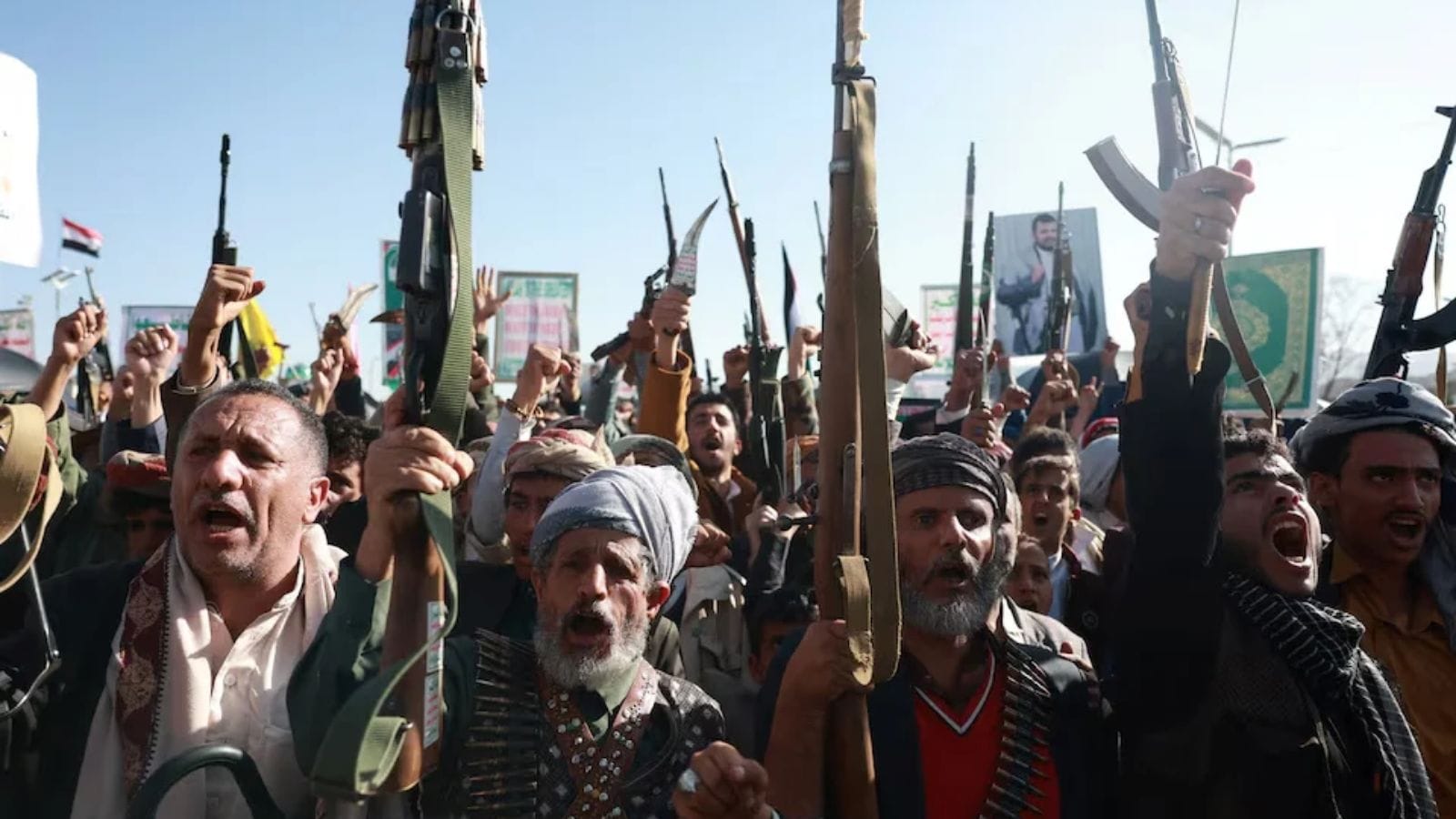
Instead of folding, the Houthis adapted. Backed by technical expertise, smuggling networks, and weaponry from Iran, a ragtag militia evolved into a hardened, decentralized military force capable of surviving years of relentless airstrikes. Think of the conflict like trying to punch water: every massive conventional blow delivered by Saudi fighter jets dispersed the target, hardened the survivors, and created new grievances among the civilian population, while the Houthis learned to strike back using cheap, asymmetric tools that cost a fraction of the multimillion-dollar Patriot interceptors fired to stop them.
By the time Riyadh realized the war could not be won purely from the air, the strategic reality had shifted beneath their feet. The Houthis were no longer just defending territory in Yemen; they were holding the Saudi economy hostage.
The Economics of a Ten-Thousand-Dollar Drone
Consider the terrifying asymmetry of modern warfare in the Arabian Peninsula. A Houthi Samad-3 drone or a Quds cruise missile can be assembled in a subterranean workshop in Sanaa using commercially available components and smuggled guidance systems for roughly ten to twenty thousand dollars.
To shoot that single drone out of the sky before it hits an oil refinery, a desalination plant, or an international airport, Saudi air defenses must fire a Patriot PAC-3 interceptor missile.
Price tag? Roughly three to four million dollars.
Do that math across a weekend barrage of twenty drones and missiles. In a matter of hours, an insurgency operating in one of the poorest countries on earth can force one of the wealthiest nations on earth to burn through tens of millions of dollars in munitions, deplete its defensive stockpiles, and suffer catastrophic reputational damage on global news networks—even if ninety percent of the incoming projectiles are intercepted.
I remember speaking with an aviation logistics consultant who spent months working out of King Abdulaziz International Airport in Jeddah during a spike in cross-border attacks. He described the psychological toll not as dramatic panic, but as a slow, corrosive exhaustion. Every time an alert sounded, ground crews froze. Cargo schedules rippled into chaos. Insurance premiums for maritime shipping through the Red Sea and air freight into Saudi hubs ticked upward by fractions of a percent—numbers that look tiny on a spreadsheet until you multiply them across billions of dollars in trade volume.
"You can build the most luxurious resort on the Red Sea," he told me over lukewarm coffee in a hotel lobby near the corniche. "You can hire the best architects from Milan and the best chefs from Paris. Nobody is bringing their kids there if they think they might have to spend Tuesday night in a basement bunker listening to air defense batteries."
Why Riyadh Chose Escalation
Faced with this stranglehold, outside observers often wonder why Saudi Arabia does not simply declare victory, pull back its forces, and pay whatever diplomatic price is required to make the attacks stop.
It is a fair question, and it gets to the heart of why this conflict is so agonizingly difficult to resolve.
First, there is the stark reality of border security. Unlike the United States fighting a war half a world away in Iraq, Saudi Arabia shares an eight-hundred-mile, porous, mountainous border with Yemen. Riyadh cannot simply pack up its bags and sail home; Yemen is its permanent neighbor. Allowing an armed, ideologically hostile group closely aligned with Tehran to consolidate absolute power along that border—armed with long-range ballistic missiles and drone swarms—is viewed by Saudi leadership as equivalent to allowing a rival superpower to park artillery batteries on their front lawn.
Second, unilateral withdrawal without a binding, enforceable security guarantee would not end the attacks; in Riyadh’s calculation, it would invite more of them. If the Houthis discover that striking Saudi economic infrastructure extracts immediate political and territorial concessions, that tactic becomes permanent leverage. Every time Riyadh raises oil production, signs a diplomatic deal, or opens a new tourism zone, a missile alert could be used to demand another ransom.
So Riyadh doubled down.
Intensifying airstrikes on Houthi command centers, tightening naval blockades around Red Sea ports, and pouring fresh resources into allied Yemeni ground forces is an attempt to break the stalemate through sheer pressure—to raise the cost of the war so high for the Houthi leadership that they are forced to negotiate from a position of exhaustion rather than triumph.
The Human Ledger
Yet behind the sterile language of "strategic deterrence" and "foreign direct investment targets" lies a human reality that defies easy policy prescriptions.
In Yemen, doubling down means another winter of acute malnutrition, shattered hospitals, and families calculating how many days of clean water they have left before the fuel for the local pumping station runs out. Over twenty million Yemenis rely on humanitarian aid to survive. A generation of children has grown up knowing the distinct, terrifying whistle of incoming ordnance before they ever learned to read. When air campaigns intensify around Sanaa or Hodeidah, the precision-guided munitions may be aimed at radar installations and weapons depots, but the shockwaves shatter the windows of bakeries, clinics, and mud-brick homes.
Across the border in southern Saudi Arabia, in towns like Khamis Mushait and Jizan, ordinary families live with their own quiet trauma. Schoolchildren practice missile drills. Shopkeepers sweep up shattered glass after debris from an intercepted rocket falls onto a residential neighborhood. Migrant workers from South Asia and East Africa—the invisible backbone of the Saudi construction and service economy—duck behind concrete barriers when the sirens wail, wondering if the remittance check they send home each month is worth the gamble.
It is a tragedy of mirrors. On one side, a population enduring one of the worst humanitarian crises of the twenty-first century; on the other, a society racing to reinvent its future before its oil wealth runs dry, trapped in a war that threatens to strangle its transformation in the crib.
The Fragility of the Mirage
Walk down the promenade in Jeddah at sunset, and you can feel the sheer, intoxicating ambition of what Saudi Arabia is trying to build. Families stroll along the water, young Saudi entrepreneurs debate tech startups in specialty coffee shops, and cranes pierce the horizon in every direction, assembling the skeletal frames of megaprojects that will define the next century. The energy is real. The desire for a modern, diversified, outward-looking future is palpable among millions of young Saudis who have no interest in fighting the wars of their fathers.
But ambition is fragile when built on contested ground.
Every gleaming skyscraper rising out of the desert sand is a bet on peace. Every foreign executive stepping off a plane in Riyadh is silently weighing the glossy brochures against the morning security briefing. By doubling down in Yemen, Saudi Arabia is trying to blast open a corridor of safety wide enough for its economic dreams to pass through.
Whether military force can ever buy that kind of quiet remains the great, unanswered question hanging over the Arabian Peninsula. For now, the cranes keep turning in the desert, the blueprints remain spread across the mahogany tables, and the air defense crews keep their eyes fixed on the radar screens facing south—waiting to see if the next flash of light on the horizon is a commercial airliner carrying investors, or another ten-thousand-dollar shadow screaming out of the dark.