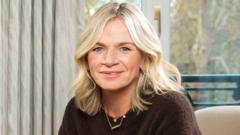
The air in a television studio carries a specific, electric scent. It is a mixture of ozone from the towering lighting rigs, the faint metallic tang of heated floor paint, and the frantic, floral notes of expensive hairspray. To someone like Zoe Ball, this isn't just a workspace. It is home. It is the environment where she has spent decades pivoting between the chaos of live radio and the high-gloss demands of the small screen.
But the ballroom has a different gravity. For weeks, the British public and the inner circles of the BBC have been locked in a quiet, intense speculation. Who would step into the vacuum left by a legend? Who would inherit the sequins and the high-stakes pressure of the Strictly Come Dancing presenting roster? The rumor mill didn't just whisper Zoe’s name; it shouted it.
She was the natural heir. She had the history, having danced across that very floor as a contestant and hosted the sister show, It Takes Two, for a decade. She knew where the bodies were buried and where the glitter was stashed. Yet, when the music finally started and the spotlights swept the room, she wasn't the one holding the microphone.
The reality of the television industry is often far colder than the warm, amber glow of the screen suggests. It is a world of contracts, demographics, and the invisible machinery of "fit."
The Weight of the Saturday Night Crown
Imagine standing in the wings of a stage where ten million people are watching. The floor beneath your feet is buffed to a mirror shine, so slick it feels like standing on ice. Your ear-piece is a hive of voices: the director counting down, the producer giving a last-minute note, the roar of a live crowd that sounds less like people and more like a physical wave of heat.
This is the Saturday night slot. It is the peak of the mountain. In the UK, it is the cultural equivalent of the hearth—the place where the nation gathers. To be passed over for that seat isn't just a missed job opportunity. It is a public weighing of your value in the currency of the current moment.
Zoe Ball didn't hide behind a publicist’s carefully worded shield. She confirmed the news with the kind of breezy, grounded honesty that has made her a staple of the morning airwaves. She wasn't getting the job. The role was going elsewhere. In that admission, the veil dropped for a second, revealing the human heart beating beneath the professional veneer.
Consider the psychological toll of the "Almost." We have all experienced it in smaller, quieter ways. The promotion that seemed destined for us until the very last meeting. The house we had already mentally furnished before the sale fell through. For a performer, the "Almost" happens on a stage built of tabloid headlines and social media feeds.
The stakes are invisible but heavy. Every time a veteran broadcaster is sidelined or overlooked for a new project, it sends a ripple through the industry. It raises questions about longevity, about the shelf-life of charisma, and about what the gatekeepers are looking for when they close the doors of the boardroom.
The Mechanics of the Big Reveal
The BBC is a machine of immense complexity. When a vacancy appears on a flagship program, the process is less like an interview and more like a high-stakes chess game. Producers aren't just looking for someone who can read a teleprompter without blinking. They are looking for a specific kind of alchemy.
They need someone who can bridge the gap between the eighty-year-old grandmother in her armchair and the twenty-something scrolling on her phone. They need a stabilizer. Strictly is a juggernaut, but it is also a delicate ecosystem of egos, sequins, and very real physical exhaustion.
Zoe possessed the alchemy. She had the "lived-in" feel of a presenter who could handle a celebrity’s mid-season breakdown with a laugh and a genuine hug. But the decision-makers often look for the "new" over the "known." They chase the ghost of the future audience, sometimes at the expense of the present one.
The rejection—if we can call it that—wasn't a reflection of a lack of talent. It was a reflection of a shifting strategy. It was the sound of a gear turning in a massive, bureaucratic engine.
Life in the Radio Booth
There is a unique intimacy to radio. When Zoe sits in the BBC Radio 2 studio at dawn, she is speaking directly into the ears of millions of people while they are still in their pajamas, still bleary-eyed, still vulnerable to the start of the day. There are no sequins there. There is no three-point lighting.
Perhaps there is a quiet relief in staying within that booth. In the ballroom, you are a character in a play. On the radio, you are a companion.
But the sting remains. To be the frontrunner in the eyes of the public and then to watch the ship sail without you is a lesson in the transience of "it" status. The industry is a fickle beast. It loves you until it decides it needs a different version of love. It rewards loyalty with a gold watch and then forgets to invite you to the party.
Zoe handled the moment with a grace that felt almost radical. No bitterness. No leaked stories of "source close to the star says she’s devastated." Just a simple confirmation of the fact. She stepped back and allowed the next person to take the light.
The Invisible Audition
Every time we see a celebrity "confirm" they didn't get a role, we are watching the end of a long, silent struggle. There are the screen tests where you have to pretend the chemistry is there with a stranger. There are the meetings with executives who look at you as if you are a set of data points rather than a human being with a thirty-year career.
We tend to think of these people as polished statues, immune to the anxieties of the "gig economy." But the entertainment world is the ultimate gig economy. You are only as good as your last season. You are only as relevant as the latest trending topic.
The ballroom is a place of dreams, but the corridors behind it are lined with the ghosts of people who were "perfect for the role" until they weren't. Zoe Ball’s career is not defined by this one vacancy. It is, however, illuminated by it. It shows us that even at the very top, the "no" is more common than the "yes."
The glitter eventually settles. The lights go down. The studio technicians coil the thick black cables and the cleaners sweep up the stray feathers from a samba costume.
Zoe returns to the early morning shifts, the familiar microphone, and the audience that chooses her every single day. The big chair in the ballroom remains, now occupied by someone else, gleaming under the purple neon. It is a reminder that the show always goes on, but the people who make us care about it are often the ones who know exactly how it feels to stand just outside the circle of light, watching the dance from the shadows, and smiling anyway.



