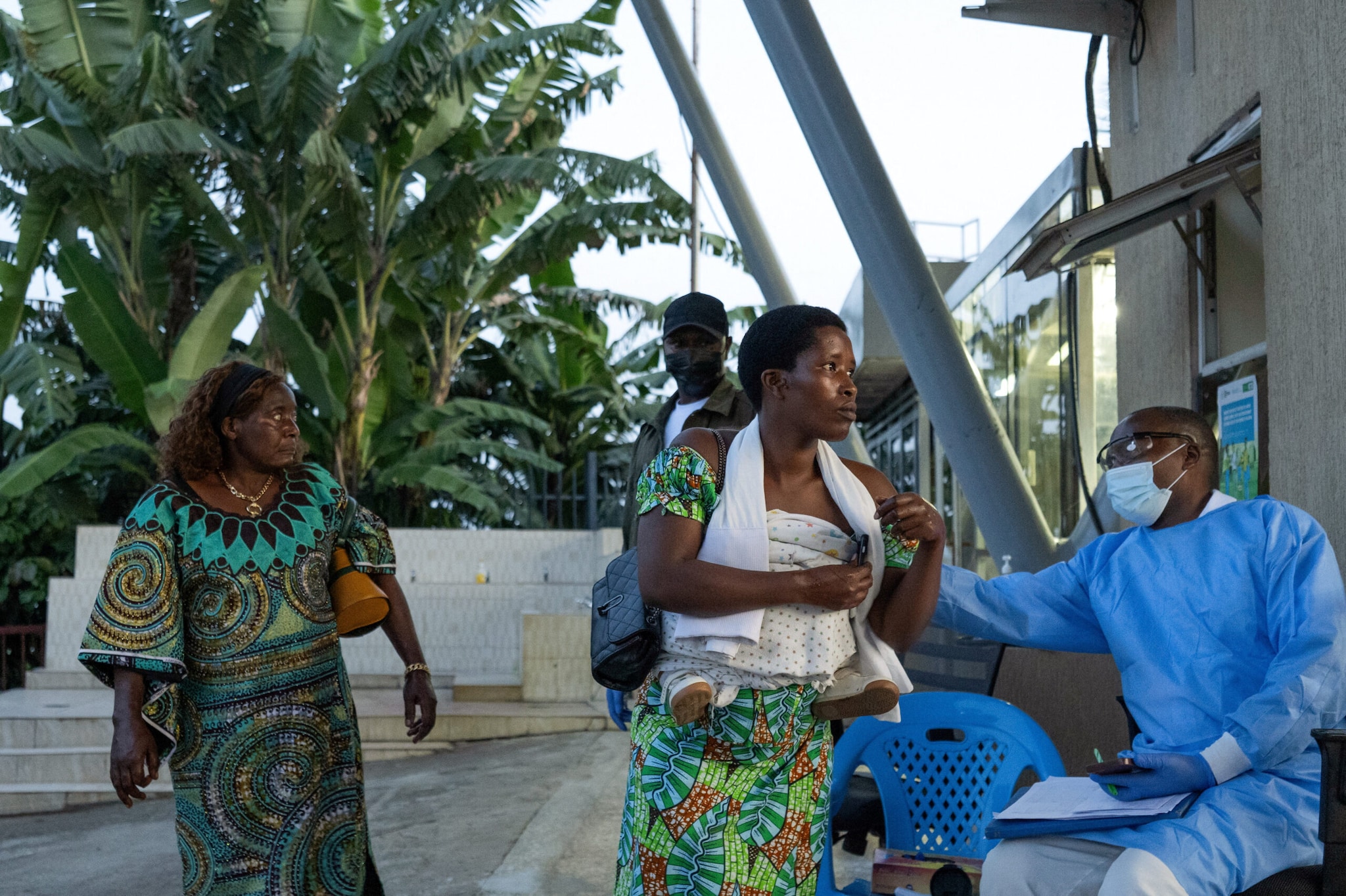
The World Health Organization is sounding the alarm again. Bureaucrats are tracking charts, issuing warnings about the "speed and scale" of the latest Ebola outbreak, and hinting that global catastrophe is just around the corner if we do not dump billions of dollars into centralized containment.
It is a predictable script. It plays out during every major outbreak. The institutional reflex is always the same: panic early, centralize control, and treat the local population as a passive vector to be managed rather than the primary solution. Also making waves recently: Inside the Ebola Crisis Nobody is Talking About.
This top-down panic is not just unhelpful. It actively subverts the mechanics of effective disease eradication.
By focusing entirely on macro-level transmission metrics and international border readiness, global health bodies miss the fundamental reality of how hemorrhagic fevers are actually defeated. Ebola is not a global pandemic waiting to happen; it is a hyper-local tragedy that requires hyper-local trust. The obsession with international mobilization scales up the panic while slowing down the specific, ground-level interventions that actually work. Additional insights into this topic are detailed by National Institutes of Health.
The Containment Paradox: Why Big Budgets Fail Small Villages
When a multinational health agency deploys to an outbreak zone, they bring an entourage of logistics experts, massive field hospitals, and rigid operational protocols. They also bring a deep, often unspoken skepticism of local capacity.
I have watched public health syndicates burn through tens of millions of dollars building massive isolation centers that remain completely empty. Why? Because the planners forgot to account for basic human psychology and local sociology. If you tell a villager that their sick relative must be taken by men in biohazard suits to a distant, fenced-off facility where families cannot visit, that villager will hide their sick relative.
Every single time.
The data backs this up. During the 2014–2016 West Africa outbreak, and again in the Democratic Republic of Congo outbreaks, epidemiological modeling showed that traditional surveillance and top-down enforcement accounted for only a fraction of the drop in transmission. The real turning point occurred when local communities modified their own burial practices and established their own volunteer-led isolation protocols.
Top-Down Approach:
International Panic -> Massive Funding -> Rigid Protocols -> Local Distrust -> Hidden Cases

Community-Led Approach:
Local Engagement -> Cultural Adaptation -> Early Isolation -> Trusted Testing -> Extinction of Vector
When you centralize the response, you institutionalize the panic. You treat a highly specific cultural problem as a generic logistical math equation. The math fails because the variables are human.
Dismantling the Myth of Exponential Global Spread
Let's address the foundational fear that drives the WHO’s fundraising apparatus: the idea that Ebola is going to hop on a commercial flight and paralyze a major Western metropolis.
This narrative ignores basic virology. Ebola is not influenza. It is not COVID-19. It is not measles.
- R0 Realities: While the basic reproduction number ($R_0$) for Ebola can hover between 1.5 and 2.5 in crowded, under-resourced settings, it requires direct contact with bodily fluids from a symptomatic individual.
- Asymptomatic Non-Transmission: A person incubating Ebola cannot infect you on a plane. They are not shedding virus until they are visibly, severely ill.
- The Transmission Barrier: In environments with running water, basic personal protective equipment (PPE), and routine infection control, the $R_0$ drops drastically below 1.
The fear-mongering about global scale is a fundraising tactic disguised as epidemiological concern. When global agencies scream about the threat to the international community, they are shifting focus away from where the resources are actually needed: the broken primary healthcare systems of the affected regions.
If a health system cannot even manage routine maternal care or treat basic malaria, it cannot withstand an Ebola outbreak. The solution is not an elite, parachuting strike team of international experts who leave three months later. The solution is boring, unglamorous, permanent infrastructure.
The Danger of the Vaccine Silver Bullet
The development of the Ervebo vaccine was undeniably a major scientific achievement. However, the international community has weaponized this technology to justify cutting corners on fundamental public health measures.
We see it in every briefing: the belief that if we just manufacture enough doses and execute a flawless ring-vaccination strategy, the underlying vulnerabilities of the region cease to matter. This is a dangerous technocratic delusion.
Vaccines are a tool, not a strategy. Ring vaccination—vaccinating the contacts of a confirmed case and the contacts of those contacts—requires a level of granular, trusted contact tracing that cannot be bought with an emergency IMF grant. It requires deep, tedious, painstaking community relationship building.
Imagine a scenario where an international team arrives with a highly effective vaccine but zero trust. The locals, suspicious of outsiders who only show up when there is a deadly virus to film, refuse the shot. The vaccine sits in ultra-cold storage units that drain local generators, while the virus continues to move through alternative networks of hidden contacts.
That is not a hypothetical scenario. That is exactly what played out in parts of North Kivu. The obsession with the shiny tool blinds planners to the cultural terrain.
Re-Engineering the Outbreak Playbook
If we want to stop treating Ebola outbreaks like recurring seasonal crises that catch everyone by surprise, we have to flip the entire operational model upside down.
1. Demilitarize the Response
The habit of using armed escorts or state security apparatuses to enforce quarantines and safe burials must stop. The moment a health intervention looks like a military operation, the public health battle is lost. Fear drives the virus underground. When people hide symptoms, contact tracing becomes mechanically impossible.
2. Fund the Periphery, Not the Center
Stop sending 80% of emergency funds to international NGOs and UN agencies who spend half their budgets on Western consultants and armored Land Cruisers. Direct those resources to the local nurses, community health workers, and traditional leaders who are already on the ground. They are the ones who can actually convince a family to alter a traditional funeral practice without causing a riot.
3. Change the Metric of Success
The metric of success should not be the number of international personnel deployed or the millions of dollars pledged in Geneva. The only metric that matters is the time elapsed between the first symptom of an index case and the isolation of that case. That metric only improves when the local population trusts the clinic down the street.
The Trade-Off Nobody Wants to Talk About
Taking a hyper-local, community-first approach has a distinct downside that makes international bureaucrats incredibly uncomfortable: it takes time to build trust, and it does not yield clean, photogenic press releases during the first two weeks of an emergency.
It requires ceding control. It means letting local councils dictate how isolation wards are run. It means allowing traditional healers to be part of the triage process so that patients do not feel completely alienated from their culture.
To a centralized health authority, this looks messy. It looks unscientific. It looks risky.
But the alternative is the current status quo: an endless cycle of panic, massive capital flight into temporary fixes, deep local resentment, and an epidemiological curve that only flattens after the virus has already burned through the most vulnerable populations.
Stop listening to the alarmist rhetoric designed to fund bloated administrative structures. Outbreaks are not defeated by global mandates issued from Switzerland. They are choked out in the dirt, village by village, by people who trust their neighbors more than they fear your statistics.