The air in Sacramento often carries the scent of dry pine and political friction. It is a place where the legislative machinery hums with a specific kind of intensity, a coastal defiance that views itself as the final atmospheric layer protecting a certain vision of the American dream. But three thousand miles away, in the marble corridors of Washington and the gold-leafed ballrooms of Florida, a different engine is revving. It is an engine designed specifically to dismantle that Californian shield.
We are no longer talking about a standard election cycle. We are talking about a multi-front war where the battlefield isn't just a ballot box, but the very plumbing of the democratic process.
The Architect and the Antagonist
Consider a hypothetical voter named Elena. She lives in a mid-sized suburb of Fresno. Elena isn't a political operative. She’s a nurse who worries about the cost of eggs and whether her ballot—mailed from her kitchen table—will actually be counted. To Elena, the "war" between Donald Trump and the state of California feels like noise. But the reality is that the noise is slowly vibrating the walls of her house.
On one side, you have the Trump campaign’s legal and rhetorical machine. They see California not as a state, but as a laboratory of "lawlessness." They point to universal mail-in ballots and relaxed voter ID requirements as cracks in the foundation. On the other side, California’s leadership, led by Governor Gavin Newsom and a phalanx of aggressive attorneys general, views Trump’s maneuvers as a direct assault on the right to participate.
This isn't just a disagreement over policy. It is a collision of two irreconcilable versions of reality.
The Legal Trenches
The skirmishes are happening in the fine print. While the headlines scream about rallies and insults, the real movement occurs in the quiet filings of the court system. The Trump team has shifted its strategy from the broad, sweeping claims of 2020 to a more surgical, localized approach. They are challenging the specifics of how voter rolls are cleaned, how signatures are verified, and how late a ballot can arrive and still be deemed "legal."
Imagine a sieve. California wants the holes to be large enough to ensure every legitimate grain of sand passes through, even if a few pebbles get in. The Trump campaign wants the mesh so fine that only the most "perfect" grains make it, even if thousands of others are left behind.
Statistics tell a sobering story. In previous cycles, the rejection rate for mail-in ballots in certain jurisdictions spiked not because of fraud, but because of technicalities. A missing middle initial. A signature that aged ten years since the voter last signed a DMV form. These are the "invisible stakes." When we talk about "election integrity" versus "voter access," we are actually talking about whether Elena’s vote gets tossed in the trash because she was rushing to her night shift and her handwriting was a bit messy.
The Shadow of the 12th Amendment
There is a ghost haunting this conflict: the procedural nightmare of a contested certification.
If you look closely at the maneuvers in California, you see a preparation for a scenario where the results are not just questioned, but stalled. If a handful of counties in a handful of states—including the deep-blue behemoth of California—can have their results tied up in litigation long enough, the entire machinery of the Electoral College begins to grind.
It is a game of clocks.
The strategy is simple: delay. If you can’t win the vote, you complicate the counting. If you can’t complicate the counting, you challenge the certification. By creating a narrative of "chaos" in the nation’s most populous state, the opposition builds a case for federal intervention or a "contingent election" decided by the House of Representatives.
The Human Cost of High-Stakes Friction
We often treat these political battles like a sport. We check the score, look at the polling averages, and move on. But there is a psychological erosion happening.
When a former president repeatedly claims that a state’s entire voting system is "rigged," it doesn't just energize his base. It creates a profound sense of vertigo for everyone else. Trust is a non-renewable resource. Once a voter like Elena begins to wonder if her neighbor’s vote is "illegal" or if her own vote is being suppressed by a technicality, the social contract begins to fray.
I remember talking to a poll worker in Orange County during a primary. She was a volunteer, a grandmother who had been doing this for twenty years. She told me that for the first time in her life, she was afraid to wear her "I Voted" sticker to the grocery store. That fear is the collateral damage of the multi-front war. It is the human element that gets lost in the talk of "litigation strategies" and "delegate counts."
The Power of the Precedent
California is often called the "head of the resistance," but it’s also the nation’s biggest target. Because of its size, any legal victory won here by the Trump campaign can be exported. A ruling on signature verification in Los Angeles becomes the blueprint for a challenge in Philadelphia or Detroit.
This is the hidden genius of the campaign's focus on the West Coast. They aren't trying to "flip" California to the Republican column; they are trying to use California to break the rules that govern everyone else.
Consider the "voter roll" lawsuits. These are filed with the intent of forcing states to purge names more aggressively. On paper, it sounds logical—who wants dead people on the rolls? But in practice, these purges often catch young voters, low-income renters who move frequently, and naturalized citizens. It is a war of attrition.
Beyond the Ballot Box
The tension isn't limited to the mechanics of voting. It’s also about the narrative of what California represents. To the Trump movement, California is a cautionary tale of "woke" overreach and bureaucratic bloat. To California, Trump is an existential threat to the climate, to labor, and to the very idea of a multicultural democracy.
This is why the legal battles are so vitriolic. They aren't just fighting over who gets to be President; they are fighting over whose version of America is allowed to exist.
Every time a new lawsuit is filed, another layer of complexity is added to the act of voting. We are moving toward a system where you might need a law degree just to ensure your voice is heard. The complexity isn't a bug; it’s a feature. If you make the process sufficiently intimidating, people will simply opt out.
But opting out is exactly what the architects of this conflict are counting on.
The Sound of the Gavel
As we move closer to the next flashpoint, the noise will only get louder. There will be more emergency injunctions, more late-night social media screams, and more "unprecedented" maneuvers.
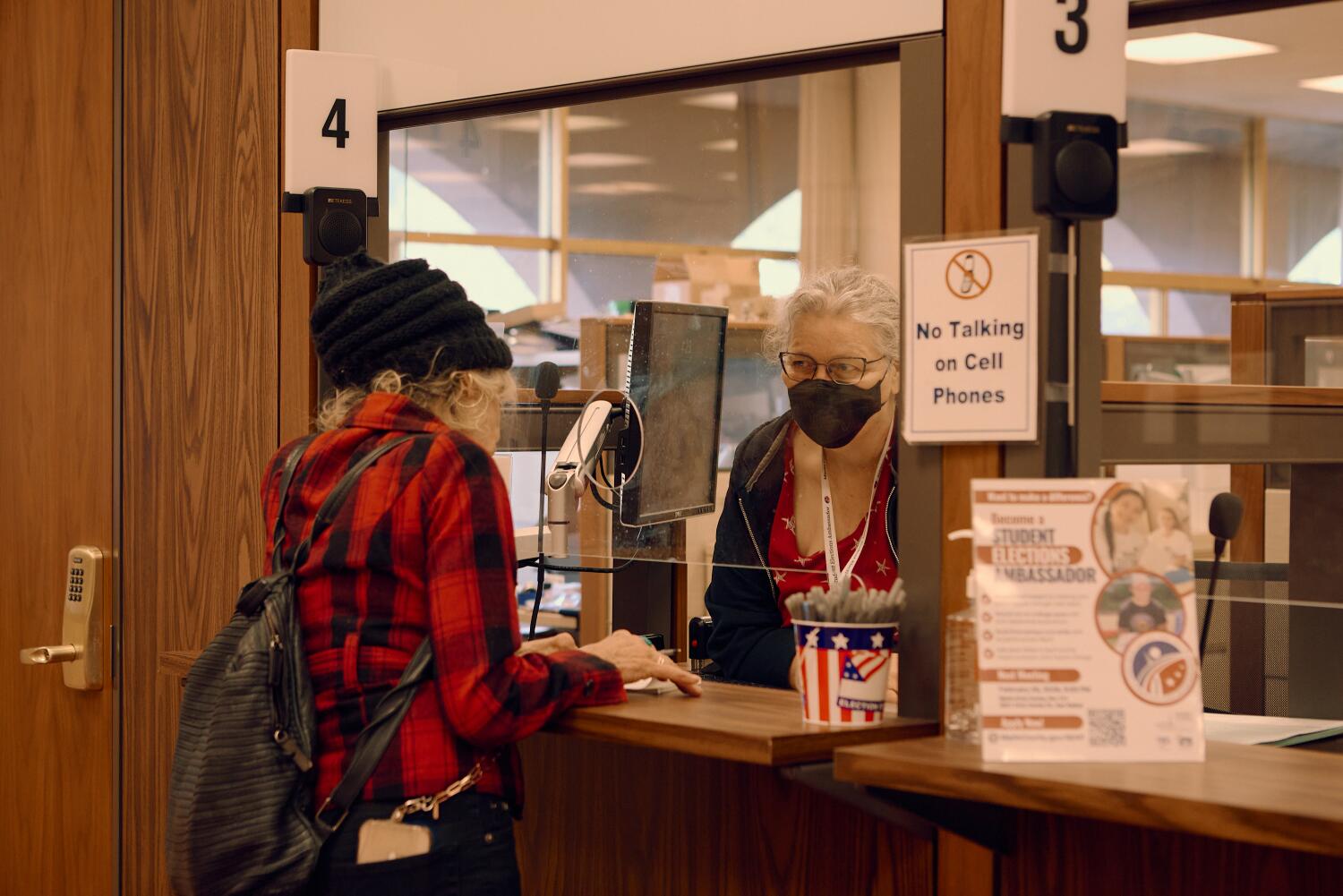
But amidst the roar, we should look back at the quiet moments. The sound of a ballot dropping into a metal box. The scratch of a pen on a signature line. The hushed conversation between a poll worker and a first-time voter.
These are the things being fought over. Not just power, not just a seat in the Oval Office, but the fundamental, quiet dignity of being counted.
The war over the next election isn't being fought in a vacuum. It is being fought in our courthouses, our community centers, and our own minds. And as the two sides dig their trenches deeper into the California soil, the rest of the country is left to wonder if the ground beneath all of us is still solid.
The lights stay on late in Sacramento. They stay on even later in the legal war rooms of the opposition. Both sides are waiting for the same thing: the moment the first ballot is cast and the machinery—fragile, contested, and vital—begins to turn once more.
A single sheet of paper travels through a machine. It is a small, light thing. But right now, it carries the weight of an entire nation’s uncertainty.
Would you like me to analyze the specific legal precedents being used in these California election lawsuits to see how they might impact other swing states?