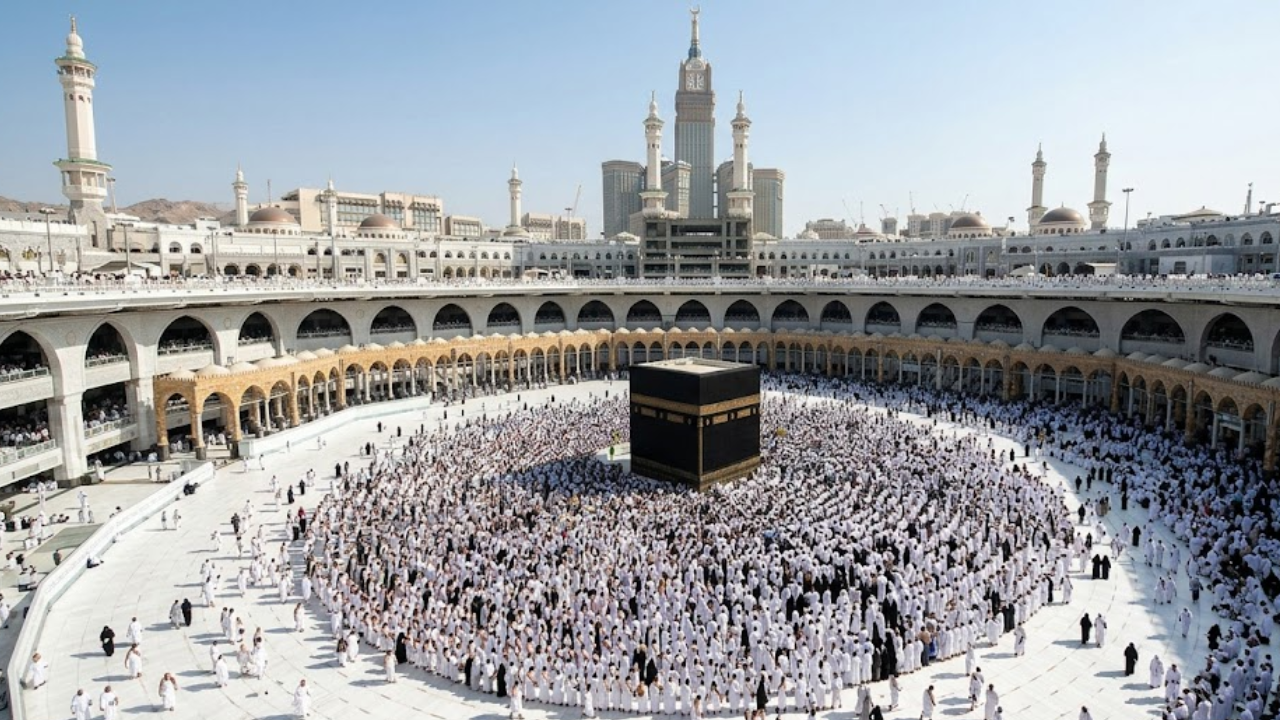
Ahmed sits at his kitchen table in Jakarta, the humid air pressing against his shoulders like a physical weight. On the table lies a small, plastic rectangle—the Nusuk card. To a casual observer, it looks like nothing more than a standard ID or a credit card. But to Ahmed, and millions like him, this card is the culmination of a decade of penny-pinching, of skipping weekend meals, and of a lifelong yearning to stand before the Kaaba.
The journey to Makkah has never been just a flight and a hotel stay. It is a spiritual marathon that, until recently, came with a staggering financial hurdle. The Hajj is an obligation for those who are able, yet "ability" has increasingly become a question of the bank account rather than the spirit.
The Weight of a Dream
For years, the logistics of the Hajj were a fragmented puzzle. A pilgrim had to navigate a maze of private operators, hidden fees, and fluctuating costs that could vanish a family’s life savings in a single afternoon. The dream was often shadowed by the anxiety of the "hidden price tag." How much for the transport? How much for the tent in Mina? How much for a simple meal when the sun is high and the throat is parched?
The Saudi Ministry of Hajj and Umrah realized that the digital age offered a solution to this ancient problem. They didn't just need a tracking system; they needed a way to lower the barrier to entry. Enter the Nusuk card. It was designed to be a digital identity, a key to the holy sites, and a shield against fraud. But the latest update to this initiative has shifted the narrative from security to accessibility.
The Invisible Discount
Consider the math of a miracle. The Ministry recently unveiled a series of deep-seated financial incentives baked directly into the Nusuk ecosystem. This isn't just a coupon code or a seasonal sale. It is a structural shift. By leveraging the Nusuk card, pilgrims now access a tiered discount system that slashes the cost of essential services.
Think of it as a bypass valve. By removing the middleman—the layers of third-party vendors who often inflated prices for "convenience"—the Ministry has used the Nusuk card to connect the pilgrim directly to the service provider.
Let’s look at a hypothetical scenario to ground this. If Ahmed were to book his transport and housing through traditional, fragmented channels, he might face a 20% markup designed to cover the administrative bloat of various agencies. By using the Nusuk card as his primary transaction and identification tool, that markup evaporates. The "discount" isn't a gift; it is the efficiency of a streamlined system being passed back to the person who needs it most.
Beyond the Riyal
The savings aren't limited to the big-ticket items like hotels. The real impact is felt in the "micro-costs" that bleed a traveler dry. The Nusuk card functions as a digital wallet, and within that ecosystem, the Ministry has negotiated lower rates for basic necessities.
- Reduced rates on high-speed rail transport between the Holy Cities.
- Lowered costs for cafeteria services within the camps.
- Specialized pricing for essential health insurance coverage.
These aren't just line items on a spreadsheet. For a pilgrim from a developing nation, a 15% reduction in the cost of a bus ticket or a meal plan is the difference between performing the ritual with peace of mind or performing it while calculating the remaining balance in a thinning wallet.
The stakes are invisible but immense. When a person is worried about money, they aren't fully present in their prayer. By stabilizing the cost, the Ministry is essentially "buying" the pilgrim more focus for their faith.
The Digital Guardian
The Nusuk card also solves a darker problem: the "ghost" operator. Every year, stories surface of pilgrims who arrived in the Kingdom only to find their "all-inclusive" packages were scams, leaving them stranded without beds or transport.
The card acts as a verification seal. If a service is discounted through Nusuk, it is vetted. If it is vetted, it is guaranteed. This removes the "risk premium" that many pilgrims feel forced to pay—the extra money spent on expensive brands just to ensure they won't be left on a sidewalk in the heat of the afternoon.
The technology behind the card is complex, involving encrypted data and real-time integration with Saudi government databases. But for the user, it remains simple. One card. One identity. One price that stays fair.
A New Geometry of Travel
The shift we are seeing is a move toward what we might call "Sacred Tech." Usually, technology in travel is about luxury—faster check-ins for first-class passengers or biometric scanners for elite lounges. Here, the technology is being used to democratize the most significant journey of a human life.
The Ministry’s decision to bake discounts into the card is a recognition that the future of the Hajj cannot be one where only the wealthy participate. It must remain a rite for the masses. By digitizing the economy of the pilgrimage, they have created a transparent market where prices are regulated not by greed, but by the shared goal of hospitality.
Ahmed looks back at his card. He knows that when he lands in Jeddah, he won't have to haggle with a driver or wonder if his permit is genuine. He knows that the money he saved—the "Nusuk discount"—is money he can now bring home to his children, or use to buy a gift for his neighbor who couldn't make the trip.
The road to Makkah is long, dusty, and demanding. It tests the body and the soul. But for the first time in modern history, the weight on the pilgrim’s back is a little lighter, not because the path is shorter, but because the burden of the cost has finally been shared with the machines.
The card in Ahmed’s hand is cold plastic, but it represents a warm welcome. It is a promise that the gates are open, and the price of entry is no longer a barrier to the divine.