The letter arrived on a Tuesday, wedged between a grocery store flyer and a water bill. It was printed on standard government cardstock, the kind that feels slightly too stiff in your hands. For Michel, who had spent the last fourteen years building a life in a quiet suburb of Ohio, that single piece of paper felt heavier than the concrete blocks he laid every morning at his construction jobs.
The text was dense, written in the bloodless vocabulary of federal administrative law. But its message was stark. The highest court in the land had spoken. The safety net was being reeled back in. Also making news recently: The Long Wait for a Quiet Sky.
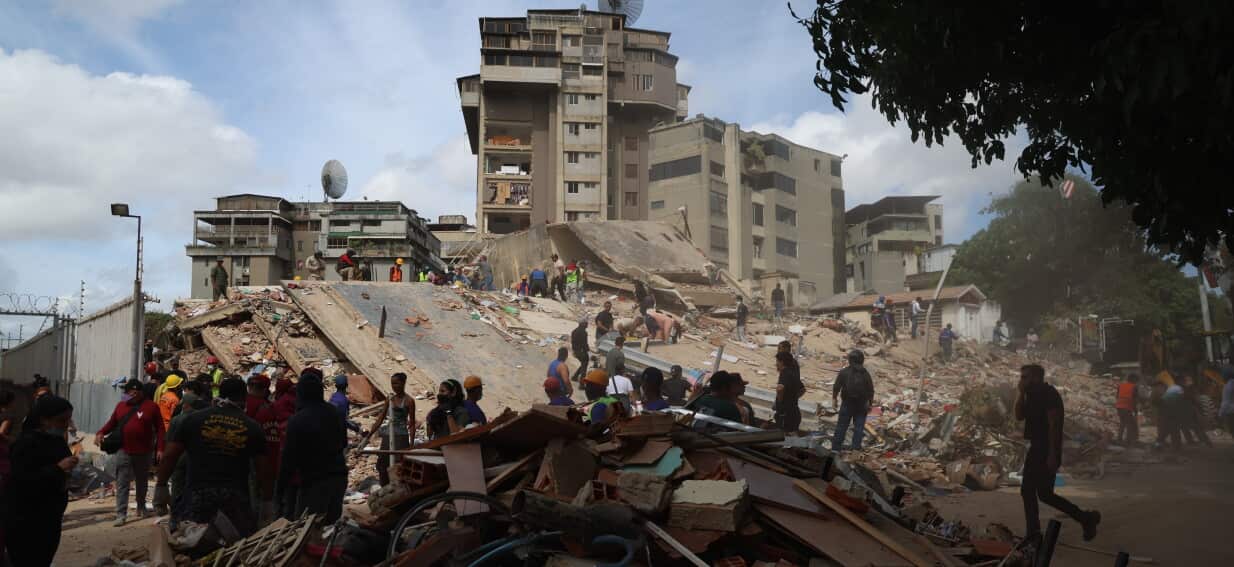
For more than a decade, Michel had lived under the umbrella of Temporary Protected Status, a federal program known simply as TPS. It is a legal designation granted by the Department of Homeland Security to foreign nationals already in the United States when their home countries are struck by catastrophes—cataclysms so severe that returning would pose a direct threat to their survival. For Michel, that cataclysm was the catastrophic 2010 earthquake in Haiti. For others, it was the grinding, relentless civil war in Syria.
To the legal system, Michel’s presence in America was an administrative line item. To Michel, it was the only home his young children had ever known. More details into this topic are covered by Reuters.
The core of the issue lies in a fundamental misunderstanding of how time works in the human soul versus how it works in legislative chambers. When TPS is granted, it is intended as a short-term pause button. The government looks at a nation in ruins and says, Stay here for eighteen months. Let the dust settle. Let the smoke clear.
But eighteen months become three years. Three years become a decade.
During those years, the people under this protection do not freeze in place. They do not live in packing crates. They get jobs. They open bank accounts. They buy homes, pay taxes, register vehicles, and have children who grow up cheering for American sports teams and speaking English with local accents. They become the fabric of neighborhoods that would notice if they suddenly vanished.
Consider what happens when that temporary horizon is abruptly pulled closer.
The legal battle that wound its way to the Supreme Court centered on a deceptively simple question of executive power. Can a presidential administration unilaterally end a humanitarian designation that has been systematically renewed by multiple previous administrations? The court’s answer was a resounding yes. The law, as written by Congress decades ago, grants the executive branch immense discretion to decide when a foreign country has recovered enough to receive its citizens back.
When the justices look at a map of Haiti or Syria, they look at legal benchmarks and diplomatic reports. They see a country where the acute crisis of an earthquake or a specific military siege has technically shifted into a different phase of governance.
But look closer at the reality on the ground.
In Port-au-Prince, armed gangs control vast swaths of the capital, infrastructure remains fractured, and the basic mechanisms of daily survival are a luxury. In Syria, a decade of conflict has left cities looking like lunar landscapes, littered with unexploded ordnance and fractured by deep sectarian divides. The crisis hasn't ended; it has simply evolved into a permanent state of instability.
To suggest that these environments are ready to absorb tens of thousands of returning families is a bureaucratic fiction. It is a decision made in rooms filled with polished mahogany, far removed from the dust and danger of the actual destinations.
This is where the concept of temporary status breaks down completely. We have treated a profound human reality as if it were a library book on an extended loan, capable of being recalled at any moment without consequence.
The economic argument alone exposes the flaw in this logic. Individuals holding TPS are fully authorized to work. They are not living on public assistance. They are employed in sectors that form the backbone of the domestic economy: healthcare, construction, food service, and transportation. They contribute to social security funds they may never be permitted to draw from. They pay property taxes that fund the schools their American-born children attend.
When you suddenly invalidate the status of thousands of workers, you do not just disrupt their households. You rip a hole in the local economies that rely on them.
Imagine a regional hospital system where dozens of dietary aides and environmental service workers suddenly lose their legal right to work overnight. Imagine a construction firm losing its most experienced foremen in the middle of a major infrastructure project. The ripples extend far beyond the individuals named on the immigration documents.
The true weight of this ruling, however, is measured in the quiet conversations that take place after the children have gone to bed.
Michel and his wife sit at their kitchen table, staring at a digital clock that seems to tick faster with each passing day. They are faced with choices that no parent should ever have to formulate. If they are forced to leave, do they take their children—who are American citizens by birth—to a country plagued by violence, a place the children know only through whispered family stories and grim news broadcasts? Or do they leave them behind with relatives, fracturing the family unit in order to preserve their children’s safety and education?
This is the hidden mathematics of displacement. It is an equation where every potential outcome results in a net loss of human dignity.
The legal system defends its rigidity by arguing that rules are rules. Without boundaries, they say, the entire immigration framework collapses into chaos. They argue that changing political administrations must have the authority to alter foreign policy and domestic enforcement priorities as they see fit.
But this argument ignores the doctrine of reliance interests. When the state allows a person to remain within its borders for a generation, renewing their status every year and a half, it creates a tacit agreement. It invites that person to invest their life, their labor, and their loyalty into the community. To suddenly withdraw that invitation based on a rigid interpretation of a single word—temporary—feels less like the rule of law and more like a betrayal of basic human consistency.
The path forward remains deeply uncertain.
Advocates have long argued for a legislative bridge, a mechanism that would allow long-term TPS holders with clean records and deep community ties to adjust their status to permanent residency. Congress possesses the power to create this pathway tomorrow. Yet, immigration policy remains paralyzed by partisan gridlock, treated as a rhetorical weapon for election cycles rather than a human problem requiring a practical solution.
As the sun rises over the Ohio suburb, Michel packs his lunch box and heads to his truck. He will work a twelve-hour shift today, reinforcing the foundations of a new medical center. He will do his job with the same precision and dedication he has shown for over a decade. But the foundation of his own life has never felt more hollow.
The law has given its verdict, clear and uncompromising. It leaves no room for the messy, beautiful reality of a life built in the spaces between the words.
A country is not merely a collection of borders and statutes. It is an ongoing experiment in shared humanity. When we choose to view our neighbors solely through the lens of administrative classifications, we lose something vital about ourselves. We trade our capacity for empathy for the cold comfort of bureaucratic order.
The letters will continue to arrive in mailboxes across the country, turning quiet afternoons into moments of quiet desperation. The lives built in the shadow of these temporary horizons will continue to hang in the balance, waiting for a spark of political courage that may never come. Until then, thousands of families will continue to wake up every morning in a country they love, wondering if it will still have room for them by nightfall.