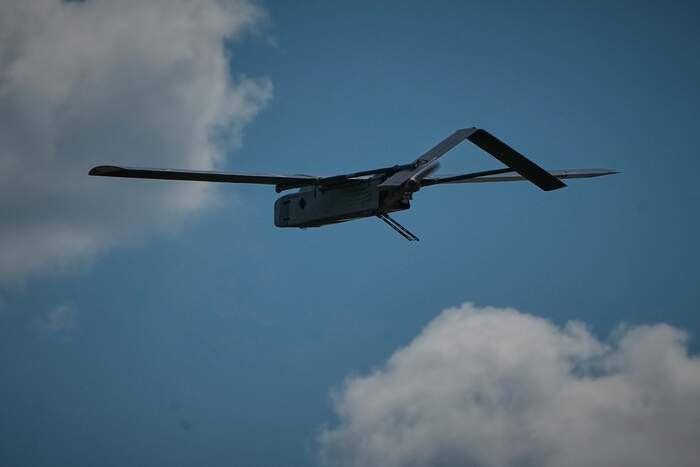
International negotiations surrounding Lethal Autonomous Weapons Systems (LAWS) remain trapped in a structural deadlock because diplomatic frameworks rely on consensus-based treaties to regulate rapidly iterating software architectures. While United Nations discussions under the Convention on Certain Conventional Weapons (CCW) focus on defining the boundaries of human control, military procurement cycles are already deploying algorithmic targeting, sensor fusion, and loitering munitions across active theaters. To understand why international law lags behind battlefield reality, analysts must deconstruct the negotiation mechanics, the technical thresholds of autonomy, and the strategic incentives preventing major powers from accepting binding restrictions.
The Structural Bottleneck of the CCW Framework
The primary venue for international deliberation on autonomous weapons is the Group of Governmental Experts (GGE) on LAWS, operating within the UN Convention on Certain Conventional Weapons in Geneva. Unlike the UN General Assembly, where resolutions pass by majority vote, the CCW operates strictly by consensus. Any single state party holds an effective veto over procedural advancements, mandate expansions, or treaty drafts.
This procedural rule creates a predictable diplomatic stalemate. Participating states divide into three distinct geopolitical blocs, each optimizing for incompatible strategic outcomes:
- The Prohibitionist Bloc: Comprising largely non-aligned nations, Latin American states, and the Holy See, this coalition demands a legally binding international treaty prohibiting autonomous weapons that operate without meaningful human control. Their core argument rests on the Martens Clause of international humanitarian law (IHL), asserting that delegating life-and-death decisions to algorithms violates the principles of humanity and the dictates of public conscience.
- The Regulatory Incrementalists: Led by European powers such as France and Germany, this group advocates for a two-tiered approach: banning fully autonomous systems that operate entirely outside human oversight while establishing strict political declarations and transparency mechanisms for semi-autonomous systems.
- The Technological Hegemons: Including the United States, Russia, China, Israel, and South Korea, these states resist any legally binding ban. Their position relies on the premise that existing IHL frameworks—specifically the Geneva Conventions—are sufficient to govern new technologies, and that premature regulation would stifle defensive capabilities against adversarial swarms or hypersonic threats.
Because consensus requires unanimous agreement across all three blocs, the lowest common denominator dictates the output. The GGE has produced eleven guiding principles since 2019, affirming that international humanitarian law applies to autonomous systems and that human responsibility cannot be transferred to machines. Yet these principles carry zero enforcement mechanisms, functioning as non-binding norms rather than verifiable arms control constraints.
Deconstructing the Autonomy Spectrum
A central failure in diplomatic reporting is treating "autonomy" as a binary switch rather than a multi-dimensional control loop. In military systems engineering, autonomy refers to the delegation of specific functions within the Observe-Orient-Decide-Act (OODA) loop. Understanding where human intervention occurs—and where latency constraints make human intervention physically impossible—is essential for evaluating regulatory proposals.
1. Human-in-the-Loop (Semi-Autonomous)
The system identifies potential targets through radar, electro-optical, or infrared sensors, then pauses execution until a human operator verifies the classification and authorizes engagement. Standard wire-guided missiles and remotely piloted aircraft operate within this architecture.
2. Human-on-the-Loop (Supervised Autonomous)
The system executes target acquisition, tracking, and engagement independently, while a human operator monitors the telemetry feed and retains the capacity to override or abort the strike within a defined time window. Modern naval close-in weapon systems (CIWS) and terrestrial air-defense batteries utilize this model because incoming anti-ship missiles travel at supersonic speeds, compressing reaction windows below human cognitive limits.
3. Human-out-of-the-Loop (Fully Autonomous)
Once activated and deployed into a designated geographic kill box, the platform searches for, identifies, tracks, and engages targets based entirely on pre-programmed algorithmic parameters without further communication with a human controller. Loitering munitions operating in contested electromagnetic environments—where GPS jamming and datalink severance render remote piloting impossible—increasingly rely on this operational mode.
The core technical challenge for arms control negotiators is that the transition from supervised autonomy to full autonomy requires no hardware modification. A drone equipped with an onboard neural network processor and standard electro-optical sensors can switch from human-in-the-loop to human-out-of-the-loop via a software patch or a change in rules of engagement. Unlike nuclear centrifuges or chemical precursors, autonomous targeting code exhibits no physical signature detectable by satellite imagery or standard weapons inspectors.
The Verification Paradox in Algorithmic Arms Control
Traditional arms control treaties, such as New START or the Chemical Weapons Convention, succeed because their targets are physically observable, countable, and verifiable. Strategic bombers, intercontinental ballistic missile silos, and chemical stockpiles require massive industrial footprints. Autonomous weapons invert this dynamic.
The verification paradox rests on three technical realities:
- Dual-Use Software Ubiquity: Computer vision algorithms used for autonomous agricultural harvesting, industrial inspection, or self-driving vehicles share identical foundational architectures (such as convolutional neural networks and transformer models) with military target recognition systems. Restricting the underlying research is economically and practically impossible.
- The Black-Box Accountability Gap: Deep learning models trained on synthetic and real-world sensor data often reach classification decisions through statistical correlations opaque even to their engineers. Under International Humanitarian Law, commanders must ensure distinction (separating combatants from civilians) and proportionality (ensuring collateral damage does not exceed the concrete military advantage anticipated). If an autonomous system misidentifies a civilian vehicle as a mobile missile launcher due to adversarial camouflage or sensor degradation, attributing criminal liability under the Rome Statute becomes legally ambiguous. Was the failure caused by the field commander who authorized deployment, the procurement officer who certified the system, or the software engineer who curated the training dataset?
- Simulation vs. Battlefield Divergence: Testing an autonomous system in a controlled range environment yields predictable reliability metrics. Deploying that same system into an urban battlespace characterized by electromagnetic interference, decoys, and dynamic civilian movement introduces edge cases that degrade algorithmic precision. Regulatory proposals demanding "predictability and reliability" fail to specify the exact statistical thresholds required to certify a weapon as lawful.
The Strategic Cost Function of Restraint
To understand why major military powers refuse binding prohibitions, one must evaluate the strategic cost function of unilateral or asymmetric restraint. In modern high-intensity warfare, speed of decision-making determines survival.
When an adversary deploys saturated drone swarms capable of overwhelming traditional air defenses, a defending force relying on human operators to manually approve each intercept faces mathematical defeat. Human cognitive processing introduces latency—typically measured in seconds—whereas machine-to-machine engagement operates in milliseconds. In environments where communications links are degraded by electronic warfare, maintaining a continuous human-in-the-loop requirement effectively neutralizes a platform's operational utility.
This creates a classic prisoner's dilemma in international security. State A may prefer a world where no nation fields fully autonomous weapons, recognizing the risks of accidental escalation and flash wars. However, if State A cannot verify that State B has refrained from embedding autonomous targeting routines into its existing drone fleet, State A must develop and deploy comparable systems to avoid catastrophic strategic vulnerability. Diplomatic statements endorsing humanitarian principles do not alter this underlying payoff matrix.
Operationalizing "Meaningful Human Control"
Because an outright ban lacks enforcement mechanisms and faces insurmountable verification hurdles, the center of gravity in technical policy has shifted toward operationalizing the concept of Meaningful Human Control (MHC). Rather than attempting to ban software capabilities, this framework seeks to bound the operational parameters within which autonomous functions are permitted to execute.
Implementing MHC requires imposing hard constraints across four distinct operational variables:
- Spatial Boundaries: Restricting autonomous target engagement strictly to pre-defined geographic polygons devoid of civilian populations, such as open ocean corridors, high-altitude airspace, or uninhabited desert borders.
- Temporal Limits: Enforcing mandatory self-destruct or mission-abort timers on loitering platforms, ensuring that an uncrewed system cannot remain active indefinitely after losing contact with command networks.
- Target Class Restrictions: Limiting autonomous engagement exclusively to materiel targets—such as radar emitters, armored vehicles, or naval vessels—while explicitly prohibiting algorithmic targeting of human personnel.
- Environmental Fail-Safes: Programming systems to default to a non-lethal loiter or return-to-base state if sensor confidence scores drop below a verified threshold or if ambient environmental conditions deviate from the parameters established during operational testing.
Even within this bounded framework, severe limitations persist. Adversaries operating outside international norms can exploit these predictable fail-safes. If an opposing force knows that a rival's autonomous defensive drones will abort an engagement whenever civilian vehicles are detected within a fifty-meter radius, that force will deliberately co-locate military assets with civilian traffic—weaponizing the defender's algorithmic compliance with international humanitarian law.
The Bifurcation of Global Weapons Governance
Current diplomatic trajectories indicate that the UN CCW process will not produce a legally binding treaty prohibiting lethal autonomous weapons. The consensus rule guarantees that states investing heavily in algorithmic warfare will block any text that constrains their operational latitude, relegating the Geneva talks to producing incremental best-practice guidelines and voluntary transparency reports.
Consequently, governance will bifurcate along two parallel tracks. First, a coalition of prohibitionist states will likely bypass the CCW entirely, replicating the diplomatic playbook used to establish the 1997 Ottawa Treaty on anti-personnel mines and the 2017 Treaty on the Prohibition of Nuclear Weapons. They will negotiate a standalone ban outside the UN consensus framework, establishing a strong normative stigma while failing to secure signatures from any major military producer. Second, major military powers will codify their own internal regulatory architectures—such as the U.S. Department of Defense Directive 3000.09—focusing on rigorous software verification, validation, and testing protocols rather than international prohibitions. Military planners and defense compliance teams must therefore prepare for a fragmented regulatory environment where export controls, domestic procurement standards, and coalition interoperability rules—not a unified UN treaty—dictate the lawful deployment of autonomous systems.