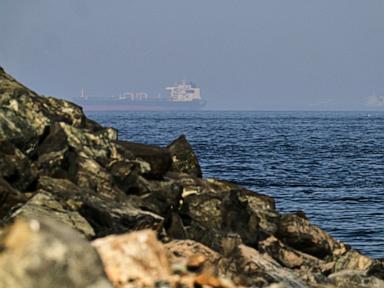
The steel hull of a merchant vessel hums with a vibration that gets inside your teeth. For the twenty-two men aboard the Iranian-flagged oil tanker, that hum had been the only constant soundtrack for three weeks of tense navigation. Salt spray crusted on the windows of the bridge. The air smelled of sulfur, diesel, and the heavy, sweet scent of crude oil.
Then, the rhythm broke.
The sound of a helicopter rotor blade cutting through the heavy air is distinct. It starts as a distant thrum, a heartbeat in the sky, before expanding into a deafening roar that rattles the loose bolts on the deck. From the bridge, the crew watched a gray silhouette hover over their bow. Below it, on the water, rigid-hull inflatable boats sliced through the choppy waves, flying the unmistakable markings of the United States military.
This was not an accident. It was a calculated collision of geopolitics and horsepower in the middle of a shifting maritime blockade.
The Invisible Lines on the Water
To the uninitiated, the ocean looks like a blank canvas of freedom. Maps show blue space. But to a naval commander or a merchant captain, the sea is choked with invisible fences. Blockades are not always physical walls of steel; today, they are legal and digital webs spun by satellite tracking, financial sanctions, and international mandates.
When an Iranian-flagged tanker moves through these waters, it carries more than just fuel. It carries a political lightning rod.
The mechanics of a modern maritime intercept are precise, cold, and incredibly tense. Imagine driving down a dark highway and seeing the blue lights of a state trooper appear in your rearview mirror. Now imagine that highway is a lawless stretch of international water, and the trooper is an amphibious assault ship bristling with guided missiles.
The U.S. military personnel boarding the tanker were operating under the strict protocols of Visit, Board, Search, and Seizure (VBSS). These teams are trained for extreme variables. They do not know if they will encounter cooperative sailors offering them tea, or a hostile crew wired to a detonator.
As the boots hit the deck, the immediate reality of global conflict shrinks to a space the size of a companionway. It becomes about the tone of a translator's voice, the compliance of a captain handing over a manifest, and the palpable sweat of men who realize they are pawns in a match being played by leaders thousands of miles away.
Why a Single Tanker Matters to Your Wallet
It is easy to dismiss an incident in a distant strait as a localized skirmish. It feels remote. It belongs in a briefing room in Washington or Tehran, not at a kitchen table.
That is an illusion.
The global economy rides on a convoy of ships just like this one. The maritime supply chain is a fragile, interconnected nervous system. When a nerve gets pinched in the Middle East, the pain travels instantly to gas stations in Ohio, manufacturing plants in Germany, and grocery stores in Japan.
Consider how the energy market reacts to friction:
- The Premium of Risk: Insurance companies watch these standoffs with calculators in hand. The moment a boarding action occurs, the cost to insure every vessel transiting that corridor spikes.
- The Deviation Cost: If a route becomes too volatile, shipping companies choose the long way around. Bypassing a crucial strait means adding weeks to a journey, burning thousands of tons of extra fuel, and delaying the delivery of goods.
- The Psychological Speculation: Oil prices do not just react to supply; they react to fear. The mere suspicion of a tightening blockade causes traders to bid up prices in anticipation of a shortage that hasn't even happened yet.
When the U.S. military steps onto an Iranian deck, they are attempting to enforce an international order. But they are also pulling a string that vibrates through the entire global financial structure.
The Human Geometry of the Deck
Let us look past the official press releases that detail "suspected breaches" and "security operations." Let us look at the people on that ship.
There is a hypothetical young sailor we can call Amin. He is twenty-four, from a coastal town near Bandar Abbas. He took this job because his family needed the hard currency. He does not read the international sanctions list before he goes to sleep; he reads messages from his mother on a cracked smartphone screen when the ship gets close enough to shore to catch a roaming signal.
When the boarding team climbs the ladder, Amin is told to sit on the deck with his hands visible. His heart is hammering against his ribs. He sees men in body armor, night-vision goggles flipped up, speaking a sharp, clipped English he only recognizes from action movies.
On the other side of the interaction is a twenty-two-year-old Navy boarding officer from Nebraska. Let us call him Miller. Miller’s adrenaline is spiking just as fast as Amin’s. He has been trained to look for anomalies—hidden compartments, altered logbooks, weapons caches, or signs that the ship's automatic identification system (AIS) was intentionally spoofed to hide its location.
Miller does not hate Amin. Amin does not hate Miller. Yet, they are trapped in a high-stakes choreography dictated by capitals they have barely visited. If someone slips on a greasy deck, if a weapon discharges by accident, the spark could ignite a regional conflagration.
The tension of a blockade is maintained by these microscopic human interactions, repeated day after day, ship after ship, in the blinding heat of the outer gulfs.
The Game of Shadows and Transponders
How did both parties end up on this specific patch of ocean? The answer lies in a high-tech game of hide-and-seek played across the electromagnetic spectrum.
Modern commercial shipping relies on transparency. Every major vessel is required to broadcast its position, speed, and destination via an AIS transponder. It is the digital fingerprint of the sea. But when a nation faces a blockade or heavy sanctions, those transponders have a habit of going dark.
Ships become ghosts.
They slip into the shadows of the shipping lanes, changing their names, painting over their hulls, and conducting illicit ship-to-ship transfers of oil under the cover of night. It is a massive, multi-billion-dollar shell game. The U.S. military and its allies counter this with a constellation of reconnaissance assets:
- Radar imaging satellites that can pierce through cloud cover and darkness to track the physical shape of a hull.
- Long-endurance maritime patrol aircraft that monitor radio frequencies and visual anomalies from high altitude.
- Unmanned surface drones that linger in crucial chokepoints for weeks, quietly logging the acoustic signatures of passing vessels.
The Iranian-flagged tanker was caught because the web grew too tight. The digital trail crossed with physical observation, and the decision was made to move from passive tracking to active intervention.
The Ripple in the Water
The boarding operation eventually ends. The paperwork is inspected, the cargo is verified, the radio transmissions fade back into static, and the U.S. naval teams return to their craft, leaving the tanker to idle in the swells.
But nothing goes back to exactly how it was before.
The report moves up the chain of command, transforming from an active operational event into a line item in a diplomatic dossier. In response, insurance premiums adjust by fractions of a percent. A refinery on the other side of the world looks at its projected deliveries and decides to source its next million barrels from a safer, more expensive latitude. A family in a port city waits an extra week for a container that was delayed by the shifting patterns of the fleet.
We prefer our conflicts to have clear beginnings and definitive endings. We want a whistle to blow, a treaty to be signed, a victory to be declared.
But the reality of modern geopolitical conflict is a permanent state of friction. It is a slow, grinding war of attrition fought in the gray zones of international law, where the weapons are financial restrictions, satellite images, and the heavy boots of young men stepping onto a foreign deck in the middle of a lonely sea. The hum of the tanker continues, carrying its heavy cargo toward an uncertain coast, while the horizon fills with the silhouettes of the ships that are watching its every move.