The Peace-War Binary is a Fairytale for Bureaucrats
Most pundits are obsessed with the "Gray Zone." They treat this middle ground between peace and war like a fresh discovery, a mystical fog where cyber-attacks, disinformation, and economic sabotage live. The competitor’s argument suggests we are in a state where "everyone is a winner and a loser."
That is a comforting lie.
It suggests a stalemate where nobody has to take responsibility for losing. In reality, there is no such thing as a "Gray Zone." There is only aggressive competition and the failure to recognize it. Calling it "neither peace nor war" is a convenient excuse for leaders who are too timid to win and too scared to fight.
I’ve sat in rooms where executives and policy advisors hand-wring over "attribution" while their intellectual property is being siphoned out in real-time. They call it a "complex landscape." I call it a heist. If you are losing ground, you are in a war, whether you’ve signed a declaration or not.
The Winner Takes Everything
The idea that everyone is a "loser" in modern conflict ignores the brutal reality of resource accumulation. When a nation-state uses commercial front companies to monopolize rare earth minerals or dominates the undersea cable infrastructure, they aren't "drawing" in a gray zone. They are winning a structural victory that will last for decades.
The "everybody loses" narrative is a cope. It’s used by the entities currently being disrupted because they cannot adapt to a world where the front line is a server room in Virginia or a lithium mine in Africa.
The Cost of Indecision
- Asset Stripping: While you debate ethics, your competitors are acquiring your future dependencies.
- Narrative Control: If you aren't defining the truth, you are subsidizing someone else's lie.
- Infrastructure Capture: Control of the pipes matters more than control of the water.
Stop Asking if This is Legal and Start Asking if it is Effective
People often ask: "How do we regulate behavior in the Gray Zone?"
This is the wrong question. It’s like asking for a referee in a street fight. Regulation only works when both parties value the status quo. Our current adversaries do not. They view your adherence to "norms" as a structural vulnerability.
Imagine a scenario where a global logistics firm is hit by ransomware that looks like it came from a rogue criminal group, but the decryption key is only offered in exchange for a specific political concession. Is that a crime? An act of war? A business negotiation?
The labels don't matter. The result does. If you spend three months debating the legal framework of the attack, you have already surrendered.
The Myth of Symmetric Response
The biggest mistake is the belief that a cyber-attack requires a cyber-response, or an economic tariff requires a counter-tariff. This is linear thinking. It’s predictable. And being predictable is the fastest way to become a casualty.
True dominance in this "non-war" era requires asymmetric brutality. If someone targets your electoral integrity, you don't just secure your servers; you target their energy grid’s financing. You don't play the game they started. You end the game they rely on.
I have seen companies spend millions on "robust" cybersecurity frameworks that do nothing because they ignore the human element—the disgruntled employee or the compromised supply chain. They build a wall when the enemy is already in the kitchen.
The High Price of "Stability"
We are told that maintaining stability is the ultimate goal. This is a fallacy. Stability is just another word for the preservation of the existing power structure. If you are an insurgent or a rising power, stability is your enemy.
The current global order is obsessed with "de-escalation." But de-escalation is often just a slow-motion surrender. When you de-escalate against an aggressor who hasn't achieved their goal, you are merely giving them time to reload.
Why Your Strategy is Failing
- You Value Process Over Outcomes: You’d rather follow a failing protocol than take a winning risk.
- You Fear Friction: You think a quiet day is a good day. It’s usually just a day where the enemy is working in silence.
- You Overestimate Logic: You assume your opponent wants the same things you do. They don't.
The Technology Trap
We’ve outsourced our strategic thinking to algorithms and "data-driven" models. We think that if we have enough sensors, enough AI, and enough "visibility," we are safe.
Technology is a force multiplier, but it cannot multiply zero. If your strategy is nonexistent, no amount of sophisticated software will save you. In fact, over-reliance on tech creates a single point of failure. A well-placed bribe or a physical cut to a fiber optic line can render a billion-dollar defense system useless in seconds.
Own the Chaos or Be Owned by It
The "Gray Zone" isn't a place you visit; it’s the reality you inhabit. There is no "back to normal." The friction is the point.
The winners of the next decade won't be the ones who managed to stay "peaceful." They will be the ones who realized that the distinction between a market, a battlefield, and a browser tab has evaporated entirely.
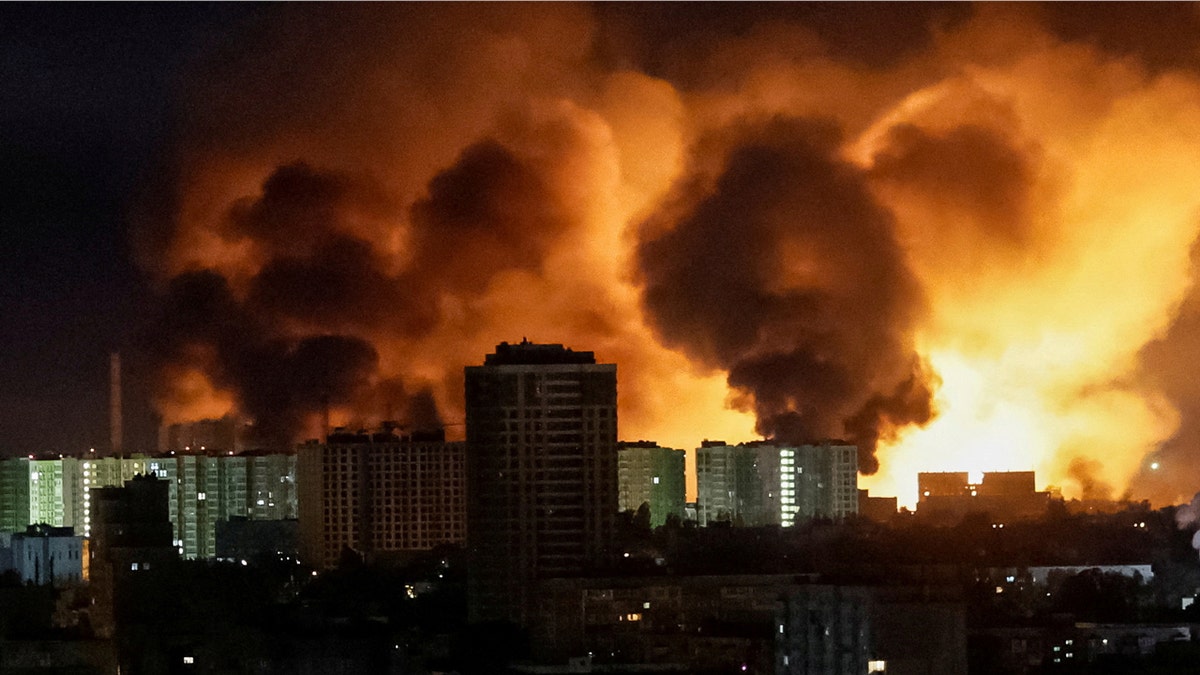
If you're waiting for the smoke to clear to see who won, you've already lost. The smoke is the permanent environment. Learn to breathe it.
Stop looking for the exit. There is no peace treaty for a war that refuses to acknowledge itself.
Move first. Move harder. Stop apologizing for surviving.