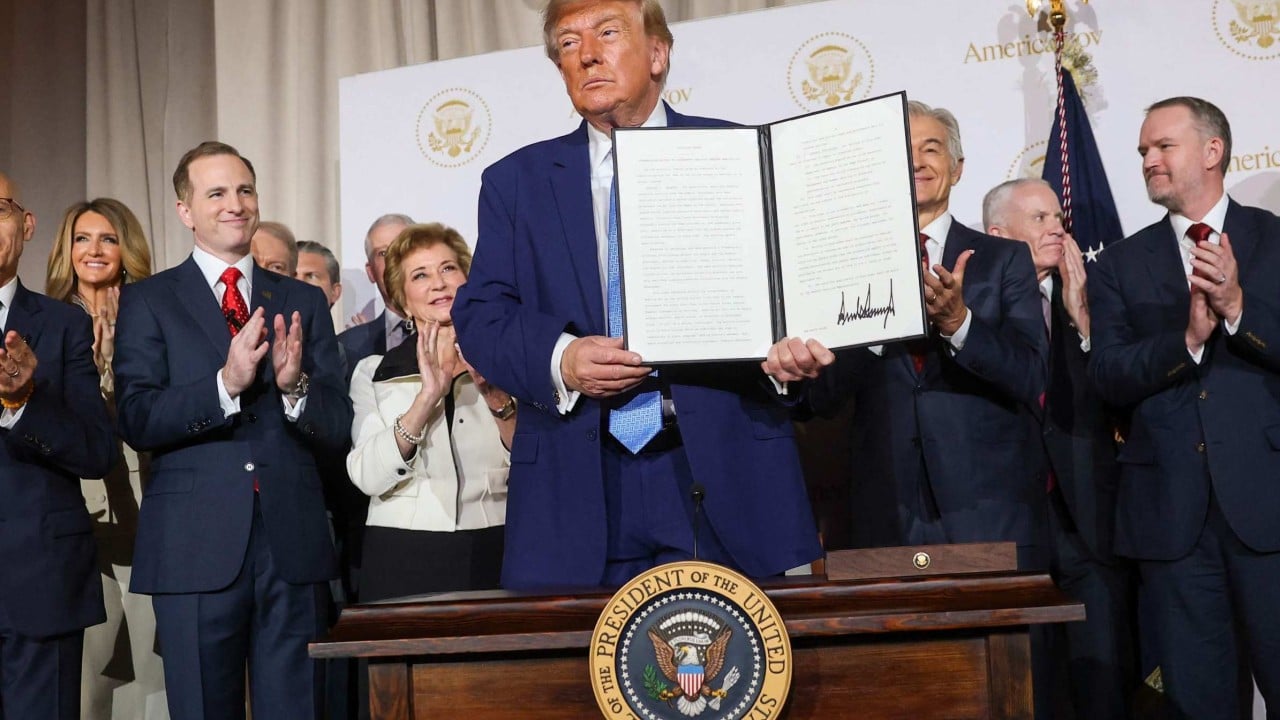
President Donald Trump has formally rejected calls for bilateral cooperation with China on artificial intelligence safety, drawing a hard line despite recent diplomatic engagement with Chinese President Xi Jinping. Speaking after a high-stakes leadership summit, Trump dismissed the prospect of a joint venture or shared safety frameworks, arguing that any convergence with Beijing would compromise American technological dominance.
The decision exposes a profound philosophical split between the world's two superpowers. While Washington views artificial intelligence strictly as a high-stakes geopolitical race with a single winner, Beijing has increasingly framed safety protocols and human control as shared responsibilities. This friction raises immediate questions about how global algorithmic governance will function when the primary architects refuse to sit at the same table.
The White House stance is rooted in a zero-sum calculation. According to administration officials, maintaining a commanding lead in advanced computing power means keeping proprietary methods under lock and key. Trump made his position explicit when addressing reporters, stating that integration with rival states serves no strategic purpose when American firms already hold a substantial advantage. Instead of formal treaties or joint oversight bodies, the administration has doubled down on domestic self-policing, introducing frameworks like the White House Accord on Super Intelligence to guide corporate audits without foreign entanglements.
Yet this refusal to coordinate creates a dangerous regulatory vacuum. Artificial intelligence models do not respect national borders. A catastrophic algorithmic failure, a rogue autonomous system, or an uncontained cyber weapon deployed via machine learning will not check passports before crossing international lines. By framing safety exclusively as a competitive weapon, both capitals risk ignoring systemic vulnerabilities that affect global infrastructure.
Industry analysts point out that the divergence goes beyond mere political posturing. Beijing’s messaging, championed by Xi Jinping during diplomatic exchanges, emphasizes keeping advanced models strictly under human supervision. Conversely, American commercial momentum is heavily driven by commercial acceleration, where venture capital and defense contractors alike prioritize speed to market. When Washington labels international safety proposals as attempts to slow down American progress, it conflates technical restrictions with precautionary guardrails.
The consequences of this impasse are already visible in global supply chains and semiconductor restrictions. Even as diplomatic channels open for baseline communication regarding sudden software incidents, high-end hardware remains heavily restricted. The ongoing dispute over advanced chips ensures that the hardware powering these intelligence systems remains a frontline battleground.
Refusing to cooperate does not eliminate shared risks. It merely guarantees that when those risks materialize, the response will be fragmented, reactive, and dangerously uncoordinated.


