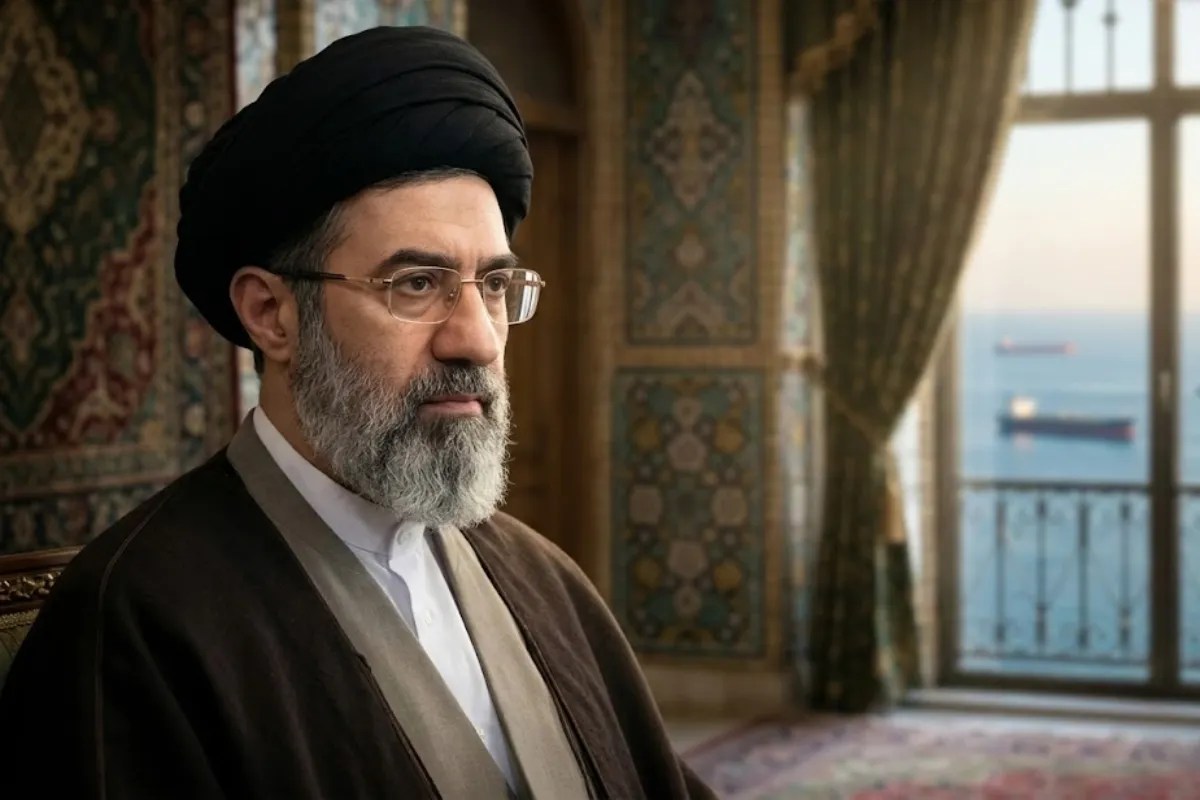
Geopolitics is a theater of the absurd where the loudest voices usually have the weakest hands. The headlines are currently screaming about Iran’s "new" Supreme Leader and his supposed vow to bury Americans in the depths of the sea. It sounds terrifying. It makes for great clickbait. It is also a fundamental misunderstanding of how power operates in the Middle East.
If you believe the hype, we are on the precipice of a global conflagration. If you understand the mechanics of authoritarian survival, you realize this isn't a declaration of war. It’s a marketing campaign for a domestic audience that is losing faith in the brand.
The Myth of the Mad Mullah
Mainstream media loves the narrative of the "irrational actor." They paint the Iranian leadership as religious zealots who would gladly invite nuclear annihilation if it meant hitting a US destroyer. This is lazy analysis.
The Iranian regime is, above all else, a survivor. They have navigated decades of sanctions, internal unrest, and regional isolation. You don't last forty years by picking fights you know you will lose. When a leader talks about "the depths of the sea," they aren't describing a tactical plan. They are practicing Strategic Ambiguity.
By projecting an image of reckless defiance, they force the West to calculate the "cost of chaos." It’s a leverage play. They want the Trump administration—or any administration—to view the price of regime change as prohibitively expensive. The more unhinged the rhetoric, the more they hope to keep the B-52s on the tarmac.
Why the Sea is the Wrong Metric
The competitor's piece focuses on the "depths of the sea" threat. This is a classic distraction. Iran’s real power isn't in its ability to sink a carrier strike group in a fair fight. It’s in its ability to turn off the global economy’s light switch.
- The Strait of Hormuz Trap: Roughly 20% of the world’s petroleum liquids pass through this narrow chokepoint.
- Asymmetric Reality: Iran doesn't need a blue-water navy. They need 500-dollar drones and sea mines that cost less than a used Honda.
- The Insurance Factor: The moment a single missile is fired, maritime insurance rates for tankers skyblock. Global oil prices hit $150. The resulting inflation does more damage to a US President’s reelection chances than a dozen sunken patrol boats.
When the Supreme Leader talks about the sea, he isn't talking about naval combat. He is talking about economic leverage. He is telling the world: "If we go down, the global economy goes down with us."
The Domestic Desperation Factor
I have watched analysts fall for the same trap for twenty years. They analyze these statements as if they are meant for the Pentagon. They aren't. They are meant for the streets of Tehran and Mashhad.
The Iranian Rial is in a tailspin. Young Iranians are more interested in VPNs and global culture than revolutionary slogans. The regime is facing a crisis of legitimacy.
In this context, aggressive rhetoric is a tool for Internal Cohesion.
- Projecting Strength: It signals to the hardline base that the new leadership hasn't "gone soft."
- Defining the Enemy: By framing the struggle as a cosmic battle against the "Great Satan," they attempt to delegitimize domestic dissent as foreign-funded treachery.
- The Rally Effect: External threats are the best way to quiet internal complaints about bread prices and electricity shortages.
Trump and the Art of the Counter-Bluff
The irony is that the Iranian leadership and the Trump camp actually understand each other perfectly. Both utilize hyperbole as a primary negotiating tool.
The media treats these exchanges as a prelude to World War III. In reality, it’s a high-stakes auction. Trump’s "Maximum Pressure" 2.0 isn't about starting a war; it’s about forcing a better deal by demonstrating a willingness to walk away. Iran’s "Sea of Fire" rhetoric is the counter-offer.
Both sides are essentially shouting at each other through a megaphone to see who flinches first.
The Cost of Being Wrong
The danger isn't intentional war. The danger is a Communication Breakdown.
When you base your entire foreign policy on bluster, you leave no room for off-ramps. If the US misinterprets a rhetorical flourish as a genuine mobilization, or if Iran miscalculates a US "freedom of navigation" exercise as an invasion, the resulting kinetic exchange is accidental.
I've seen regional tensions spike and fade a dozen times. Each time, the "experts" claim this is the big one. They ignore the underlying data: neither side can afford the bill for a total war. The US is $34 trillion in debt and weary of "forever wars." Iran is a tinderbox of social unrest.
The Actionable Truth
Stop reading the headlines and start looking at the shipping lanes.
If the threats were real, you would see a massive shift in global insurance premiums and a flight to safety in gold and oil futures that lasts longer than a single trading session. The markets aren't panicking because the markets know this is a script.
If you are an investor or a policy observer, the move is to ignore the "Supreme Leader’s" adjective-heavy threats. Look instead at the Proxy Infrastructure.
- Is Hezbollah moving hardware?
- Are the Houthis receiving new guidance systems?
- Are Iranian tankers "going dark" in the Persian Gulf?
These are the metrics of intent. A speech about the "depths of the ocean" is just vibrating air. It’s meant to scare the uninformed and satisfy the extremists.
The real power moves happen in silence. The loudest person in the room is usually the one with the most to lose and the least amount of ammunition. Iran is shouting because it’s the only way it can still feel relevant on the global stage.
Stop treating every theatrical outburst like a mobilization order. The regime isn't looking for a grave in the sea; it’s looking for a way to stay in the palace for another decade. Fear is their only remaining export. Don’t buy it.