The spine of the book didn’t just crack; it surrendered. I was sitting in a drafty corner of a used bookstore in Gloucester, the kind of place where the air tastes like damp paper and old salt, staring at a copy of Moby-Dick that looked like it had been through a shipwreck of its own. Most people see Herman Melville’s masterpiece as a literary Everest—a massive, frigid peak that everyone respects but nobody actually wants to climb. We know the highlights. The obsessive captain. The metaphorical whale. The endless, grueling chapters on the chemical composition of spermaceti oil that make modern readers want to hurl the volume into the nearest body of water.
For over 150 years, we treated this book like a monument. Static. Untouchable. A sacred text of American gloom. But something strange is happening in the quiet corners of the publishing world and the loud, chaotic spaces of digital fan culture. The whale is being dismantled, put back together, and remixed into something that breathes.
We are witnessing the "literary remix" era, where the old gods of the canon are being dragged into the light of the 21st century not to be mocked, but to be understood in a way Melville’s original audience never could. It isn’t just a trend. It’s a rescue mission.
The Weight of the Unread
Consider the hypothetical case of Sarah, a high school English teacher who has spent twenty years watching her students' eyes glaze over at the mention of "The Whiteness of the Whale." She knows the book is a miracle of prose, a howling cry against the silence of God. But to her students, it’s just a heavy brick of 19th-century vocabulary that feels entirely disconnected from their lives.
The problem isn't the story. The problem is the shell.
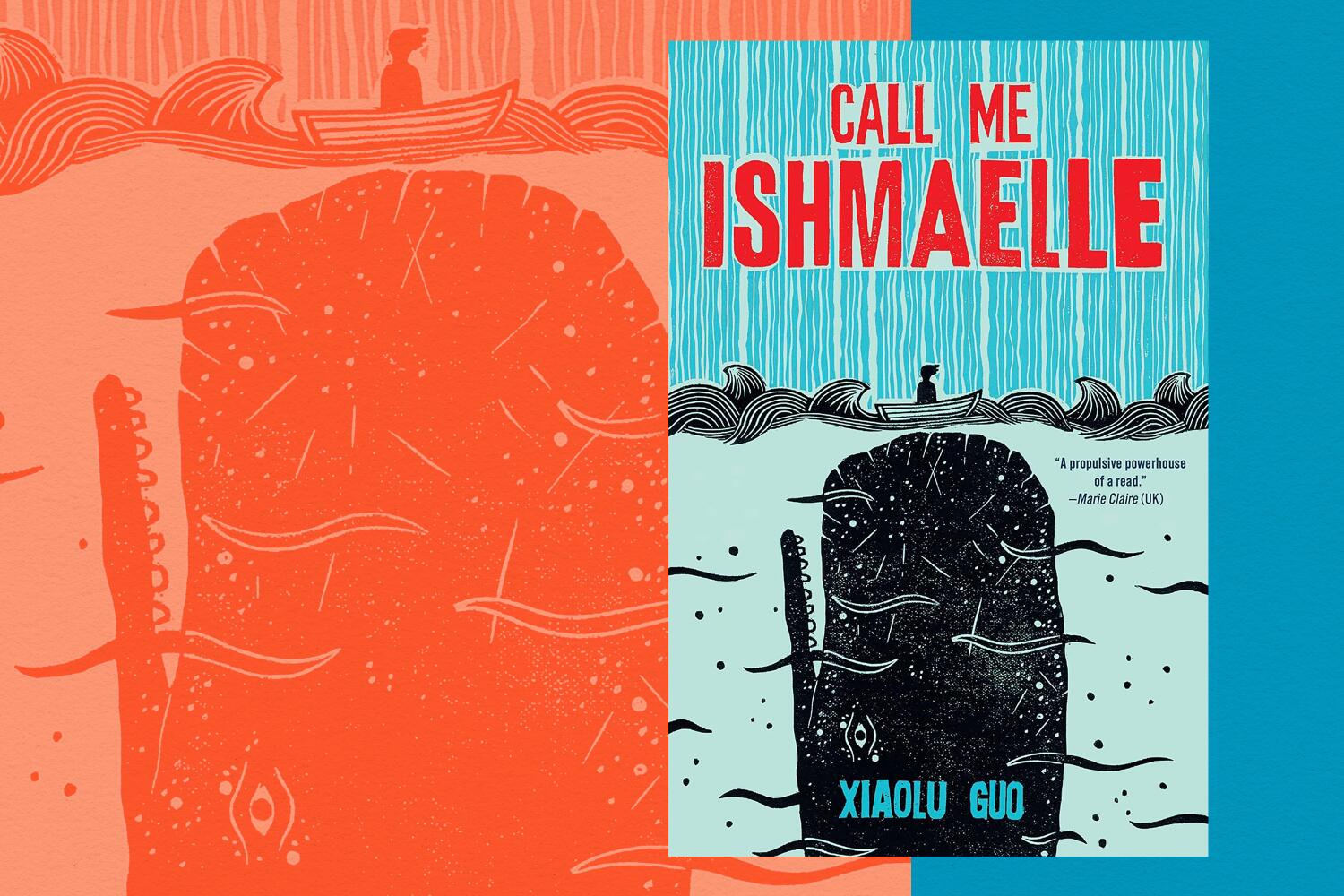
When a classic becomes "The Greatest Novel Ever Written," it often ceases to be a book and becomes a chore. It gathers dust on the "Important" shelf. But the new wave of remixes—ranging from Matt Kish’s Moby-Dick in Pictures to the queer-coded reinterpretations and even the absurd brilliance of "Moby-Dick; or, The Whale" translated entirely into emoji—is breaking that shell.
These creators aren't just summarizing the plot. They are performing a kind of literary alchemy. They are taking the core obsession—the human need to find meaning in a chaotic, uncaring universe—and translating it into the dialects of today. It’s a recognition that while the technology of storytelling changes, the ache at the center of the story remains identical.
The Invisible Stakes of a Remix
Why does it matter if we rewrite the classics? Some purists argue that altering the text is a form of vandalism. They see the remix as a watering down of intellectual rigor. But they miss the invisible stakes: if a story stops being told in a way that people can hear, the story dies.
Melville himself was a remixer. He didn't invent the maritime disaster; he pulled from the real-life sinking of the Essex and the legends of Mocha Dick, a real albino whale that terrorized sailors. He took raw data and spun it into myth. When modern artists do the same to his work, they are actually honoring his process. They are treating Moby-Dick not as a museum exhibit behind glass, but as a living organism.
Take, for instance, the recent surge in "re-centring" narratives. In the original, the crew of the Pequod is a multi-ethnic microcosm of the world, yet they are often secondary to Ahab’s singular madness. New iterations are shifting the lens. They are asking: What did the cabin boy, Pip, see when he was left bobbing in the lonely heart of the ocean? What were the unspoken bonds between Queequeg and Ishmael that Melville could only hint at through the social veils of 1851?
These aren't just creative exercises. They are corrections. They allow us to see the "human element" that was always there, hidden beneath the technical manuals on harpoon sharpening.
The Emotional Core of the Hunt
The real reason Moby-Dick is currently having a "moment" in the remix culture is that we are living in an era of Ahabs. We live in a world of algorithmic obsessions, where people disappear down digital rabbit holes in pursuit of their own personal Great White Whales. Whether it's a political conspiracy, a financial obsession, or a social media vendetta, the psychological blueprint of the monomaniac is more relevant now than it was in the days of sail.
The remix trend works because it highlights this resonance. It strips away the intimidating 19th-century sentence structures—those winding, labyrinthine thoughts that can span a whole page—and leaves us with the raw, vibrating nerves of the characters.
I remember talking to a digital artist who spent a year "illustrating" every single page of the book. He told me that by the time he got to the middle, he realized he wasn't drawing a whale anymore. He was drawing his own anxiety. He was drawing the feeling of being small in a world that is impossibly large.
That is the power of the remix. It gives the reader permission to find themselves in the text. It turns a "classic" into a mirror.
The Mechanics of the Modern Myth
When we look at the facts of the trend, the numbers support the shift. Sales of "reimagined" classics are outpacing standard reprints in several key demographics. This isn't because people are getting lazier; it's because they are hungrier for depth. We are overstimulated and under-nourished by "content." A remix of Moby-Dick offers the weight of history combined with the accessibility of the present.
- Visual Storytelling: Graphic novel adaptations use the "show, don't tell" rule to bridge the gap for visual learners, turning Melville’s dense descriptions into haunting imagery.
- Gender and Identity: New prose versions explore the fluidity of the characters, reflecting modern understandings of identity that were suppressed in the 1800s.
- Audio and Sensory: Immersive podcasts and "soundscapes" of the novel allow the listener to feel the creak of the timber and the roar of the gale, bypassing the analytical brain and hitting the emotional one.
It's a mistake to think these versions replace the original. Instead, they act as a gateway. A reader might start with a sleek, neon-drenched retelling of the story and find themselves so haunted by the themes that they eventually pick up the "dry" original. The remix is the handshake that introduces two strangers.
The Salt in the Wound
There is a specific kind of loneliness in Melville’s writing. It’s the loneliness of the person who knows too much and can’t find anyone to listen. Ishmael begins the book by telling us he goes to sea when he finds himself "grim about the mouth" and when it is a "damp, drizzly November" in his soul.
We all have those Novembers.
The remix trend acknowledges that the "damp, drizzly November" of 2026 looks a bit different than it did in 1851, but it feels exactly the same. By shifting the setting, the language, or the perspective, these new creators are proving that Melville’s ghost still has a voice.
It is easy to be cynical about "trends." It’s easy to say that we are losing our grip on the foundations of literature. But the truth is much more hopeful. We are finally learning how to talk back to our books. We are moving from a culture of passive consumption to one of active participation.
Ahab didn't want to understand the whale; he wanted to kill it. He wanted to conquer the mystery. The remixers are doing the opposite. They are diving into the mystery, swimming alongside the leviathan, and reporting back in a language we can finally understand.
The old copy of the book I found in Gloucester didn’t stay on my shelf. I gave it to a friend who had only ever seen the movie. Along with it, I sent him a link to a modern, glitch-art interpretation of the final chase.
He texted me three days later.
"I get it now," he wrote. "The whale isn't a fish. It's the thing that stays when everything else is gone."
That realization didn't come from a lecture or a textbook. It came from the friction between an old story and a new mind. As long as we keep breaking the classics apart and stitching them back together, the Great White Ghost will never truly stay beneath the waves. It will keep surfacing, breaching the water, demanding to be seen by eyes that are finally, truly open.
The sea hasn't changed. The salt is still there. We’ve just found a better way to sail.