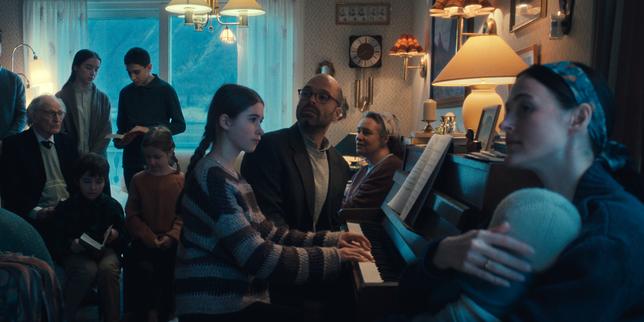
The upcoming live-action Spider-Noir series represents a deliberate financial and creative gamble to solve Hollywood’s superhero fatigue by stripping away the standard modern comic book tropes. Instead of relying on multiversal spectacles and high-tech suits, this joint venture between Sony Pictures Television and Amazon MGM Studios pulls the character back to 1930s New York, modeling the narrative after classic hardboiled fiction. By trading standard blockbuster formulas for a gritty, black-and-white aesthetic inspired by classic noir cinema, the production intends to capture an older, disillusioned television audience that has checked out of mainstream superhero franchises.
The industry has shifted. Audiences are tired of interconnected universes that require hours of homework just to understand a single movie.
The Commercial Risk of Counter Programming
Hollywood does not fund expensive television shows out of artistic curiosity. The decision to greenlight a series centered on an alternate-universe variant of Spider-Man—played by Nicolas Cage—comes at a moment when traditional superhero media is experiencing severe diminishing returns.
For years, studios operated under the assumption that bigger VFX budgets and wider cinematic universes guaranteed higher profits. The reality of the current television market has shattered that illusion. Viewers are overwhelmed by the sheer volume of content, much of which looks identical due to standardized digital production pipelines.
By leaning heavily into a specific historical period, the creators of the new series are attempting a distinct industry maneuver known as counter-programming. They are betting that a superhero show stripped of its typical colorful, family-friendly trappings can succeed by appealing directly to fans of premium crime dramas. It is a strategy designed to capture the demographics that watch prestige television on Sunday nights rather than the crowd that lines up for Thursday night theater previews.
Mining the Archive of Pre-War Cinema
The creative foundation of this project relies heavily on the cinematic language of the 1940s. Directors and writers are moving away from the bright, saturated palettes of modern Marvel adaptations and instead adopting the heavy shadows, low-key lighting, and cynical worldviews of directors like John Huston and Howard Hawks.
This is not just a cosmetic choice. The shift in visual style alters how a story operates. When a protagonist exists in a world defined by deep shadows and constant rain, their morality changes. The characters in traditional comic book media often operate with absolute moral clarity, distinguishing easily between right and wrong. Noir rejects that simplicity, presenting a world where everyone is compromised, including the hero.
Why the Detective Archetype Beats the Modern Superhero
The classic superhero is an aspirational figure. They possess immense power, high-tech gadgets, and a clear mission to protect the innocent. The hardboiled detective is the exact opposite. They are usually broke, beat up, and working out of a dusty office with a failing radiator.
This older archetype resonates differently with audiences. A hero who can fly and shoot lasers feels distant during periods of real-world economic uncertainty and cultural cynicism. A detective who has to worry about paying rent, dealing with corrupt police officers, and navigating a broken political system feels grounded, even if that detective happens to have spider-like abilities.
Superhero Formula vs. Hardboiled Noir Formula
| Element | Standard Superhero Media | Hardboiled Noir Media |
| :--- | :--- | :--- |
| *Motivation* | Saving the world / Cosmic balance | Solving a specific, local case / Survival |
| *Environment* | Futuristic cities / Cosmic landscapes | Rain-slicked streets / Corrupt urban centers |
| *Morality* | Binary good vs. evil | Gray areas / Universal compromise |
| *Resolution* | Definitive victory | Cynical closure / The system remains broken |
The narrative tension in this new adaptation does not stem from whether the main character can stop an alien invasion. It comes from whether he can maintain his personal integrity in a city that is fundamentally corrupt. That is a much tighter, more sustainable dramatic engine for episodic television.
The Problem of the Intellectual Property Trap
There is a inherent contradiction at the heart of this project that the studio executives are desperate to manage. The show wants to be a serious, atmospheric crime drama, but it is still legally obligated to function as a piece of corporate intellectual property.
This tension creates a difficult balancing act for the writers. If they lean too far into the superhero tropes, they alienate the mature audience they are actively trying to court. If they lean too far into the historical crime fiction, they risk confusing the core comic book fans who expect a certain level of superpowered action.
The industry is watching this experiment closely. If the series succeeds, it will likely trigger a wave of historical, genre-bending comic book adaptations as studios realize they can reuse existing characters in radically different formats. If it fails, it will be viewed as a costly reminder that audiences might not want their superhero stories mixed with vintage prestige drama.
The Reality of Streaming Economics
The production cannot rely solely on the novelty of its premise. Streaming platforms are currently undergoing a massive correction, moving away from the era of unchecked spending toward a model focused strictly on retention and subscriber acquisition cost.
Amazon needs hits that justify the high cost of their Prime Video infrastructure. A project like this is expensive because recreating 1930s New York requires extensive set construction, period-accurate costuming, and specialized post-production work to achieve the proper film-grain look. The budget demands high viewership numbers from day one.
The inclusion of an established lead actor is a deliberate safety mechanism against these financial pressures. A recognizable star provides immediate marketing leverage in international markets where the specific comic book variant might be unknown. It turns the project from an obscure niche adaptation into a major star vehicle.
Overcoming the Gimmick Factor
The greatest threat to the longevity of the series is the risk of becoming a one-note joke. A superhero talking like a character from a radio play can be entertaining for an hour, but it can easily become tedious over an eight-episode season.
To survive, the narrative must move past the initial novelty of its setting. The writers have to establish genuine stakes that matter to the audience. This requires moving away from simple pastiche and pastiche humor, focusing instead on the actual historical realities of the era, such as the economic devastation of the Great Depression and the rising political tensions of the pre-war period.
By grounding the fictional comic book elements within genuine historical anxieties, the production team can create a story that feels heavy and significant. The focus shifts from the absurdity of a costumed vigilante in the 1930s to a serious examination of institutional corruption during one of the most turbulent decades in American history.
The Shift in Consumer Expectations
The audience that grew up during the initial boom of cinematic universes has aged. The teenagers who watched the early foundations of modern superhero cinema are now adults in their late twenties and thirties, and their media consumption habits have evolved accordingly.
They no longer find the standard tropes satisfying. They want stories that reflect the complexity of adult life, featuring characters who make mistakes and face actual consequences. The traditional studio model has been slow to adapt to this aging demographic, choosing instead to keep making content aimed at the broadest possible global audience.
This project is an explicit acknowledgment that the audience has changed. It is an attempt to retain viewers who are on the verge of walking away from the genre entirely by offering them something that treats their intelligence with respect. The success of this approach depends entirely on the execution, specifically whether the studio allows the creative team to fully commit to the dark, uncompromising nature of the genre or if they force standard corporate mandates into the final cut.
The era of the frictionless, mass-market superhero movie is winding down, forced aside by an audience demanding distinct creative identities. Studios can no longer rely on a familiar logo to guarantee financial success. They have to build something specific, moody, and targeted at an audience that prefers a glass of whiskey and a dark room to a blast of CGI explosions on an IMAX screen.