Cold. That is the first thing you notice when you step off a late-night flight from Delhi into Toronto in late November, even before your boots hit the tarmac. A dry, sharp chill that makes your ears ache and your breath plume like steam from a kettle.
For a long time, the diplomatic air between Ottawa and New Delhi felt much the same way. Stiff. Guarded. Heavy with unspoken grievances and stalled ambitions. When a relationship between two countries fractures—even quietly, behind closed doors and diplomatic cables—the damage does not stay inside foreign ministries. It leaks into ordinary lives. It sits in the throat of a father trying to wire money home for a sister's surgery. It hums inside the quiet worry of a small-business owner in Mississauga watching freight rates spike while trade talks drag on.
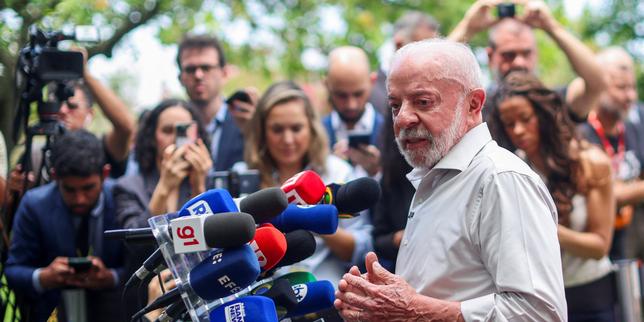
Then, slowly, the temperature began to shift. When Canadian Foreign Minister Anita Anand spoke of the "enormous potential" between Canada and India amidst global uncertainty, she was not reading from a dusty press release written in a vacuum. She was naming something real that has been clawing its way back to the surface through a year of intense diplomatic repair, trade missions, and pragmatic statecraft.
To understand why this moment carries weight—and why it could still slip through their fingers—we have to look past the communiqués and trace the human threads connecting two countries separated by oceans, time zones, and a history that has swung from warm familiarity to bitter frost and back toward cautious thaw.
The Weight of a Broken Thread
Let's start with a hypothetical scenario to make the stakes tangible. Picture two people who have never met, yet whose livelihoods depend on the same invisible current.
In Brampton, Ontario, Harpreet runs a mid-sized logistics and food-distribution firm. Half his warehouse racks hold Canadian pulses and yellow peas—crops grown on vast prairie fields under big, open skies. Down in Nagpur, in central India, Rajesh manages a dal-processing mill that turns legumes into staples for millions of households. Both men know the rhythm of harvests, weather swings, and shipping containers. When diplomatic friction slows visas, complicates commercial clearances, or leaves steep tariffs sitting on agricultural goods, neither man gets a headline about "geopolitical recalibration." Harpreet just sees containers sitting longer at port and margins shrinking; Rajesh sees input costs jump and has to explain to his buyers why prices shifted overnight.
Now scale that tension up. Over the past few years, the relationship between Canada and India hit severe turbulence, including a deep diplomatic rift over allegations surrounding the killing of Hardeep Singh Nijjar, which strained trust to a near breaking point. When trust breaks between governments, everything else becomes harder. Consular lines tighten. Business delegations hesitate. Even everyday travel feels heavier when every border stamp carries a subtext of suspicion.
You do not fix that kind of strain overnight with a single handshake. Repairing diplomatic trust is like mending a wool sweater that has snagged on a nail; pull too fast, and the thread frays further. Since Mark Carney became Canadian Prime Minister and Anita Anand stepped into the role of Foreign Minister—alongside sustained engagement with Indian External Affairs Minister S. Jaishankar and Trade Minister Maninder Sidhu—both sides have been working through a deliberate reset. They have held repeated ministerial meetings, launched a joint roadmap, signed terms of reference for a Comprehensive Economic Partnership Agreement (CEPA), and pushed toward a year-end target that could help double bilateral trade toward $70 billion.
Still. Momentum on paper is not the same as relief on the ground.
I have spent enough time watching policy promises collide with real-world friction to know how easily good intentions stall in customs queues and committee rooms. A speech about "enormous potential" sounds inspiring in a conference hall. In a factory floor in Pune or a grain terminal in Saskatchewan, people want to know whether rules are predictable enough to hire another worker or sign a three-year contract.
Why Global Uncertainty Changes the Math
Why now? Why are leaders in Ottawa and New Delhi leaning so hard into commercial and strategic engagement when global politics feel so unsettled?
Think of the global economy right now like a ship sailing through choppy, unpredictable waters where old trade routes are being rerouted, tariffs are being weaponized, and supply chains that once looked permanent suddenly look fragile. When a single market or a single supply corridor becomes too risky or too expensive, countries look for partners whose strengths fill their gaps rather than duplicate their weaknesses.
This is a metaphor, of course—nations are not ships, and trade deals are not lifeboats—but it captures the urgency driving both capitals. Canada has vast natural resources, energy, agricultural output, critical minerals, and stable financial institutions. India brings massive market scale, rapid digital and technological growth, deep talent pools, and rising demand for food, energy, and industrial inputs.
Look at the numbers beneath the headlines. Canadian affiliates have employed tens of thousands of workers in India, while Indian affiliates employ tens of thousands in Canada. Services trade—led heavily by education-related travel alongside tech, research, and professional exchanges—runs into the tens of billions of dollars annually. And the conversations now stretch from clean technology, artificial intelligence, and civil nuclear cooperation to fintech, payment modernization, and cross-border remittances.
Let's pause and ask a question every practical reader asks when hearing about big bilateral resets: Does diplomatic warmth actually lower costs or create jobs, or is it just talk until a formal treaty is signed?
The honest answer is both. Trade agreements like CEPA take real negotiation because sensitive sectors—agriculture, industrial market access, tariffs on pulses and peas—do not surrender protection easily. Yet even before a final deal is inked, parallel cooperation on aviation links, innovation partnerships, business missions, and regulatory dialogue can lower friction. When ministers travel with hundreds of business leaders, when provincial premiers and Indian state leaders meet directly in cities like Mumbai, Bengaluru, and New Delhi, commercial confidence begins to test the water again.
The Invisible Stakes Behind Every Negotiation
People often treat foreign policy as a chess match played by diplomats in tailored suits. That view misses almost everything that matters.
Every tariff rate, every visa rule, every energy or critical-minerals arrangement has a human shadow attached to it. Consider another hypothetical character: Meera, a software engineer in Bengaluru working on cloud infrastructure for a North American client, whose brother is studying engineering in Waterloo. For Meera, stable ties between India and Canada aren't an abstract line in a foreign policy brief. They shape whether cross-border tech collaboration expands, whether international student pathways stay clear and fair, and whether families on both sides of the globe can move between homes without feeling caught in political crossfire.
There is also a harder truth we should not gloss over. Trust cannot be built by pretending disagreements never existed. Security concerns, differing domestic political pressures, and competing commercial interests—from agricultural levies to energy competition—remain real. If either side treats renewal as a reason to sweep tough issues under the rug, the next storm will knock the partnership right back off balance.
Admitting that is not cynicism. It is realism. The strongest partnerships are rarely the ones without friction; they are the ones with enough maturity and institutional channel-building to argue through friction without blowing up the bridge.
From Promise to Permanence
Suppose the negotiations succeed. Suppose CEPA moves forward, aviation connections expand, clean energy and critical mineral projects find solid financing, and high-level visits—including upcoming leadership engagements—turn diplomatic goodwill into durable commitments.
What changes then?
Not overnight miracles. Not instant perfection. Just a steady, compounding shift from suspicion to predictability. Farmers in western Canada get clearer market access. Manufacturers and tech firms in India and Canada build deeper supply links. Researchers, students, and entrepreneurs spend less time navigating barriers and more time building things that last.
Potential is a strange word in politics. It can sound like an excuse for what hasn't happened yet. Yet when two massive, complex democracies with deep human ties choose cooperation over drift in a fractured world, potential stops being a polite phrase. It becomes a choice.
Picture a winter morning in Toronto or a humid evening in New Delhi a few years from now: a cargo vessel unloading goods without months of delay, a young researcher walking into a joint lab with a colleague from halfway around the world, two neighbors finally speaking plainly instead of shouting across a divide.