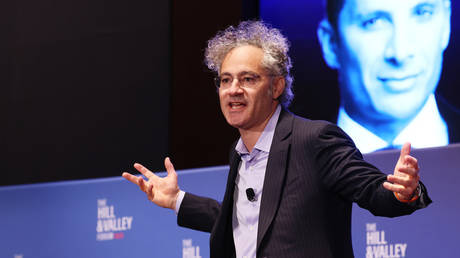
John Ternus is the next CEO of Apple because he is the only person left who understands that the company’s future is a physical problem, not a digital one. In April 2026, the board ended years of speculation by naming Ternus, the Senior Vice President of Hardware Engineering, as the successor to Tim Cook. This is not just a promotion; it is a tactical retreat to the company's core identity. After fifteen years of Cook’s operational mastery—a period defined by supply chain optimization and the relentless growth of the Services division—Apple is returning to the hands of a builder.
The transition, effective September 1, 2026, moves Cook to the role of Executive Chairman. It marks the conclusion of the most successful corporate handoff in history. But the appointment of Ternus over "safe" operational candidates or high-profile software leads signals a fundamental shift in how Apple intends to survive a decade that will be defined by the physical limits of silicon, the geometry of optics, and the brutal physics of power consumption.
The Mechanical Mind in a Software World
To understand why Ternus was the only choice, you have to look at his hands. Most tech executives today are architects of abstraction; they talk about ecosystems, platforms, and clouds. Ternus talks about screws, thermal conductivity, and the structural integrity of aluminum.
Joining Apple in 2001, Ternus was a mechanical engineer during the era when the company was still fighting for its life. He didn’t rise through the marketing ranks or the finance office. He climbed the ladder by solving the hardest physical problems the company faced. He was the engineer who figured out how to make the iPad thin enough to feel like a sheet of glass without snapping in a backpack. He was the one who oversaw the transition to Apple Silicon, a move that fundamentally broke the industry's reliance on Intel and redefined the Mac.
Apple Silicon wasn't just a win for the software team. It was a victory of hardware engineering. Ternus understood that if you control the physical properties of the chip, you control the destiny of the device. This "silicon-first" mindset is exactly why he is being handed the keys. In a world where AI performance is limited by heat and battery life, the person who understands the hardware is the person who holds the power.
Why Not the Safe Bet
For years, the betting money was on Jeff Williams, Apple’s Chief Operating Officer. Williams was "Tim Cook 2.0"—a supply chain wizard who could keep the trains running on time and the margins high. If Apple wanted to continue its trajectory as a high-end luxury goods and services company, Williams was the obvious play.
The board’s pivot to Ternus suggests they believe the "Cook Era" has reached its natural conclusion. You can only optimize a supply chain so much. You can only squeeze so many pennies out of an App Store commission before the regulators or the market push back.
Ternus represents a return to the Steve Jobs philosophy of vertical integration, but updated for 2026. Jobs was about the "soul" of the machine; Ternus is about the "engine." He isn't a showman or a philosopher. He is a pragmatic technical leader who has spent 25 years inside the most secretive R&D labs in the world. He knows where the bodies are buried, but more importantly, he knows where the breakthroughs are hidden.
The Successor Comparison
| Feature | Tim Cook | John Ternus |
|---|---|---|
| Background | Operations / Supply Chain | Mechanical Engineering |
| Core Philosophy | Efficiency & Scale | Performance & Integration |
| Signature Achievement | $3.6 Trillion Market Cap Growth | Apple Silicon Transition |
| Public Persona | Diplomatic / Measured | Technical / Accessible |
| Primary Challenge | Geopolitics & Logistics | AI Hardware & Innovation |
The AI Bottleneck
The most immediate challenge facing Ternus isn't the stock price—it’s the AI gap. While competitors like Google and Microsoft have spent the last few years shouting about large language models, Apple has been quietly building the hardware capable of running those models locally.
This is where the Ternus appointment becomes a masterstroke. The next phase of AI isn't going to happen in the cloud; it’s going to happen on the device. To do that, you need hardware that can handle massive compute loads without melting the device in your pocket.
Ternus has already laid the groundwork for this. The M4 chip and its successors are not just faster processors; they are specialized AI engines. By promoting the head of hardware, Apple is betting that the winner of the AI war won't be the company with the best chatbot, but the company with the best "AI phone."
The Problem of Personality
If there is a weakness in the Ternus play, it is the void of the "visionary." Steve Jobs was a prophet. Tim Cook was a diplomat. John Ternus is, by all accounts, a quiet, low-profile executive who prefers a lab to a stage.
In a market that rewards hype, Ternus is an anomaly. He doesn't post on social media. He doesn't give "thought leadership" speeches at Davos. He is a member of the old guard who still believes the product should speak for itself.
However, we have seen this script before. When Cook took over, the critics said he lacked the vision to lead a creative company. He responded by building the most valuable entity on Earth. Ternus doesn't need to be a visionary if he can lead a team of visionaries. His job isn't to invent the next big thing; it's to ensure that when the next big thing is invented, Apple has the physical infrastructure to build it better than anyone else.
The Ghost of Steve Jobs
Ternus is the first CEO since Jobs to have a deep, fundamental understanding of how the products are actually made. When Jobs wanted to know why a prototype wasn't working, he went to the lab and yelled at the engineers. When Ternus wants to know why a prototype isn't working, he likely already knows the answer because he’s looked at the CAD files.
This level of technical literacy at the top changes the culture of a company. It moves the needle away from "financial engineering" and back toward "real engineering." For the thousands of engineers at Apple Park, having one of their own in the big chair is a massive morale boost. It signals that at Apple, the product is once again the priority.
The risks are real. Ternus must navigate a fractured geopolitical landscape, aggressive antitrust scrutiny, and a maturing smartphone market. He has to prove that he can handle the "soft" side of being a CEO—the politics, the press, and the shareholders. But by choosing a builder over a bookkeeper, Apple has signaled that it is ready to stop playing defense and start building the future again.
The era of optimization is over. The era of the engineer has begun.