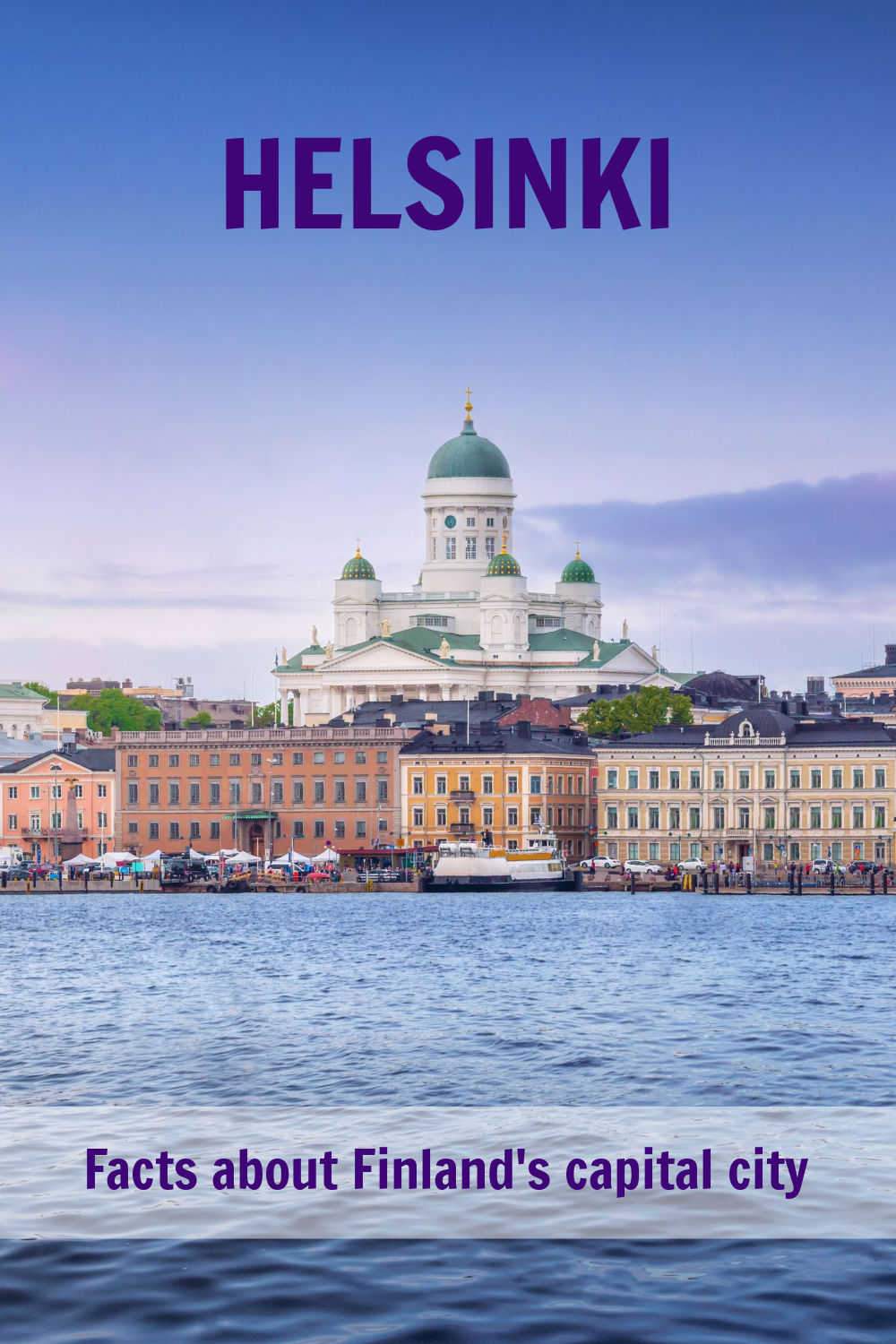
The air in Helsinki during late spring carries a specific, sharp clarity. It is the kind of cold that forces you to breathe deeply, reminding you exactly where you stand on the geographic map—perched on the edge of a European continent that feels increasingly fragile. Inside the presidential palace, away from the Baltic breeze, two men sat across from each other. Alexander Stubb, the President of Finland, and Subrahmanyam Jaishankar, the External Affairs Minister of India.
On paper, the meeting was a standard diplomatic ledger entry. They spoke of bilateral ties, trade routes, and regional security. The official press releases used the predictable, sanitized vocabulary of international relations, calling India an "influential actor."
But diplomacy is rarely about the words typed out by press secretaries. It is about the unwritten shifts in gravity.
To understand why a meeting between a Nordic nation of five and a half million people and a South Asian behemoth of 1.4 billion matters, you have to look past the mahogany tables. You have to look at the map through the eyes of a Finnish border guard looking east, or an Indian shipping strategist looking at the changing trade lanes of the global north. The world we knew, governed by predictable alliances and Western-centric pivots, is fracturing. In its place, a quieter, far more complex architecture is being assembled.
The View from the Edge
Imagine standing on the eastern border of Finland. For decades, this line represented a delicate, highly calculated neutrality. It was a quiet frontier. Today, it is the frontline of a fundamentally altered European security reality. When Finland joined NATO, it wasn't just changing its military posture; it was acknowledging that the old safety guarantees had evaporated.
For a country like Finland, existence requires flawless geopolitical radar. You cannot afford to misread the room.
When President Stubb looks out at the global horizon, he sees a European continent deeply entangled in its own immediate security crises, and an American superpower stretched across multiple theaters of tension. The old ways of securing peace through regional consensus are failing. To find stability, Europe is having to look far beyond its traditional neighborhood.
Enter New Delhi.
India does not view the world through the black-and-white lens of traditional power blocs. For decades, Western commentators often misunderstood this stance, labeling it as fence-sitting or passive neutrality. They were wrong. It was never passive. It was a deliberate, calculated strategy of multi-alignment—a refusal to let foreign capitals dictate India’s national interest.
Now, that exact strategy has turned India into the global swing vote.
When Jaishankar arrived in Helsinki, he brought with him the weight of a nation that speaks to Moscow, negotiates with Washington, manages a volatile relationship with Beijing, and champions the global South. He represents a country that cannot be ignored, bypassed, or forced into a corner. For Finland, engaging with India is no longer an exercise in exotic trade diplomacy. It is a necessity for navigating a fragmented world.
The Friction of Distance
Consider the sheer physical and cultural distance between these two nations. One is a highly digitized, homogeneous, Arctic-adjacent welfare state known for its silence and societal trust. The other is a roaring, multilingual, tropical subcontinent navigating the messy, chaotic waters of rapid economic ascension.
Historically, their interactions were polite but peripheral. They traded paper pulp, telecommunications equipment, and information technology services. Useful, but hardly foundational to either nation's survival.
But distance shrinks when the ground beneath everyone’s feet begins to shake.
The conflict in Ukraine sent shockwaves far beyond the borders of Eastern Europe. It disrupted global food supplies, sent energy markets into a tailspin, and forced a massive re-evaluation of supply chain dependencies. Suddenly, a decision made in a European capital could impact the price of fertilizer for a farmer in Punjab. Conversely, India’s decisions on energy procurement reverberated through the financial corridors of Brussels and London.
During their discussions, Stubb and Jaishankar weren't just exchanging pleasantries about historical ties; they were dealing with the hard, friction-filled realities of a world where everything is connected, yet everything is broken.
The Finnish presidency’s characterization of India as an "influential actor" is a telling choice of words. In the coded language of diplomacy, "influential" means you possess the power to alter the trajectory of events. It means your absence from the table renders any global solution incomplete. Finland recognizes that whether the issue is climate transition technology, Arctic maritime routes, or the resolution of continental conflicts, India’s signature is required.
The Art of the Uncomfortable Conversation
True diplomatic expertise does not lie in agreeing on everything. It lies in the ability to manage profound disagreements without collapsing the relationship.
Europe and India do not see eye-to-eye on every global flashpoint. To pretend otherwise is to indulge in naive optimism. Western nations have frequently expressed frustration with India’s independent foreign policy choices, particularly its stance on strategic autonomy and its historic defense relationships.
But the tone in Helsinki was different. It lacked the sanctimonious lecturing that characterized Western approaches to the global South in previous decades.
Instead, there was an unspoken admission of reality. Finland, fresh into its NATO membership, understands the raw reality of hard power. India, sitting in a rough neighborhood surrounded by nuclear-armed rivals, has lived that reality for seven decades. There is a mutual, pragmatic respect between two nations that understand what it means to live next to massive, unpredictable neighbors.
This shared understanding shifts the conversation. It moves from "Why aren't you voting with us at the UN?" to "How do we ensure that the global maritime lanes remain open and stable?"
The tangible outcomes of these talks manifest in ways that affect real lives. When Finland and India discuss talent mobility and migration partnerships, it isn't just about visas. It is about a aging Nordic society desperately needing world-class engineering talent to sustain its innovation economy, and a young, dynamic Indian workforce looking for global avenues to deploy their skills. When they discuss green transitions, it is about combining Finnish expertise in clean-tech and bio-economy with India’s massive scale of industrial implementation.
This is where the abstract concept of diplomacy touches the earth. It is found in the life of a young software engineer from Bengaluru moving to Espoo, or a Finnish environmental engineer deploying water purification technology in Rajasthan.
The Quiet Room
We live in an era dominated by loud, performative politics. Leaders tweet, red lines are drawn in permanent marker only to be washed away by the next news cycle, and international summits often feel like expensive backdrops for domestic public relations.
The meeting in Helsinki was the antithesis of that noise.
It was a return to the quiet room. It was an acknowledgment that the world cannot be run by dictates from any single hemisphere. The global South is no longer a theater where major powers play out their rivalries; it is an active author of the new international rules-based order.
As Jaishankar and Stubb concluded their talks, there were no grand treaties signed, no dramatic announcements that would dominate prime-time television. But that misses the point entirely. The significance of the moment is found in the very fact that the meeting happened with such deliberate, respectful gravity.
The old world order is gone, and the new one is not yet fully formed. It is being built piece by piece, handshake by handshake, in cities like Helsinki, by leaders who understand that survival in the coming decades requires listening to voices very different from their own.
The Baltic water outside the palace remained still, reflecting a cold, gray sky. Inside, two leaders from opposite ends of the earth had just finished redrawning the invisible lines of connection that keep a fractured world from falling apart entirely.