Chemistry has an asymmetry problem. For centuries, scientists looked at molecules the way a child looks at hands, noticing that a left hand and a right hand share every structural component yet refuse to overlap. In the laboratory, creating molecules with this built-in handedness, known as chirality, was long a game of clumsy chance. You mixed your reagents, you ran your reactions, and you wound up with a fifty-fifty split of left-handed and right-handed compounds. Separating them required the patience of a watchmaker and the budget of a munitions plant.
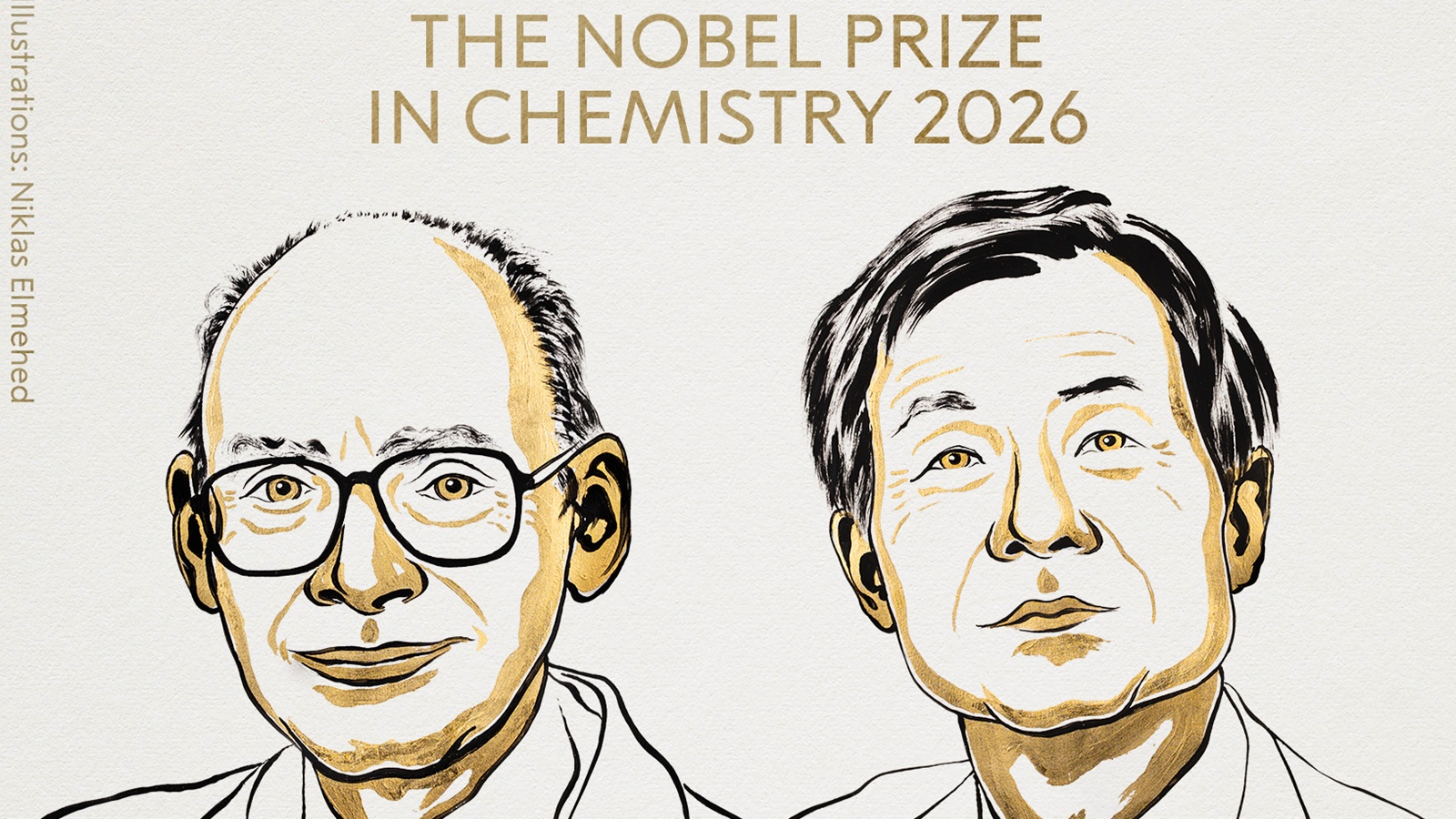
That stalemate ended when Henri Kagan and Kenso Soai unlocked the foundational mechanisms of asymmetric synthesis. Their work on the Nobel Prize-winning chemistry of molecular handedness transformed an academic curiosity into an industrial necessity. Modern pharmaceuticals, agrochemicals, and materials science depend entirely on the principles these researchers established. Yet the path to solving nature s mirror image mystery was paved with decades of counter-intuitive physical organic chemistry that baffled contemporaries.
To understand why this breakthrough matters, you have to look at how life actually builds things. Biology is fundamentally homochiral. Your DNA twists in one direction. The amino acids that build your proteins are exclusively left-handed. If you synthesized a drug in a generic laboratory flask without controlling for chirality, you would likely manufacture a racemic mixture—a fifty-fifty blend of the desired therapeutic molecule and its structural twin.
Historically, that twin was treated as harmless inert filler. Sometimes, it was active poison. The tragedy of thalidomide in the mid-twentieth century forced the chemical industry to confront this brutal reality. One mirror-image form of the drug relieved morning sickness, while the other triggered severe birth defects. Nature does not care about statistical averages. Biological receptors are shaped like specialized locks, and a right-handed key will rarely fit into a left-handed tumbler. Achieving absolute control over which version of a molecule comes out of a reaction vessel became the holy grail of chemical synthesis.
Enter Henri Kagan. Working in France during the 1970s, Kagan realized that you did not need to brute-force your way through separations if you could guide the reaction from its inception. His answer was asymmetric catalysis. By introducing a chiral catalyst—a molecule that is inherently handed—into a reaction mixture, he could orchestrate how bonds formed.
Imagine trying to thread a needle in a pitch-black room versus having a guide gently tilt your hands into the exact orientation required for the thread to pass through the eye. The chiral catalyst acts as that guide. It lowers the energy barrier for one specific pathway while blocking the other. Kagan pioneered the use of chiral diphosphine ligands complexed with transition metals like rhodium. This specific architectural approach allowed a tiny amount of catalyst to direct the formation of vast quantities of a single enantiomer.
Suddenly, chemical synthesis had direction. It was no longer a roll of the dice. Pharmaceutical companies could reliably manufacture specific single-isomer drugs, cutting waste and drastically reducing side effects caused by unwanted molecular twins. But Kagan's catalytic framework, revolutionary as it was, still relied on introducing handedness from the outside. It required a chiral catalyst to make a chiral product.
Kenso Soai asked a deeper, more unsettling question. Where did the original handedness come from?
If biological systems are exclusively homochiral, and chemical reactions naturally tend toward racemic mixtures, how did life break symmetry in the first place? In the 1990s, Soai provided an experimental demonstration that stunned the chemical community. He discovered a phenomenon known as asymmetric autocatalysis.
In Soai's reaction, the product of the reaction acts as the catalyst for its own formation. More importantly, an extraordinarily tiny initial excess of one enantiomer—even an imbalance so slight it could be attributed to statistical fluctuation or chiral impurities in the environment—is amplified exponentially. The reaction feeds on itself, converting an almost perfectly racemic starting material into a pure single-handed product with staggering efficiency.
To use a macroscopic analogy, imagine rolling a ball down a ridge on the top of a mountain. A microscopic breeze or a single pebble can tip the ball to the left or the right. Once it starts rolling down that slope, gravity takes over, amplifying that microscopic initial bias until the ball is miles away from the center line. Soai proved that chemical systems could spontaneously amplify asymmetry, offering a plausible model for how prebiotic chemistry on early Earth might have selected a single handedness for the building blocks of life.
The implications of this work stretch far beyond academic journals. When a major pharmaceutical company synthesizes an antiviral agent or a complex oncology treatment today, the lineage of that manufacturing process traces directly back to the catalyst design principles laid down by Kagan and the amplification kinetics discovered by Soai.
Yet, translating these bench-scale discoveries into industrial realities was far from seamless. Early chiral catalysts were prohibitively expensive, requiring rare transition metals and multi-step syntheses just to make the catalyst itself. Chemical engineers had to figure out how to recover and reuse these delicate molecules across hundreds of production cycles without losing their stereoselectivity.
Furthermore, scale-up chemistry introduces thermal and mass-transfer gradients that can disrupt delicate catalytic cycles. A reaction that looks pristine in a 100-milliliter round-bottom flask in Paris or Tokyo can behave entirely differently in a 5,000-gallon stainless steel reactor in New Jersey. Solving these engineering hurdles required a marriage of kinetic modeling and process chemistry that took decades to mature.
Even today, challenges remain in asymmetric synthesis. Certain molecular architectures—particularly quaternary stereocenters surrounded by bulky, steric groups—continue to resist high-yield catalytic control. Chemists are constantly forced to invent new ligand skeletons, pushing the boundaries of organocatalysis and photoredox chemistry to forge bonds that nature never intended to make easily.
The recognition of Kagan and Soai by the Nobel Committee is a belated acknowledgment of a quiet revolution. While public imagination is easily captured by artificial intelligence or quantum computing, the foundational machinery of our material world is molecular. Every time a patient swallows a modern medication that targets a specific receptor without causing off-target toxicity, they are benefiting from the war against molecular ambiguity that these two scientists waged.
Nature hides its secrets in plain sight, often built out of identical atoms arranged in stubborn, unyielding geometries. By learning how to talk to molecules in their own language of left and right, chemistry stopped guessing and started designing. The mirror no longer reflects a random choice. It reflects human intent.