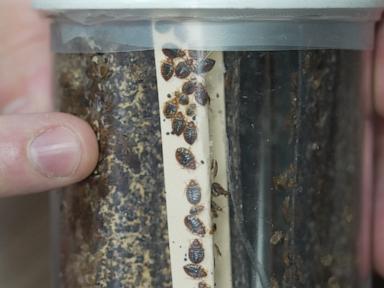
Bedbugs do more than interrupt sleep and extract blood. They drain bank accounts, wreck mental health, and expose the quiet failure of modern pest control economics.
For decades, the public conversation surrounding Cimex lectularius has remained stuck in a loop of simplistic advice. Wash your sheets. Buy a mattress encasement. Call an exterminator. This standard playbook fails because it treats a systemic urban crisis like an isolated housekeeping mishap. The reality is far more complex, driven by shifts in global travel, insecticide resistance, and an unregulated service industry that often profits more from prolonged infestations than permanent eradication. If you enjoyed this piece, you should read: this related article.
To understand why outbreaks persist in major metropolitan areas despite advanced chemistry, you have to look past the bite marks and examine the structural cracks where these insects thrive.
The Economics of Incomplete Eradication
Pest control is a multi-billion-dollar market. That financial reality creates a perverse incentive structure for certain operators. Total eradication in a single visit is rare, expensive, and technically difficult. Spraying cheap pyrethroid chemicals takes minutes, costs little, and guarantees that the technician will be called back in three weeks when the surviving eggs hatch. For another angle on this event, refer to the recent coverage from Psychology Today.
Property managers and landlords frequently shop for the lowest bid. When a landlord hires the cheapest pest control company available, they get what they pay for. Technicians rush through units, skip vital baseboard injections, and fail to coordinate treatments across adjoining apartments.
Bedbugs do not respect lease agreements. A single treated room in a multi-family building is an exercise in futility. If Apartment 4B gets treated while Apartment 4C ignores the problem, the insects simply migrate through electrical conduits and wall voids. They cross the threshold within days.
This creates a revolving door of reinfestation. Tenants bear the physical and psychological toll, while property owners treat pest control as an annoying line item rather than an existential structural threat.
The Chemistry Failure
Resistance is no longer an emerging threat. It is the baseline reality of urban entomology.
Common over-the-counter sprays and professional-grade synthetic pyrethroids fail to kill modern strains of bedbugs. Decades of chemical pressure have selected for genetic mutations. Many populations possess thickened cuticles that block toxins or internal enzymes that neutralize them before they reach the nervous system.
When an unsuspecting homeowner buys a fogger from a hardware store and sets it off in a living room, two things happen. First, the chemical aerosol settles on open surfaces where bugs rarely walk, leaving the harborage sites deep inside box springs untouched. Second, the sublethal dose of pesticide disperses the infestation. The bugs scatter into neighboring rooms, expanding the footprint of the problem.
Effective control requires extreme heat treatment or targeted applications of alternative chemistry, such as neonicotinoids or pyrrole insecticides combined with insect growth regulators. These methods demand precision equipment and specialized training. They also cost significantly more than a quick spray down, pricing out lower-income tenants and forcing them to live with chronic infestations.
The Psychological Toll and Social Stigma
Physical blood loss is minor. The psychological destruction is profound.
Victims of chronic infestations experience hypervigilance, severe anxiety, and clinical depression. Sleep deprivation alters cognitive function, leading to performance issues at work and strained interpersonal relationships. People begin to isolate themselves. They stop inviting guests over. They throw out valuable furniture in despair, accumulating debt to replace items that could have been saved or treated.
The social stigma surrounding bedbugs exacerbates the isolation. Unlike mosquitoes or ticks, which are viewed as outdoor nuisances, bedbugs carry an unearned reputation for poor hygiene. People assume that finding a bedbug in an apartment means the resident is dirty.
This assumption is entirely false. Bedbugs feed on blood, not filth. They thrive in five-star hotels just as easily as they do in dilapidated rooming houses. They care about carbon dioxide, body heat, and proximity to a host. By shaming victims, society forces the problem underground. Tenants hide infestations from landlords out of fear of retaliation, eviction, or social ostracization, giving the insects weeks or months to multiply unchecked.
The Travel Vector and the Globalized Marketplace
International mobility fuels the spread. As tourism rebounds to historic highs, commercial airplanes, trains, and hotels act as distribution hubs.
A single female bedbug hidden in the seams of a suitcase zipper can establish a colony within weeks of a traveler returning home. Used furniture markets, resale apps, and curbside scavenging further accelerate local transmission. When an antique sofa is left on the sidewalk with a free sign, it often carries a hidden cargo of dormant nymphs waiting for a warm body.
Traditional detection methods relied entirely on human eyes and physical bites. By the time a person notices a bite, the infestation is usually months old. The insects have established multiple harborages, moving from the mattress frame to electrical outlets, picture frames, and baseboards.
Canine detection teams have revolutionized early identification, but their services remain a luxury. Specialized scent detection dogs can pinpoint a single egg or nymph behind a wall before visual confirmation is possible. Until this technology becomes standard protocol for property inspections upon tenant turnover, buildings will remain reactive rather than proactive.
What Actually Works
Beating an infestation requires a coordinated, multi-disciplinary approach that ignores quick fixes and internet folklore.
Thermal remediation remains the gold standard for heavy infestations. Raising the ambient temperature of a residential space to 135 degrees Fahrenheit for several hours denatures the proteins in bedbugs and their eggs at every life stage. However, heat alone is not a silver bullet. Technicians must combine thermal treatments with targeted residual insecticides in wall voids to catch any bugs that manage to escape into cooler microclimates during the heating process.
For individuals dealing with early-stage issues, vacuuming with a HEPA-filtered machine, deploying high-temperature steam on mattress seams, and installing certified encasements offer a realistic path forward without toxic overexposure. Diatomaceous earth has a place, but only when applied as a microscopic dust rather than visible piles that insects simply walk around.
The architecture of modern living spaces—filled with crevices, modular furniture, and shared walls—favors the survival of Cimex lectularius. Defeating them requires abandoning the illusion that a single spray can solve a systemic biological challenge. It demands regulatory accountability for landlords, transparent reporting standards for multi-family housing, and a cultural shift that treats pest management as a public health necessity rather than an embarrassing private failure.