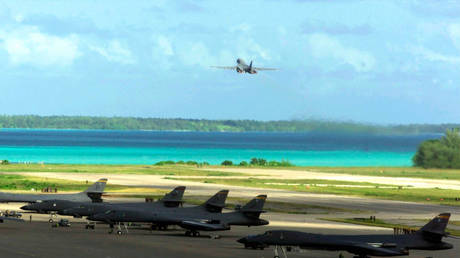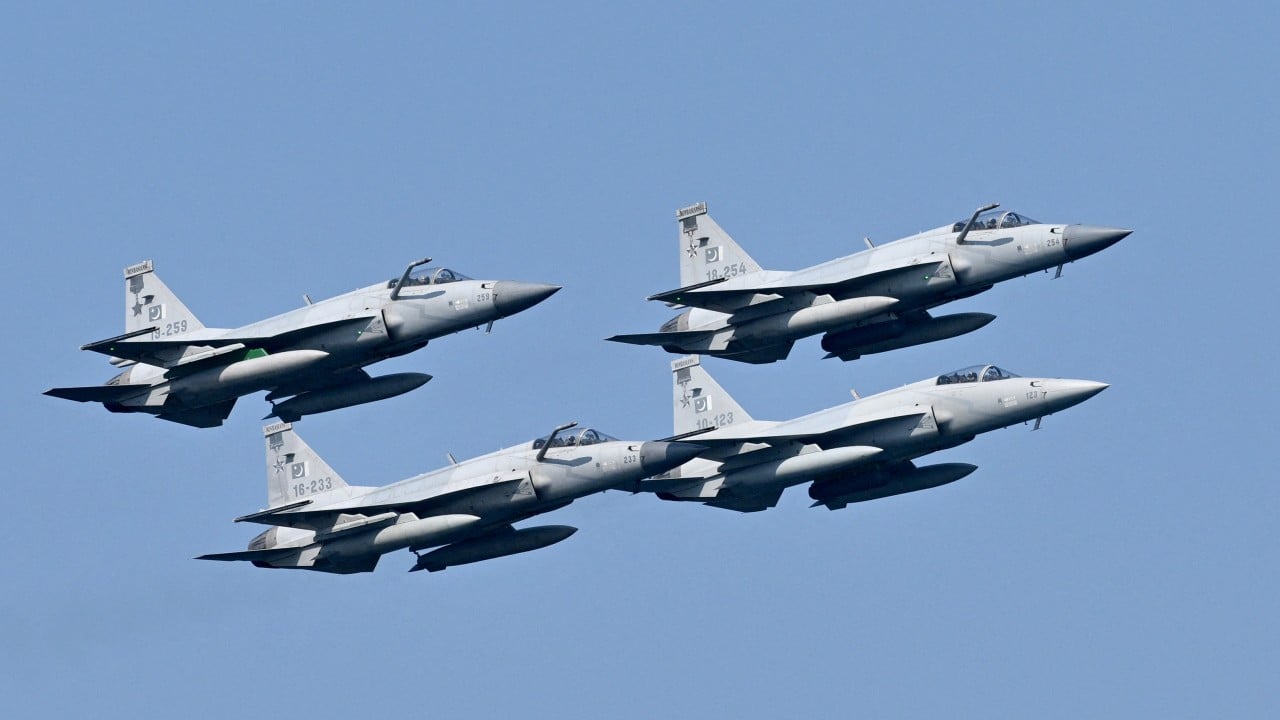
The arrival of Pakistani fighter jets and a 13,000-strong contingent at the King Abdulaziz Air Base in the Eastern Province is not merely a routine military drill. It is a calculated signaling act in a region teetering on the edge. This deployment, formalized under the Strategic Mutual Defense Agreement signed in 2025, places Islamabad at the center of the Gulf security architecture precisely as it attempts to act as a neutral broker for the United States and Iran.
For years, the relationship between Islamabad and Riyadh has been defined by financial lifelines and military training programs. The shift in 2026 is qualitative. By treating an attack on either nation as an aggression against both, the pact creates a legal and operational commitment that restricts Pakistan’s maneuverability. You might also find this similar coverage useful: Why the Chagos Islands deal just hit a massive wall.
The Mirage of Neutrality
Islamabad currently maintains an uncomfortable double life. One hand hosts high-stakes ceasefire negotiations between Washington and Tehran, while the other positions combat-ready assets in a sector frequently targeted by Iranian-backed drone and missile strikes.
This duality is not a sign of diplomatic brilliance but a response to existential economic pressure. Pakistan requires Saudi financial support to stabilize its currency and service its mounting debt. Riyadh, in turn, requires a credible, non-Western military partner capable of reinforcing its air defense grid without triggering the political fallout associated with direct American, Israeli, or British involvement. As discussed in recent reports by USA Today, the effects are notable.
If the Iran war escalates further, Islamabad will find itself unable to maintain this balancing act. Should an Iranian missile hit a target near the Pakistani deployment, the defense pact necessitates a response. The Pakistani military, a force deeply familiar with Saudi operational protocols, effectively becomes a tripwire.
The Regional Security Calculus
Why now? The answer lies in the limitations of the existing security umbrella. Gulf states have watched with mounting anxiety as US security commitments proved fluid in recent cycles of regional conflict. The reliance on Washington, once absolute, is being augmented.
The Pakistani military provides an experienced, battle-hardened force that understands the specific threat environment of the Eastern Province. These are not green recruits. They are pilots and engineers who have spent decades training alongside their Saudi counterparts. Their presence fills a gap in operational readiness that local forces have struggled to address alone.
Furthermore, this arrangement serves as an insurance policy for Riyadh against the prospect of internal instability. Pakistan’s historic role in protecting the Kingdom’s sovereignty—stretching back to the 1960s—is baked into the current security consensus. The presence of such a large contingent near key energy infrastructure is a message to Tehran: direct strikes on Saudi assets now carry the risk of a regionalized military confrontation involving one of the world's largest standing armies.
Beyond the Fighter Jets
The media focus on the fighter aircraft obscures the deeper, more significant integration of the two nations' defense apparatus. This is about command, control, and intelligence. Integrating Pakistani personnel into the Saudi air defense network provides a degree of redundancy that is essential for surviving a saturation-style drone or missile attack.
Consider the hypothetical scenario where regional air traffic control is overwhelmed during a conflict. Having a standardized, pre-vetted coalition force in the command centers allows for instantaneous decision-making that would be impossible with disparate, uncoordinated units.
However, this integration creates a vulnerability. By wedding its security to Saudi Arabia, Pakistan risks being dragged into a theater of war where its own national interests are tangential. Domestic opposition in Pakistan—historically wary of military entanglements in the Middle East—is already beginning to stir. The parliament, which has previously resisted requests for direct combat involvement in regional conflicts, will face intense pressure as the reality of the 2025 pact hits home.
The Economic Tether
Foreign policy in Islamabad is inseparable from the state of its treasury. The arrival of the Saudi Finance Minister in Islamabad, occurring simultaneously with the arrival of the military contingent, is not a coincidence. It is the visible transaction.
This financial dependency ensures that Islamabad cannot easily back away from its defense commitments, even if those commitments alienate other regional actors or complicate the ceasefire negotiations. When a state relies on another for its basic economic survival, its defense policy ceases to be a sovereign choice. It becomes a line item in a ledger.
The danger here is one of entrapment. If the ceasefire talks in Islamabad fail—a outcome that appears increasingly likely as the demands from Washington and Tehran remain diametrically opposed—the military presence becomes permanent. Pakistan will then be forced to define what "mutual defense" looks like in the face of a sustained, high-intensity conflict.
The trajectory is clear. As long as the fiscal crisis persists, the military presence will expand. The jets at King Abdulaziz are only the beginning. The cost of this security pact will eventually be measured not just in dollars, but in the potential for Pakistan to be fully absorbed into the volatile security dynamics of the Gulf.
The next phase of this escalation will not be measured in press releases or diplomatic handshakes. It will be measured by the first instance of a Pakistani pilot engaged in a defensive sortie against a regional adversary, effectively ending the charade of non-alignment.