Silence.
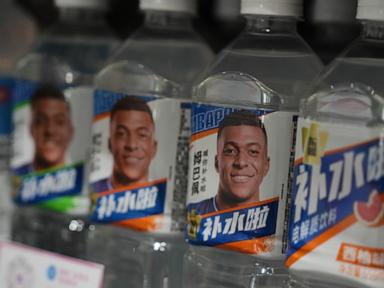
That is the sound of a hundred-million-dollar endorsement portfolio evaporating in the span of an afternoon, not with a dramatic explosion or a press conference, but with the quiet, surgical deletion of promotional banners across a digital storefront in Shanghai. For an alternative perspective, check out: this related article.
I remember the first time I watched a brand deal collapse in real time. Years ago, working alongside a sports marketing agency in London, I sat in a glass-walled conference room watching a client’s career unravel over a single, poorly phrased interview quote. We watched the phone lines go dead. We watched a brand manager in another time zone hit a single key on a keyboard, stripping our client’s face from a global campaign before the evening news had even aired. You learn very quickly in that room that modern fame is not built on stone; it is built on glass, and the temperature in the room can shatter it before you even realize you spoke too loudly.
Today, that glass is shattering for Kylian Mbappé. Related reporting regarding this has been published by CBS Sports.
When news broke that major Chinese brands were severing ties with the French football superstar following backlash over a joke involving Mao Zedong, the initial headlines read like standard corporate boilerplate. Sponsors pulled out. Social media erupted. Millions of dollars vanished. Dry, predictable, and entirely missing the point.
To understand what is actually happening here, you have to look past the press releases and step into the living rooms, boardrooms, and stadium tunnels where the collision of Western celebrity culture and Eastern consumer reality is violently reshaping the rules of global fame.
The Anatomy of a Misstep
Consider a hypothetical scenario to see how easily this trap snaps shut. Picture a twenty-something athlete—the fastest man on the pitch, accustomed to the locker-room banter of Paris or Madrid, where irony is currency and nothing is entirely sacred. Surrounded by cameras, microphones, and an entourage that laughs at every quip, he makes a throwaway remark. Maybe it is meant to be absurd. Maybe it is a clumsy attempt at humor during a casual stream or a candid interview, referencing Mao Zedong—a figure who, in the West, is often reduced to a pop-art silhouette or a historical punchline, yet remains a foundational, deeply sensitive symbol in China.
In Paris, the joke lands as edgy or mildly awkward, forgotten by the time the next match kicks off.
Six thousand miles away, in Beijing and Shenzhen, it does not land as a joke at all. It lands as an insult.
Within hours, screenshots are translated, stripped of whatever casual tone accompanied them, and uploaded to Weibo. The comment sections ignite. To understand the velocity of this outrage, think of a dry forest in August; the athlete’s comment wasn't a wildfire, it was just a single spark, but the undergrowth of national pride and historical sensitivity was already bone-dry.
Consumers do not just complain; they mobilize. They tag the sponsors. They demand accountability. And in the modern Chinese consumer market, brands do not have the luxury of waiting for the storm to pass.
The Invisible Ledger of Global Endorsements
Why do these brands move with such terrifying speed? Why is there no room for a quiet apology, a charitable donation, or a three-week cooling-off period?
To grasp the mechanics of this crisis, you have to understand the invisible ledger that governs modern sports marketing. For decades, the relationship between a superstar athlete and a corporate sponsor was simple: the brand bought the athlete’s face to sell shoes, watches, or soft drinks. If the athlete stumbled, the brand weighed the bad press against the sales figures. Usually, the sales figures won.
That math no longer works.
Today, when a major Chinese brand—whether a smartphone giant, an electric vehicle manufacturer, or an athletic apparel powerhouse—signs an athlete like Mbappé, they are not just buying his image. They are renting his alignment with their core values. In a market where domestic pride and national identity are tightly woven into consumer choices, partnering with a foreign icon carries an inherent, unspoken risk. The brand is effectively vouching for the athlete’s respect for their culture.
When that trust is broken, the brand faces an immediate, existential threat. If they hesitate to drop the athlete, the public fury turns on the company itself. Boycotts follow. Stock prices dip. Competitors swoop in to claim the moral high ground.
Let’s look at the actual stakes on the table. Top-tier footballers at Mbappé’s level command endorsement portfolios worth tens of millions of dollars annually, with the Asian market representing one of the largest, fastest-growing slices of that pie. A single major partnership in China can easily exceed five to ten million dollars per year, backed by massive promotional campaigns, billboards in tier-one cities, and exclusive product lines.
When the backlash over the Mao remark reached a boiling point, those contracts didn't just get paused. They were terminated. Marketing teams worked through the night to scrub his likeness from e-commerce platforms, pull down physical posters in flagship stores, and issue terse statements affirming their commitment to national dignity and cultural respect.
The Myth of the Untouchable Superstar
We like to believe that generational talent makes an athlete immune to the gravity that pulls down ordinary people. When you can score a hat-trick in a World Cup final, when your name is chanted by eighty thousand people every weekend, it is easy to start believing that the rules of the room bend around you.
I used to think that way, too, until I saw how fast the tide turns when the cultural current shifts. It is genuinely unsettling to watch. One day, a player is the undisputed king of global commerce, courted by luxury fashion houses and tech titans alike; the next, he is a radioactive liability that executives are paying millions of dollars just to erase from their hard drives.
This is not an isolated incident, nor is it unique to football. Over the past decade, we have watched luxury fashion brands lose billions in market value over tone-deaf advertisements, Hollywood actors vanish from theater screens over decades-old tweets, and NBA franchises lose entire broadcast markets over a single social media post.
Yet athletes remain uniquely vulnerable. Unlike actors, who operate behind scripts, publicists, and carefully edited press tours, modern athletes are expected to be constantly accessible. They stream on Twitch, post unedited clips on Instagram, and answer rapid-fire questions in mixed zones while still drenched in sweat and adrenaline. The very authenticity that makes them magnetic to fans is the exact thing that exposes them to catastrophic missteps.
When Two Worlds Collide
The deeper tragedy—and the part that gets lost in the shouting matches on social media—is the profound cultural blind spot that creates these collisions in the first place.
In Western media environments, historical figures are routinely flattened into memes, satire, and casual references. Young athletes grow up in an internet ecosystem where irony is the default language and context is optional. They are rarely trained in the complex, painful, or deeply revered histories of the markets that fund their lifestyles. Their agents negotiate the checks; their financial advisors invest the money; nobody sits them down to explain the historical weight of the symbols they might casually toss into a conversation.
Meanwhile, in China, history is not a distant, abstract backdrop for jokes. It is living memory, deeply tied to national identity, sovereignty, and collective pride. What a twenty-five-year-old in Paris views as an offhand, meaningless remark is received in Shanghai as a glaring display of arrogance and ignorance.
Neither side is entirely equipped to understand the other’s reaction in the heat of the moment. The Western fan looks at the cancelled contracts and sees an overreaction—a heavy-handed punishment for a harmless slip of the tongue. The Chinese consumer looks at the athlete’s silence or delayed response and sees a billionaire who happily takes their money while mocking their heritage.
Both perspectives are rooted in their own internal logic. And right in the middle of that chasm sits the athlete, suddenly realizing that global reach comes with global accountability.
The New Playbook for Survival
So, what happens now? Does an athlete’s global commercial appeal survive a rupture of this magnitude, or is the damage permanent?
History suggests that the road back is long, expensive, and entirely dependent on genuine humility rather than slick public relations. In the past, celebrities tried to weather these storms with carefully worded statements drafted by crisis-management firms—statements that usually began with the hollow, infuriating phrase, "I’m sorry if anyone was offended."
That playbook is dead. Modern audiences can smell a corporate non-apology from across an ocean.
To navigate a world where a five-second clip can derail a ten-year brand strategy, the entire architecture of athlete management has to change. It requires treating cultural literacy not as an optional media-training module, but as a core survival skill. If you are going to build an empire on global appeal, you have to actually understand the globe you are appealing to.
More importantly, it requires a fundamental shift in how superstars view their own voices. The microphone is no longer confined to the stadium press room. Every casual aside, every locker-room joke caught on a teammate’s phone, every off-the-cuff remark is broadcast simultaneously to audiences with wildly different histories, sensitivities, and expectations.
For Kylian Mbappé, the immediate financial sting will eventually fade. His talent on the pitch remains undeniable, and other sponsors in other markets will still line up for a piece of his stardom. The goals will keep coming. The trophies will still be lifted.
Yet somewhere in a warehouse outside Shanghai, stacks of freshly printed promotional banners—featuring the brightest smile in world football—are sitting in the dark, waiting to be shredded, a quiet monument to the day a global icon learned that in a connected world, there is no such thing as a private joke.