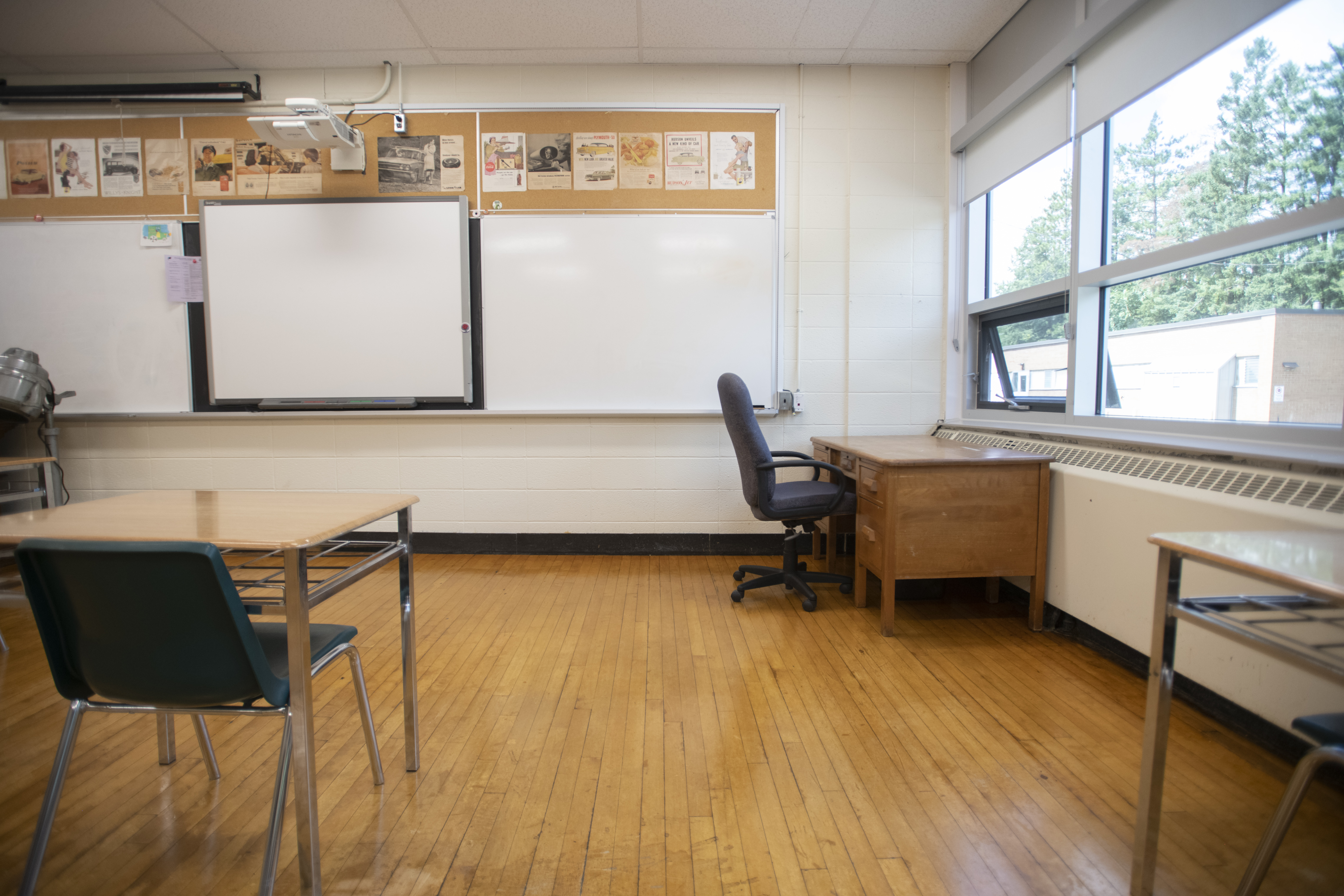
Ontario is currently witnessing a 40% attendance rate in its high schools, and the response from the government and the legacy media is a predictable, hand-wringing chorus of "How do we get them back in the seats?"
They are asking the wrong question.
The 60% of students who are missing aren't "lost." They aren't "falling through the cracks." They are engaging in the first rational economic behavior of their lives. They are staging a mass walkout from a system that has fundamentally decoupled itself from reality. To "fix" attendance by tightening rules or adding shiny new mental health apps is like trying to fix a sinking ship by repainting the deck chairs.
The ship isn't sinking. The passengers just realized they can swim, and the shore looks a lot more promising than the cabin.
The Myth of the "Lost" Student
The prevailing narrative suggests that if a student isn't in a desk between 8:30 AM and 3:00 PM, they are rotting their brains on TikTok or drifting toward a life of crime. This is a lazy, outdated assumption. In reality, the 40% attendance figure is a lagging indicator of a massive, decentralized shift in how human beings acquire value.
I have spent two decades watching educational bureaucracies burn through billions of taxpayer dollars trying to "re-engage" youth. I have seen programs launched with fanfare that do nothing but provide a temporary spike in data before the inevitable crash. Why? Because these programs ignore the Opportunity Cost of Sitting Still.
In 1995, the opportunity cost of being in high school was low. You didn't have a supercomputer in your pocket. You didn't have access to global markets, freelance gig economies, or the ability to teach yourself Python or video editing via high-end modular courses for free. Today, the opportunity cost is staggering.
When a 17-year-old realizes they can earn $25 an hour managing social media for a local business or spend six hours in a windowless room listening to a lecture on the War of 1812 that they could summarize in four minutes with a LLM, the math stops working. The 40% attendance rate isn't a crisis; it’s a market correction.
The Credentials Gap Is Now A Chasm
The government wants to focus on "attainment." They want those graduation rates high because it looks good on a spreadsheet. But a high school diploma in Ontario has undergone massive "grade inflation" and "credential devaluation."
If everyone has a gold star, the gold star is worth nothing.
Students are smarter than the Ministry of Education gives them credit for. They see that the link between "perfect attendance" and "financial stability" has been severed. They see university graduates working at coffee shops, saddled with debt, while the person who skipped class to learn a trade or build a digital brand is outperforming them by age 22.
By forcing students back into a physical room to perform "compliance-based learning," we are actually de-skilling them. We are teaching them that showing up is more important than producing. In the modern economy, showing up is the bare minimum—and often, it’s not even required.
The Social Contract Has Expired
Let’s be brutally honest about what high school has become: a state-sponsored childcare service for teenagers.
The "social benefits" of school are the last bastion of the defenders. "They need to be there for the socialization!" they cry. But look at the modern high school hallway. It’s a place of peak anxiety, performative social media presence, and a curriculum that is increasingly partisan and disconnected from the hard skills required to survive the next decade of automation.
The social contract used to be: Give us 12 years of your life, follow the rules, and we will hand you the keys to the middle class. That contract is void. The house is too expensive. The jobs are being disrupted by AI. The climate is a mess. The students aren't "checking out" because they are lazy; they are checking out because the contract was breached by the adults in the room long ago.
The Fallacy of "Flexibility"
The Ontario government's current "solution" involves looking at more "flexible" options. Usually, this means "Online Learning."
This is a disaster in the making.
Online learning, as currently implemented by the province, is just the same boring, industrial-age curriculum delivered through a 2010-era web interface. It’s the worst of both worlds. It lacks the human connection of a physical classroom and the dynamic, self-paced excellence of actual modern digital education.
If you want to solve the attendance crisis, you don't make the school "flexible." You make the school relevant.
But relevance is scary. Relevance requires firing tenured bureaucrats who haven't updated their lesson plans since the Blackberry was a status symbol. Relevance requires admitting that maybe not everyone needs to know how to calculate the area of a trapezoid by hand, but everyone definitely needs to know how to manage their taxes, understand a contract, and prompt an AI to do the work of three people.
Why the "40%" Are the New Elite
Imagine a scenario where the 60% of students who are frequently absent aren't the failures. Imagine they are the vanguard.
I’ve seen this play out in the tech sector. The most successful founders I know were the ones who treated high school as a suggestion. They spent their time in the library or at home, building things. They understood that the school's pace was set to the slowest student in the room. To stay was to stagnate.
The students currently "skipping" are building a tolerance for ambiguity. They are learning to manage their own time—even if they are doing it poorly at first. They are rejecting the "factory whistle" model of labor. This is a skill set that will be far more valuable in 2030 than the ability to sit quietly for 75 minutes while someone reads off a PowerPoint.
The Brutal Truth About Funding
The real reason the government is panicked about that 40% number? Per-pupil funding.
The education system is a giant financial engine that requires warm bodies in seats to justify its budget. If the bodies aren't there, the money starts to dry up. This isn't about the "well-being" of the children. It’s about the "well-being" of the school boards.
When a student disappears from a classroom, they are taking thousands of dollars of provincial funding with them in spirit. The panic you see in the news is the sound of a bureaucracy realizing its revenue model is collapsing. They aren't worried about the kid’s future; they are worried about their own pension fund.
Stop Trying to "Fix" Attendance
The "fix" isn't more truant officers. The "fix" isn't "mental health days."
The fix is a total demolition of the 19th-century industrial school model.
- Acknowledge the Exit: If a student is maintaining their grades but not showing up, leave them alone. They’ve clearly found a more efficient way to learn. Reward the efficiency.
- Micro-Schools and Apprenticeships: Stop forcing everyone into 2,000-person "mega-schools" that feel like prisons. Break it down. Let them work. Let them build.
- Skill-Based Certification: Move away from "credits" based on "seat time." If you can pass the test on day one, you get the credit on day one. Go home. Do something else.
The downside to this approach? It’s chaotic. It destroys the "childcare" function of schools. It requires parents to actually be involved in their children's lives rather than outsourcing them to the state for 7 hours a day. It forces the labor market to adapt to a younger, more mobile workforce.
It’s messy, it’s uncomfortable, and it’s the only way forward.
Ontario’s high schools are half-empty because the students have finally realized that the world outside the walls has changed, while the world inside remains frozen in amber. You can't legislate someone into caring about a system that doesn't care about their reality.
Stop mourning the empty desks. Start wondering what those students are doing with their newfound freedom, because they are the ones who will actually be prepared for the world we are building.
The 40% who are still showing up every day? They’re the ones I’m actually worried about. They are the ones still waiting for a whistle that isn't going to blow.