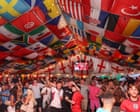
Walk down any British high street on a scorching afternoon right now and you will notice something bizarre. The pubs are absolutely packed, spilling out onto the pavements with people clutching cold pints of lager. Yet, just a few doors down, the air-conditioned clothing boutiques and department stores are practically empty.
Britain is basking in a record-breaking heatwave, and the national football team is deep into a thrilling World Cup run. On paper, this is the absolute dream scenario for retail. In reality, the traditional high street is barely getting a look-in. Instead of pounding the pavements, British consumers are hiding from the blistering sun and doing their spending from the comfort of their sofas.
The numbers tell a fascinating story of a divided summer economy. It turns out that a perfect storm of soaring temperatures and tournament fever is creating a massive boom for very specific sectors, while leaving traditional brick-and-mortar retail out in the cold.
The Great Air Conditioned Migration Online
Recent data from the British Retail Consortium (BRC) and KPMG shows a stark divide in how we are shopping during this heatwave. While overall retail sales grew by 1.9% in June, physical non-food stores saw their sales drop by 1.1% compared to the previous year.
Where did all that money go? It went straight online.
Online non-food sales jumped by a massive 5.1% over the same period. The online penetration rate—which measures the proportion of non-food items bought online—surged to 39%.
When temperatures climb toward 37°C, people simply refuse to trudge around town centres. They want instant relief. They are hopping onto retail apps to order paddling pools, electric fans, and summer clothes directly to their doorsteps. Supermarket networks like Asda reported online sales spikes of up to 30% during match half-times and hydration breaks as fans rushed to stock up on essentials without missing a single kick.
But there is a catch. This shift to online and quick top-up shopping is incredibly difficult for retailers to manage. Keeping shelves stocked when demand swings wildly based on the weather forecast is a logistics nightmare.
Pints and Crisps Over Big Ticket Items
The spending we are seeing right now is highly emotional and highly immediate. Consumers are not looking to invest in long-term items.
According to BRC Chief Executive Helen Dickinson, while seasonal goods like fans and outdoor toys are flying off the shelves, big-ticket items and gaming gear are struggling. People are living in the moment.
If you want to see where the real money is going, look at the nearest pub garden.
Data from Barclays shows that pubs have enjoyed the largest surge in spending. England’s group stage match against Panama became the busiest day of the year so far for the hospitality industry, with pub takings soaring to five times the daily average. Even a tense draw against Ghana drove a 244% year-on-year increase in card spending at pubs.
Data from payment provider Dojo showed a 23% increase in pub takings during the quarter-final weekend. The British Beer and Pub Association predicted that the upcoming semi-final against Argentina will see an extra 6 million pints poured. That is a bigger single-day spike than New Year's Eve.
But this isn't just about football. It is about a fundamental shift in how people choose to socialise when the weather gets hot.
Why Suburban Pubs are Winning While City Centres Lose
An interesting detail hidden in the recent data from The Oxford Partnership is where this drinking is actually happening. You might think city-centre bars would be cleaning up, but the opposite is true.
Suburban and urban local venues saw sales increases of over 50% during the matches. Meanwhile, city-centre locations managed a comparatively modest 18.6% rise.
When the heat is this intense, nobody wants to commute into a crowded city centre. People are choosing to stay local. They want to walk to their neighborhood pub, enjoy the sunshine close to home, and avoid the stifling heat of public transport.
Even venues that did not screen the World Cup games saw a 46.1% increase in sales, proving that the sun itself is doing a lot of the heavy lifting. Premium and international lagers are leading the charge, with brands like Cruzcampo and Stella Artois seeing triple-digit growth.
The Hard Truth for High Street Shop Owners
If you are a small business owner on the high street, this summer is bittersweet. The sunny weather brings a great mood, but it does not necessarily bring footfall to your till.
The pressure is mounting. High street retailers are currently dealing with rising business rates, increased employment taxes, and general economic uncertainty. A temporary spike in paddling pool sales does not offset the long-term decline in physical footfall.
To survive the rest of this hot summer, retail businesses need to adapt fast.
- Pivot to local digital marketing. If consumers are staying in their local suburbs, target them with hyper-local social media ads offering quick click-and-collect options.
- Create cool spaces. If you have physical stores, make sure your air conditioning is a selling point. Advertise your shop as a cool haven from the heat.
- Lean into the match day schedule. Align your promotional emails and social media posts with kickoff times. Do not try to compete with the game; find ways to complement it.
The golden summer of 2026 is proof that British consumer habits can change overnight when the sun comes out and the football is good. The businesses that survive are the ones that meet the consumer exactly where they are sitting, pint in hand, looking at their phone in the shade.


