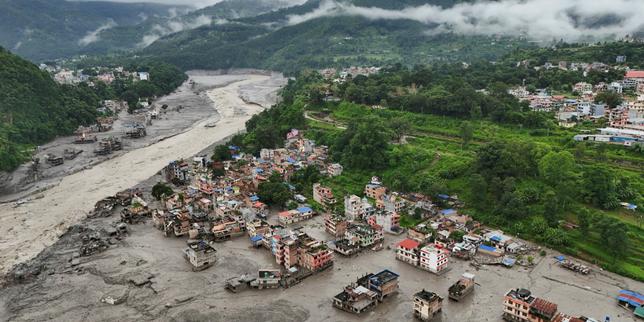
Ice and rock don't just fall off mountains by accident. They collapse because the roof of the world is warming up, shifting, and breaking apart in real-time. When a massive wall of glacial debris crashes down valleys in regions like Nepal and Tibet, it's easy to write it down as a distant tragedy. It's not. It's a loud warning sign about high-altitude climate volatility that affects millions downstream.
Let's look at what's actually happening on the ground.
The Reality Behind High Altitude Disasters
Mountain weather is brutal. But the scale of recent ice avalanches and rockfalls across the Himalayan range points to something deeper than seasonal storms. Glaciers aren't just melting; they're destabilizing. When permafrost thaws inside steep rock faces, the natural glue holding boulders and ice sheets together simply disappears.
You get sudden failures. Massive sections of hanging glaciers snap off, triggering kinetic chain reactions. These slides sweep down narrow valleys at terrifying speeds, turning into destructive mudflows and debris torrents.
Why Standard Safety Warnings Fail
Local communities and climbing expeditions often rely on traditional weather patterns to stay safe. Those patterns are gone.
I've spoken with alpine guides who admit their grandfather's weather signs don't work anymore. A clear blue morning in the Himalayas can now mask rapid thermal expansion inside a cliffside. When tourists or local villagers hear a distant roar, they usually have seconds, not minutes, to react.
Infrastructure isn't built for this. Roads, bridges, and hydroelectric projects scattered across Himalayan river basins face hazards they were never engineered to withstand. A single catastrophic avalanche can wipe out years of economic development in less than sixty seconds.
The Downstream Threat Nobody Talks About
The immediate impact makes the news: crushed infrastructure, blocked trails, and tragic losses of life. But the secondary threat is just as dangerous.
When massive rock and ice avalanches block narrow gorges, they form temporary natural dams. Behind these barriers, glacial lakes swell rapidly. If you've ever tracked Glacial Lake Outburst Floods, you know the terrifying math. Eventually, the water pressure overpowers the unstable debris dam.
A wall of water rushes down the valley, erasing downstream villages, fields, and bridges. This phenomenon threatens communities miles away from the initial high-altitude collapse zone.
What Research and Monitoring Tell Us
Scientists tracking cryosphere changes note that high-mountain Asia is warming at rates above the global average. Remote sensing tools, satellite radar, and seismic sensors now pick up the low-frequency hum of deep-seated rock slope failures before they happen.
Yet, data sharing across borders remains spotty. Tibet and Nepal share massive transboundary river systems and shared geological hazards. Political boundaries don't stop glacial floods or falling ice. Effective mitigation requires shared data, real-time sensor networks, and cross-border cooperation that transcends diplomatic friction.
Adapting to an Unpredictable Mountain Future
You can't stop a mountain from crumbling. Gravity always wins. But you can change how vulnerable populations respond to the threat.
Early warning systems need serious funding upgrades. Traditional sirens won't cut it when the source of the danger sits miles above in remote snowfields. Automated sensor arrays linked to localized mobile alerts buy crucial minutes for evacuation.
Infrastructure planning must shift. Building hydro plants or tourist lodges directly in historical debris tracks is a gamble that communities keep losing. Planners need to map out hazard zones using high-resolution satellite topography that accounts for modern warming trends, not historical averages.
Pay attention to what's happening at high altitudes. The changes unfolding on these peaks dictate the safety of major river basins relied upon by billions of people. Stop treating these events as isolated disasters. They are structural shifts in our global environment that demand immediate, practical adaptation.