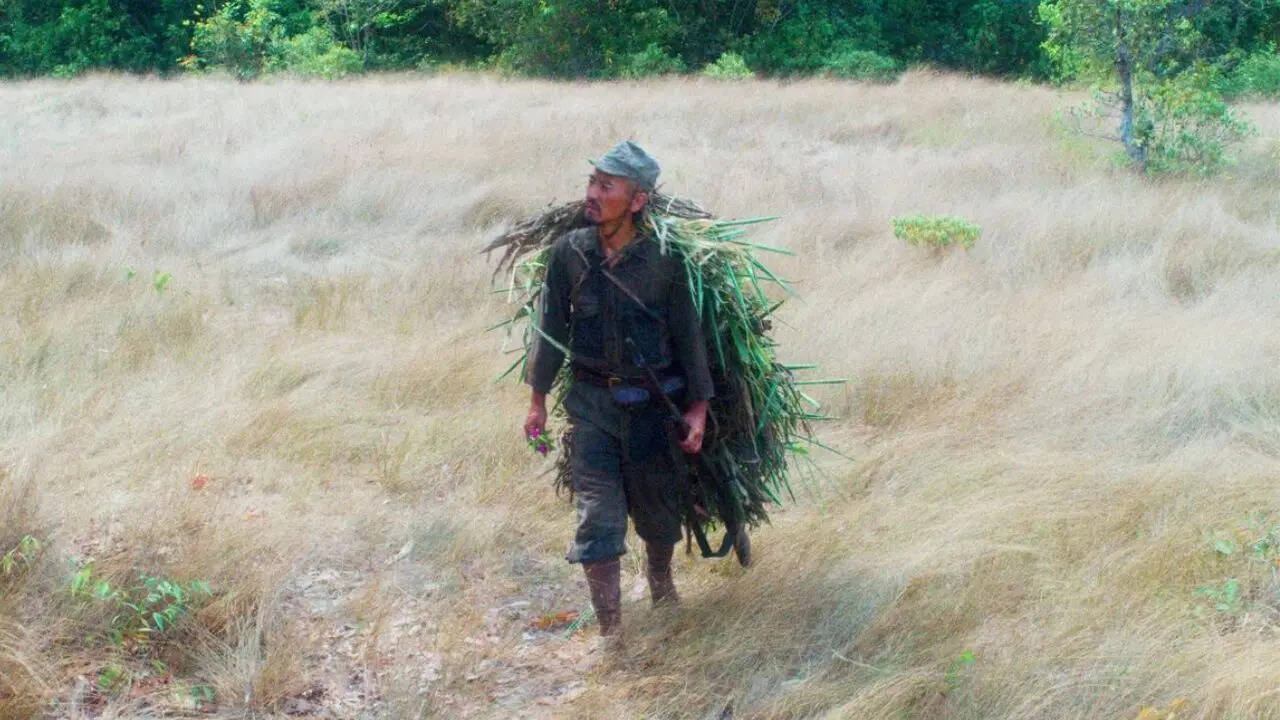
Hiroo Onoda was not a hero. He was a catastrophic failure of intelligence, a victim of his own ego, and a common criminal who spent three decades terrorizing Filipino farmers.
The standard narrative—the one you’ve seen in glossy magazines and "human interest" documentaries—paints Onoda as the ultimate samurai. A man of unbreakable will. The "last soldier" who kept the flame of the Imperial Japanese Army alive in the jungles of Lubang Island until 1974. We are told to admire his dedication. We are told to weep for his lost years.
That narrative is a lie. It is a sugary, historical revisionist coating on a story defined by paranoia and professional incompetence.
If we want to understand the reality of the Lubang holdouts, we have to stop looking at it through the lens of Bushido and start looking at it through the lens of psychological rigidity and criminal negligence. Onoda didn’t stay in the jungle because he was a "good soldier." He stayed because he lacked the intellectual flexibility to recognize he had lost.
The Intelligence Officer Who Couldn't Read a Map
Onoda wasn't some wide-eyed infantryman. He was trained at the Nakano School, the elite intelligence hub of the Imperial Japanese Army. He was taught guerrilla warfare, sabotage, and—critically—how to analyze information.
By his own admission, Onoda saw the leaflets dropped by American planes in 1945. He saw the newspapers left in the jungle. He saw his own brother’s handwriting on letters dropped from the sky telling him the war was over.
The "lazy consensus" argues that he believed these were sophisticated Allied psyops. This is a pathetic excuse for a trained intelligence officer. By 1950, the world had changed. The technology had changed. The very air over Lubang was different. To suggest that a master of "intelligence" couldn't distinguish between a global peace and a thirty-year-long, high-budget theatrical performance staged just for him is to admit he was either delusional or remarkably bad at his job.
He chose to believe the war was ongoing because the war gave him status. In the jungle, he was a Second Lieutenant with the power of life and death. In a defeated Japan, he was just another veteran in a country trying to forget the stains of the 1940s. He didn't stay out of duty; he stayed because the alternative was irrelevance.
The Body Count We Conveniently Forget
History books love to focus on the moment Onoda handed his sword to President Ferdinand Marcos. They rarely focus on the thirty Filipinos he and his small cell killed during their "mission."
These weren't enemy combatants. They were farmers. They were villagers gathering wood or tending to livestock. Onoda’s group engaged in what can only be described as a decades-long campaign of theft and murder. They burned crops to "deny the enemy resources" long after the "enemy" had become a sovereign, peaceful nation.
When we romanticize Onoda, we spit on the graves of those villagers. We prioritize the "aesthetic" of the lone warrior over the lives of the innocent people he slaughtered. If a modern insurgent hid in the woods for thirty years and killed thirty civilians, we wouldn't write books about his "unwavering spirit." We would call him a serial killer or a domestic terrorist. Why does the passage of time and a Japanese uniform change the moral calculus?
The Fallacy of the Last Soldier
Onoda wasn't even the last. Teruo Nakamura was found months later on Morotai. But Nakamura was Taiwanese-born and didn't fit the "Spirit of Japan" narrative that the Japanese right-wing desperately needed in the 1970s.
Japan was undergoing a massive identity crisis. The economic miracle was in full swing, but the cultural soul felt hollow. Onoda was a godsend for nationalists. He was a living fossil, a way to bridge the gap between the shameful defeat of 1945 and the rising power of 1974.
The Japanese government didn't bring him home because it was the right thing to do; they brought him home as a PR stunt. They needed to prove that the "old ways" were still alive. By doing so, they validated his delusions. They pardoned his crimes. They turned a tragedy of human waste into a triumph of the will.
The Professional Price of Rigidity
In the world of modern strategy, Onoda is a case study in what happens when "grit" becomes "pathology."
I have seen businesses collapse because CEOs refused to pivot, citing the same "loyalty to the original mission" that Onoda clung to. They see the market shifting, they see the data screaming that the war is over, and they double down on a failed strategy. We call this "sunk cost fallacy" in the boardroom. In the jungle, we apparently call it "heroism."
True expertise requires the ability to update your mental model when the facts change. Onoda’s mental model was fixed in 1944. He ignored every piece of contrary evidence for three decades. That isn't a trait to be admired; it's a cognitive defect.
A Thought Experiment in Perspective
Imagine a scenario where a soldier from a different conflict—let's say a remnant of a brutal 21st-century militia—hides in the Appalachian Mountains for thirty years. He spends three decades sniping hikers and stealing supplies from local grocery stores because he refuses to believe his movement lost.
Would we:
- Praise his commitment to his cause?
- Commission a Netflix biopic about his "lone journey"?
- Treat him as a tragic figure of honor?
The answer is no. He would be hunted down as a menace to society. The only reason Onoda gets a pass is the exoticism of the setting and the fetishization of the Japanese martial tradition by Western and Japanese audiences alike.
The Real Lesson of Lubang
If there is anything to learn from Hiroo Onoda, it is the danger of an echo chamber. Onoda had his small group of soldiers—Shimada and Kozuka—who reinforced his delusions. When you are surrounded by people who are just as invested in the lie as you are, the truth becomes an enemy.
They spent nights debating why the "enemy" was using civilian planes instead of bombers. They rationalized the growth of the local towns as "encampments." They built a reality where they were still relevant.
This is the ultimate cautionary tale for any leader. When you disconnect from the world and refuse to acknowledge the signals of change, you don't become a legend. You become a ghost. You become a man who wastes his life fighting a war that only exists in his own mind, leaving a trail of unnecessary blood in your wake.
Onoda returned to a Japan he didn't recognize and couldn't handle. He eventually moved to Brazil to start a cattle ranch because the "modern" world he had ignored for thirty years was too much for him. Even in his return, he couldn't adapt. He remained a man out of time, not because of a grand mission, but because he was too stubborn to grow.
Stop calling him a hero. Start calling him a warning.
True honor isn't found in staying at your post until you're a relic. It’s found in having the courage to recognize when the mission has changed—and the humility to admit you were wrong.
The jungle didn't keep Hiroo Onoda. His pride did.