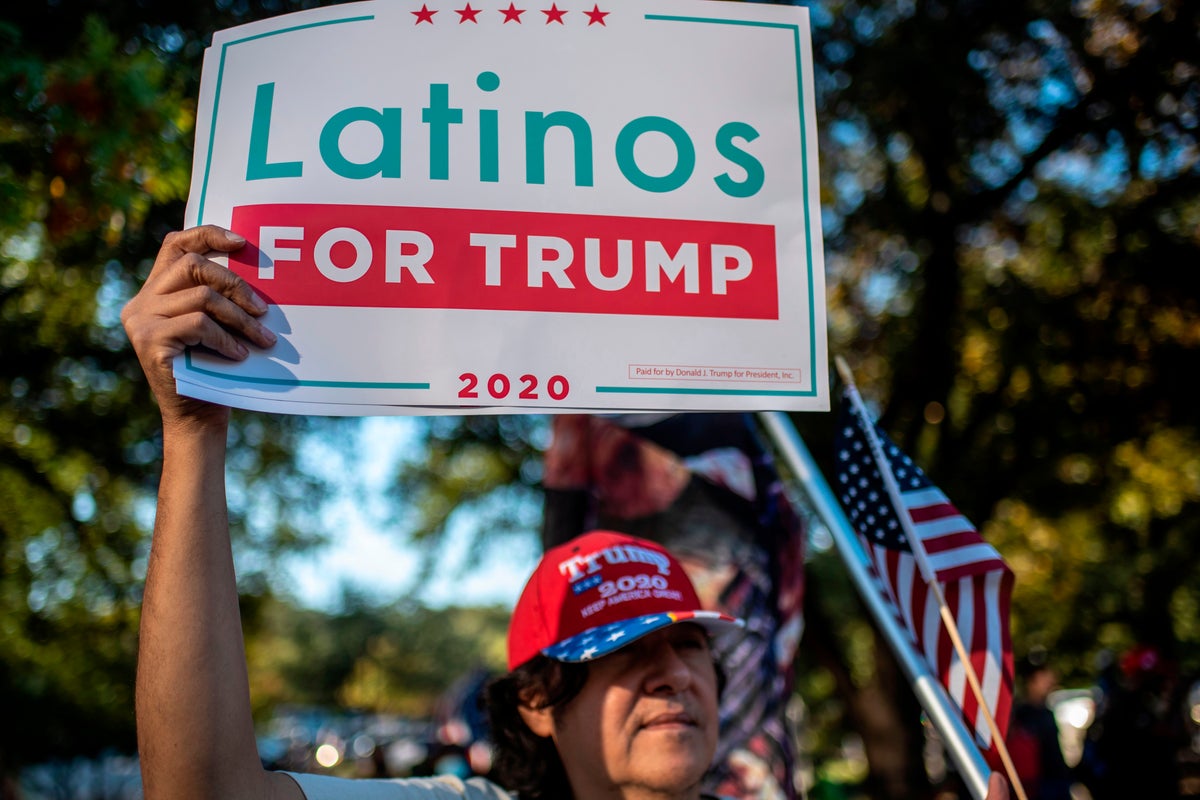
The political landscape is a creature of shifting sands, yet the rapid reversal of fortunes among Hispanic voters following the 2024 election cycle demands a closer look at the mechanisms of electoral influence. While data analysts previously highlighted how Donald Trump secured significant inroads within communities of color by emphasizing distinctions between legal and unauthorized immigration, the narrative has curdled. Recent polling indicates a sharp erosion of that support, suggesting that the coalition that propelled his victory is not the monolith many pundits assumed. This drift is not merely a statistical anomaly; it is a profound indicator of how quickly the promises of a campaign can collide with the reality of an administration.
To understand this shift, one must move past the surface-level shouting matches that dominate cable news. The 2024 election saw a genuine realignment where many working-class voters—including those of Hispanic, Black, and Asian descent—opted for a Republican agenda they perceived as more aligned with their economic and social priorities. This was not a rejection of their own heritage, but a calculated pivot toward perceived stability and stricter immigration enforcement, which many voters within these demographics viewed as a safeguard for their own legal status and economic standing. If you liked this article, you should look at: this related article.
However, the current administration’s reliance on aggressive immigration enforcement tactics has fundamentally altered that calculus. When federal agents conduct high-visibility operations in communities that previously flirted with Republican support, the distinction between "legal" and "illegal" that voters once drew begins to blur for their families and neighbors. The resulting frustration is visible in recent approval ratings, which show that Latino support has cratered in the months following the 2024 election. This is the classic trap of governing versus campaigning: what plays well as a rhetorical flourish on a debate stage often looks vastly different when it arrives on a local street corner.
The erosion of support is not confined to one specific ethnic group. Independent voters, who played a critical role in the 2024 results by leaning into the Republican column, are also demonstrating signs of detachment. As the governing party, the current administration faces the relentless pressure of addressing the primary issues—inflation and economic health—that initially handed them the keys to the White House. When those numbers stay underwater or the focus shifts to grievances rather than governance, the broad-based coalition of 2024 begins to fray at the edges. For another perspective on this development, check out the recent update from The Guardian.
Consider a hypothetical town where local businesses were once vocal proponents of a specific economic platform, believing that regulatory shifts would lead to lower costs and increased job security. If that same town experiences a series of enforcement actions that disrupt the local workforce, those business owners will inevitably re-evaluate their political allegiances. This is the phenomenon occurring on a national scale. The "trickle-down" of policy decisions is rarely as clean as a campaign brochure suggests, and voters are rarely as loyal to a candidate as they are to their own material interests.
The mistake often made by observers is to view these shifts as permanent. In truth, American politics is defined by volatility. The same demographic that backed Trump in 2024 out of a desire for order and economic relief is proving to be highly reactive to the administration's actual output. If the focus remains on divisive rhetoric and enforcement theater, the gains made among voters of color will continue to bleed away, returning the political map to a state of heightened uncertainty.
The current situation also underscores a failure to recognize the nuance within these voting blocs. Analysts spent years trying to figure out why specific communities were moving toward the GOP, often arriving at overly simplistic conclusions. The reality is that voters are pragmatic. They move toward candidates they believe will solve their immediate problems. When the problems persist—or when the proposed solutions create new, tangible burdens—the voters move again. It is a cycle of accountability that is often ignored until the election returns reveal the damage.
As we look toward upcoming midterm contests, the focus should not be on the static labels of "Red" or "Blue" but on the fluidity of these coalitions. The political survival of the current administration relies heavily on its ability to arrest this slide, yet there is little evidence that the current strategy is shifting. Instead, the reliance on an increasingly narrow base of support suggests a drift away from the very voters who made the 2024 win possible. History shows that when a party loses its middle, or when its peripheral supporters feel neglected or alienated, the electoral results are rarely kind.
The trend toward a more diverse Republican coalition was a genuine story, but the story of 2026 is becoming one of retreat. This does not guarantee a total collapse, but it does signal that the party has moved from a period of expansion to a period of contraction. The question is no longer whether they can keep their voters; it is how much more they can afford to lose before the arithmetic of the electorate changes entirely.
The political wind has changed direction, and for those who built a coalition on the hope of broader appeal, the current trajectory is a warning that the most difficult part of winning is often holding onto the consensus that brought you to power.


