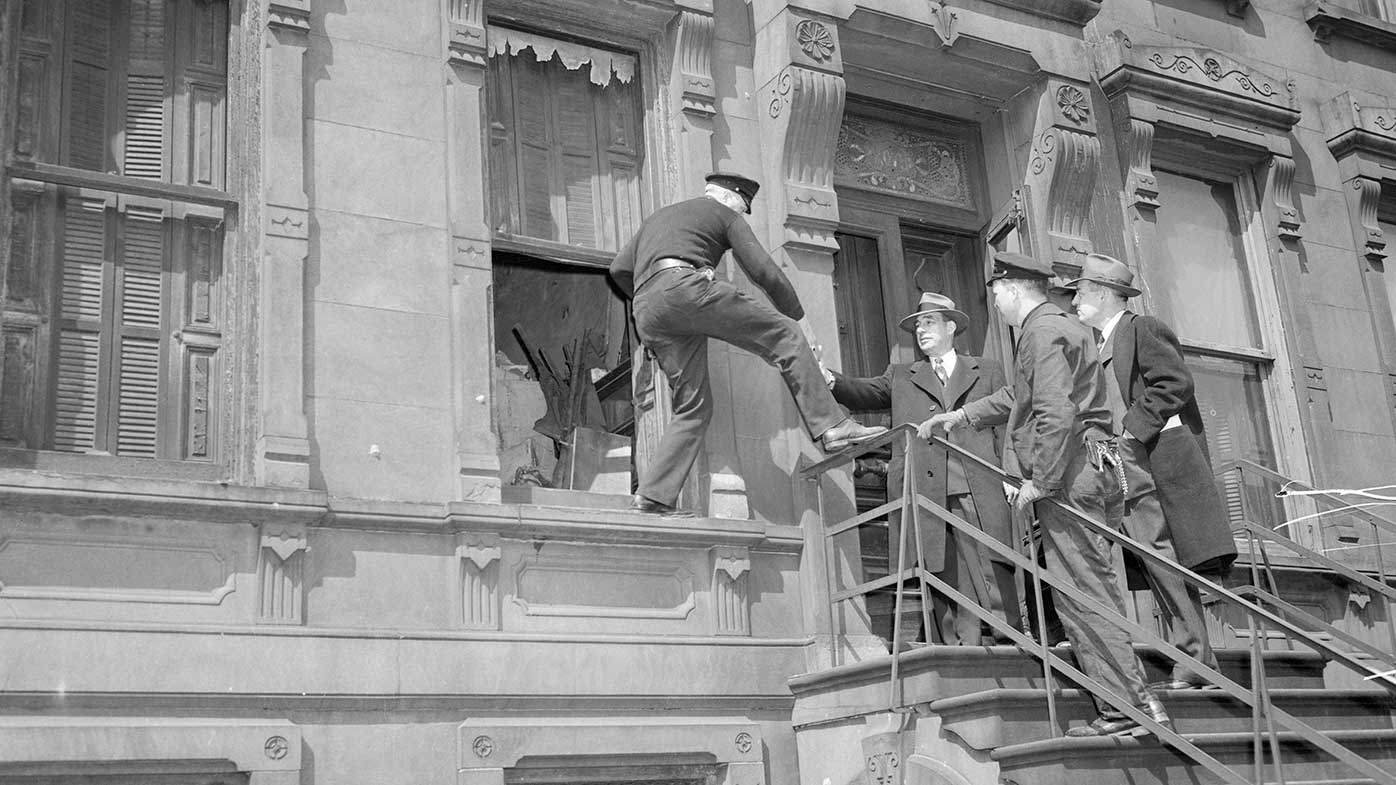
The headlines regarding the Collyer brothers—and every modern "tragedy" that mirrors their 1947 demise—are consistently, embarrassingly wrong. They frame the story as a macabre curiosity of the "shut-in" variety. They treat the booby traps and the three-story mountains of newsprint as symptoms of a broken mind. They focus on the starvation of Langley Collyer as he sat helpless while his brother Homer lay crushed under a junk-slide of their own making.
They call it "hoarding disorder." They are wrong.
What we saw in that Harlem brownstone, and what we see in the 5% of the population currently struggling with "clutter," isn't a lack of organization. It is a hyper-logical, albeit failed, attempt at security in an insecure world. We need to stop pathologizing the collection and start interrogating the environment that makes the collection feel necessary.
The Myth of the Mess
The "lazy consensus" among psychologists and tabloid journalists is that people who hoard suffer from an inability to categorize. They tell you it's about "executive dysfunction." I’ve spent two decades in the trenches of behavioral intervention and urban logistics, and I can tell you: it’s exactly the opposite.
The Collyer brothers didn't lack a system. They had a system so complex it required physical traps to defend.
When you look at a room filled to the ceiling with old washing machine parts and stacks of The New York Times, you see a fire hazard. The inhabitant sees a thermal barrier, an acoustic shield, and a commodity hedge.
Most people operate on a "Just In Time" delivery model for their lives. They trust that the grocery store will have milk, the bank will have digits, and the government will maintain the peace. A "hoarder" is someone who has lost faith in the supply chain of reality. They have switched to a "Just In Case" model.
If you think they are "crazy," you haven't been paying attention to the global economy for the last five years.
Why the Collyers Were Tactical Not Tragic
Langley Collyer didn't set booby traps because he was "confused." He set them because he was an engineer who understood that the world was predatory. He was protecting his blind, paralyzed brother from a society that had already judged them.
The standard narrative says: "He died by his own hand, crushed by his own trash."
The contrarian reality says: He died defending a fortress because the outside world offered no sanctuary.
We love to mock the "booby trap" aspect. It makes for a great clickbait headline. But let’s look at the mechanics of their "disorder" through the lens of Security Architecture:
- Redundancy: Having 14 pianos isn't about music; it's about ensuring the continuity of a lifestyle if 13 of them fail or are seized.
- Perimeter Defense: The "junk" served as a physical labyrinth. Only the initiated knew the "tunnels." This is literally how guerrilla warfare is conducted in urban environments.
- Information Archiving: They kept every newspaper not because they were messy, but because they understood that once information is digitized or "curated" by others, it can be manipulated. They held the raw data.
When we call this a "mental illness," we are gaslighting people who have a heightened sensitivity to risk. We are telling them that their desire for total self-sufficiency is a glitch in their hardware. It isn't. It's a response to a culture that provides zero safety nets.
The Diagnostic Failure of the DSM-5
The American Psychiatric Association added "Hoarding Disorder" as a distinct category in the DSM-5. This was a mistake. By separating it from OCD, they stripped away the context of Anxiety-Driven Preparedness.
I’ve worked with clients who have $5 million in the bank but won't throw away a plastic yogurt container. Why? Because the container is a known quantity. The $5 million is a series of electronic pulses that could vanish in a bank run or a cyber-attack. The yogurt container can hold seeds. It can hold water. It has utilitarian permanence.
The clinical community focuses on the "discards." They should be focusing on the Value Perception Gap.
- Standard View: The object has zero market value, therefore keeping it is irrational.
- Contrarian View: The object has replacement cost and potential utility. In a collapsing society, the man with a pile of scrap metal is a king; the man with a sleek, minimalist apartment is a victim.
The Starvation Paradox
The most haunting part of the Collyer story is Langley dying while trying to bring food to Homer, only to have Homer starve to death days later because he couldn't reach the supplies ten feet away.
Critics call this the ultimate irony. I call it a Systemic Single Point of Failure.
In engineering, if a bridge collapses because one bolt shears off, we don't blame the bolt for being "insane." We blame the design for lacking fail-safes. Langley was the sole operator of a complex life-support system. His "hoarding" was actually a highly sophisticated, manual-entry database of survival. His mistake wasn't the stuff; it was the lack of a Secondary Operator.
If we want to "fix" hoarding, we need to stop sending in junk-hauling crews with cameras. That is a violent violation of a person's defensive perimeter. It triggers a massive cortisol spike that often leads to premature death or suicide shortly after the "cleanup."
Instead, we should be building Community Redundancy.
Stop "Cleaning" and Start "Hardening"
If you have a family member who is "hoarding," your instinct is to "help them clear it out."
Don't. You are literally tearing down their walls while they are still under fire. If you want to actually lower the volume of the collection, you have to lower the Perceived Risk Profile of their life.
- Secure the Essentials: Don't talk about the newspapers. Talk about the water and the heat. If they feel those are guaranteed, the "shield" of junk becomes less necessary.
- Validate the Utility: Acknowledge that the 500 empty jars could be useful. Then, negotiate a "Managed Inventory" rather than a "Discard." Move from "Trash" to "Strategic Reserve."
- Address the Trauma of Loss: Most high-level collectors have experienced a sudden, catastrophic loss of status, person, or property. The hoarding is a physical manifestation of "Never Again."
The Inevitability of the Collyer Model
As our digital lives become more ephemeral, we are going to see a massive spike in what the "experts" call hoarding. When you don't own your software, your music, or your books—when everything is a subscription that can be revoked at the whim of a Terms of Service update—the urge to own physical matter will become a survival instinct.
The Collyers weren't the last of a dying breed. They were the early adopters of a Total Autonomy Mindset.
They weren't "killed by their own booby traps." They were killed by the friction between a world that demands transparency and two men who demanded privacy.
The next time you see a "hoarder" house, don't look at the mess. Look at the armor. Ask yourself what that person is so afraid of that they’ve built a mountain to hide from it. Then look at the state of the world and tell me they're the ones who are out of touch.
The tragedy isn't that they had too much stuff. The tragedy is that we've created a society where a pile of garbage feels safer than a neighbor's knock.
Stop trying to "cure" the defense mechanism. Start fixing the threat.