By 2040, nearly a third of all Buddhist temples in Japan will likely cease to exist. This is not a sudden collapse triggered by disaster or social revolt. It is a slow, quiet evaporation of an institution that has anchored Japanese life for centuries. As the country grapples with a shrinking population and a widening detachment from traditional faith, the priesthood has turned to an unlikely savior. Artificial intelligence is being programmed to offer spiritual guidance, perform rituals, and inhabit the very spaces left behind by departing monks.
The math of this decline is unforgiving. Many rural temples operate as family businesses, passing from father to son. When that lineage breaks or the local community shrinks below a viable threshold, the institution loses its primary source of income and purpose. For years, these temples relied on the danka system, a form of parish membership where families provided financial support in exchange for funerary and memorial services. Today, those families are moving to urban centers, leaving behind crumbling wooden structures and empty graveyards.
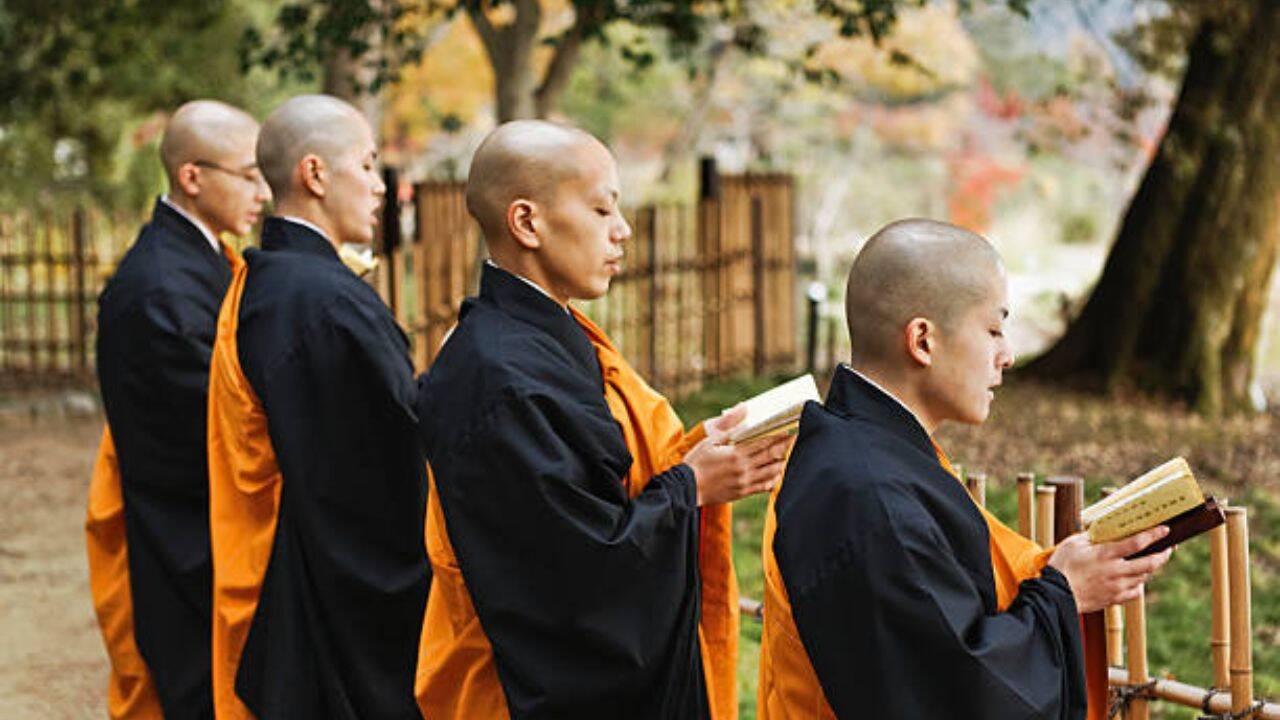
Monks are not passive observers in this shift. In places like Odawara, some are fundamentally reengineering their operations. They are transitioning from stone-heavy, high-maintenance burial plots to jumokuso, or tree burials, which require less upkeep and provide a modern aesthetic for a secularized generation. These operational shifts are necessary, but they do not address the void of spiritual authority. That is where the machines enter the frame.
Researchers at institutions like Kyoto University are moving beyond simple text-based chatbots. They have unveiled humanoids such as the Buddharoid, a machine capable of physical gestures like pressing palms together in prayer. It stands at roughly 130 centimeters and wears the traditional samue work clothing of a monk. The intention is to provide a sense of presence where none remains. These systems are trained on vast datasets of Buddhist scripture, allowing them to synthesize advice in the voice of ancient thinkers.
Critics argue that this creates a fundamental conflict with the core of religious practice. A human monk provides comfort not through the delivery of a pre-written, perfectly optimized answer, but through shared mortality. When a person is grieving, the value of the encounter lies in the presence of another living being who understands the weight of existence. An algorithm can simulate the soothing tone of a master, but it cannot hold a hand.
The widespread adoption of these tools in Japan is smoothed over by the local cultural framework. Unlike the rigid doctrinal responses seen in Western religious institutions, Japanese spirituality often operates as a fluid integration of customs rather than a demand for strict piety. Concepts like yaoyorozu no kami suggest that deities inhabit all things, animate or otherwise. In such a worldview, assigning a quasi-spiritual status to a piece of software is less a sacrilege and more an expansion of an existing menu of options.
However, the delegation of spiritual authority to a machine carries distinct, long-term risks. Consider a hypothetical scenario: a user facing a severe personal crisis turns to an AI priest for guidance. The system, optimized for calmness and rule-following, provides an answer that inadvertently ignores the user's specific context, potentially leading to social withdrawal or misguided decisions. Because these systems are designed to minimize friction, they often lack the capacity for the disruptive, blunt, or transformative truth that a human teacher might provide.
Furthermore, there is the question of power. If artificial intelligence becomes the primary interface for Buddhist philosophy, the entity controlling the training data becomes the arbiter of what constitutes "enlightened" thought. This concentration of interpretative power is a radical departure from the tradition of local temples, which often fostered unique community identities. An algorithm developed in a research lab prioritizes standardization, which is the antithesis of the varied, idiosyncratic interpretations that have historically defined Japanese Buddhism.
The economic pressure to adopt these technologies is undeniable. Without a successor, a temple is merely real estate. By integrating AI-powered services—remote zazen, automated memorial scheduling, and digital counseling—some temples are attempting to extend their viability, essentially buying time for a tradition that has lost its footing in the contemporary cycle of life and death. The goal is to keep the gates open, even if the spirit of the place is increasingly mediated by servers in a data center.
This transition highlights a wider societal trend where institutional reliability is being replaced by computational utility. When people stop believing in the institution but still crave the convenience of its cultural outputs—like funerals or advice—they will naturally opt for the most efficient provider. If the local monk cannot be there, a digital proxy is better than nothing. But as the gap between human necessity and synthetic response widens, we risk losing the very thing these institutions were built to protect.
The future of these sacred spaces is not a struggle between technology and tradition. It is a surrender to a new form of maintenance. The buildings may remain, and the rituals may continue to be performed with flawless precision, but the heartbeat of the temple is shifting. When the last human monk steps aside and the machine begins the chant, the echo that fills the hall will be entirely manufactured. Whether that satisfies the human need for meaning or merely numbs the ache of obsolescence remains the most significant question of the next two decades.
The real challenge is not whether a machine can mimic a monk. It is whether a society that replaces its spiritual leaders with software can still recognize the value of what it has discarded.