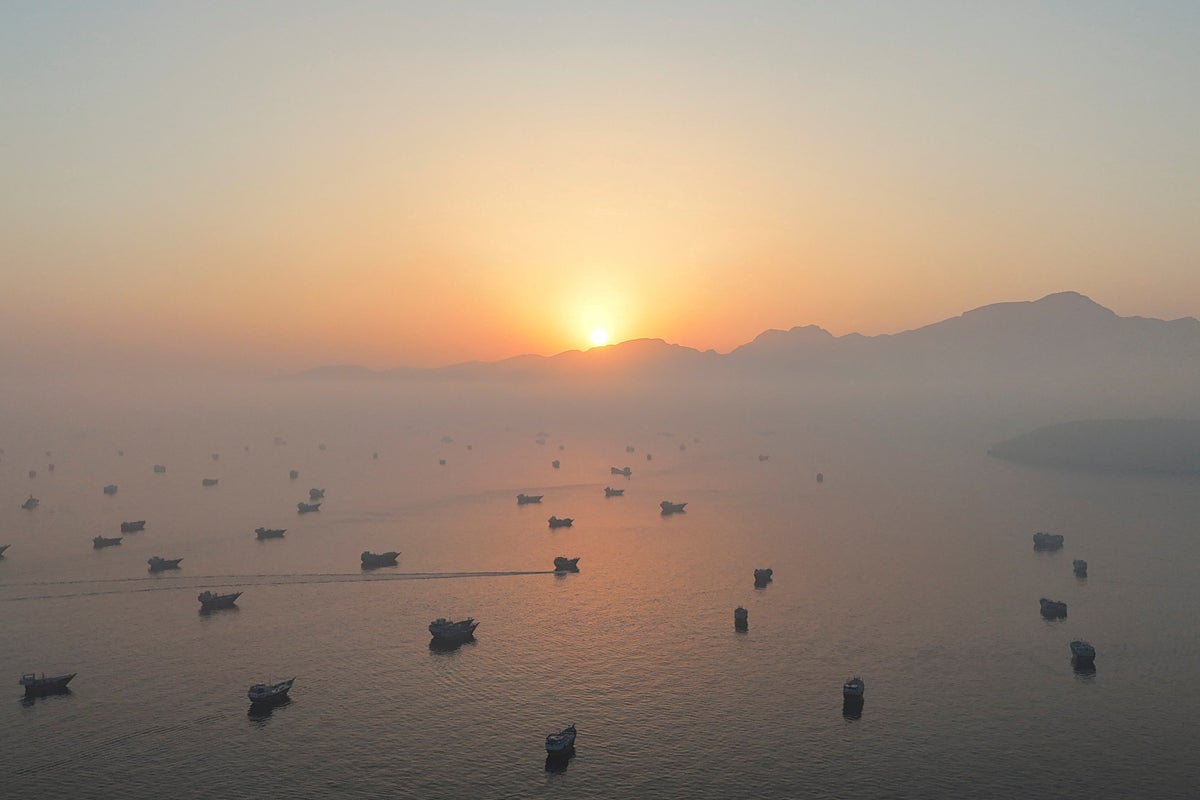
The Strait of Hormuz is not open. Despite proclamations from the White House, the data carved into the maritime record paints a grim, stagnant reality. While President Donald Trump maintains that the waterway is functioning, shipping insurance providers, tanker operators, and the stark silence of the Gulf tell a different story. The divide between political rhetoric and the tactical environment on the water has created a vacuum of uncertainty that is strangling global energy logistics.
For the mariner, the Strait is no longer a transit route; it is a mine-strewn gauntlet of high-stakes gambling.
The core of the disconnect lies in the discrepancy between an "open" status and a navigable one. An open waterway implies the presence of routine, predictable traffic, where vessels pass under the protection of international law and reliable security. Instead, we see a skeleton crew of commercial vessels testing the waters, only to be met with irregular strikes and the constant, suffocating threat of the Islamic Revolutionary Guard Corps (IRGC). According to recent tracking data, daily transits remain a fraction of their pre-conflict averages, with major Chinese shipping conglomerates continuing to avoid the route entirely to mitigate risk.
When the administration claims the Strait is operating, they ignore the fundamental logic of maritime insurance. Underwriters have effectively priced the region out of existence. Without affordable coverage, shipping companies cannot move cargo, regardless of whether a naval escort is present. This is the difference between a military victory and an operational one. You can clear a path, but you cannot force the market to walk down it.
The conflict has transformed into a war of attrition, one that extends far beyond the physical boundaries of the narrow passage. Iran’s strategy has evolved from total closure to a sophisticated, piecemeal disruption. By maintaining the threat of violence, they impose a de facto tax on the global economy. Every vessel that hesitates, every tanker that reroutes around the Cape of Good Hope, and every insurance premium that spikes serves the strategic interests of Tehran.
Historically, maritime chokepoints like Hormuz operate on trust. That trust evaporated on February 28, 2026, when the conflict escalated into a direct air war. Trust is not a switch that flips back on because a politician says so. It requires the removal of the underlying threat, the restoration of regional maritime infrastructure, and the quiet return of the shipping giants who provide the bulk of the world's energy transit.
The reality of the Strait remains tethered to the negotiation table. Oman’s ongoing efforts to mediate a deal between the United States and Iran represent the only viable path to genuine normalization. Yet, the current diplomatic environment is characterized by threats rather than concessions. Reports that the White House has pressured regional stakeholders to reject joint management proposals suggest that the United States is prioritizing a specific form of control over the immediate restoration of global trade.
This approach creates a dangerous friction point. If the United States insists on a victory that involves total exclusion of Iranian oversight, the conflict will likely persist in its current, jagged form. The result is a world where energy markets remain fractured, prices stay artificially elevated, and the physical security of mariners remains a secondary concern to geopolitical posturing.
The maritime industry has grown accustomed to the "gray zone"—that space between peace and total war. But the current situation in the Strait of Hormuz pushes this to a breaking point. We are witnessing the slow-motion decoupling of the Persian Gulf from the global energy grid. As pipelines like Saudi Arabia’s East-West line reach capacity, the reliance on the Strait may permanently diminish, but the economic shockwaves from this forced transition will reverberate for years.
The data does not lie. The transit numbers are not merely statistics; they are a pulse check on the health of the world economy. When the numbers show ships avoiding the route, when the insurance markets signal caution, and when actual incidents continue to occur with grim regularity, the definition of "open" becomes irrelevant.
The Strait of Hormuz stands as a monument to the limits of military force in an interconnected world. You can clear a shipping lane with a carrier strike group, but you cannot secure a supply chain by decree. Until the underlying tensions are resolved through meaningful, structural shifts in regional policy, the waterway will remain a ghost of its former self—a narrow corridor where the stakes are life and death, and the truth remains buried beneath a thin veneer of political spin. The ships that do pass through now are not the vanguard of a return to normalcy; they are the exceptions that prove the rule. The crisis is not over. It has simply settled into a new, more lethal rhythm.