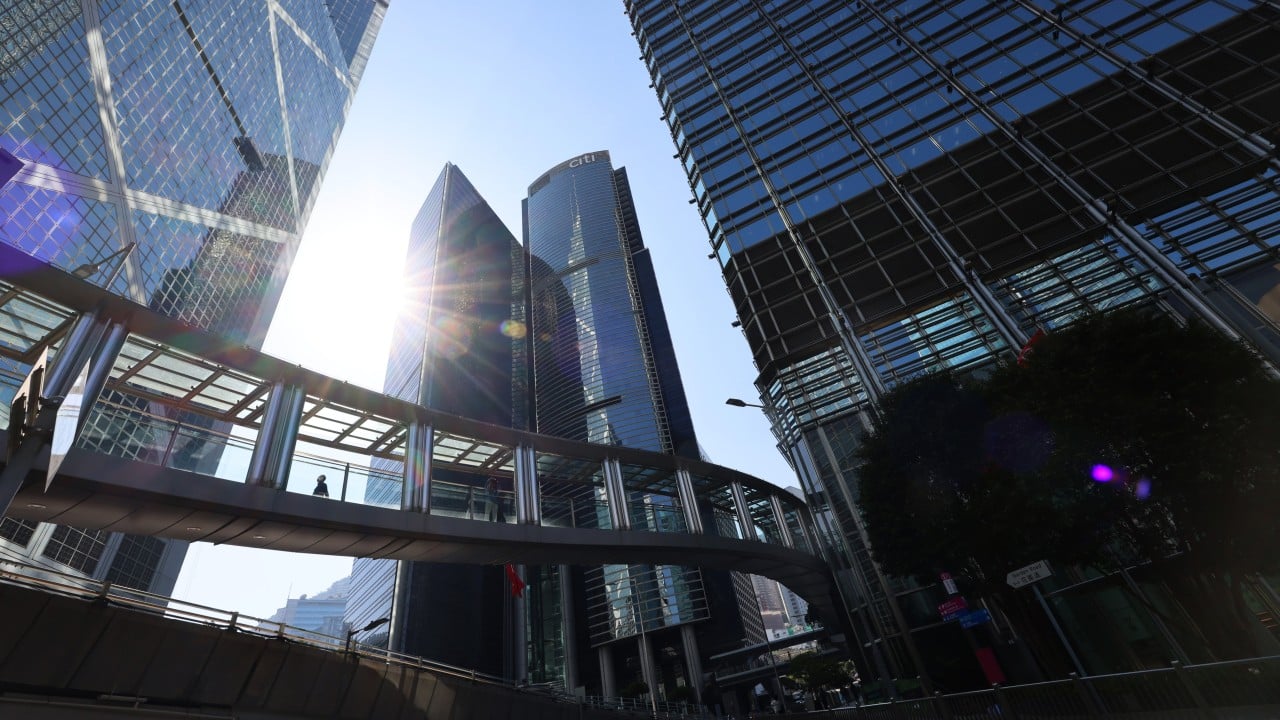
Creditor-led commercial property sales in Hong Kong are governed by a distinct friction between collateral valuation and debt service capacity. When capitalization rates compress against elevated interest expense, senior lenders face a structural choice: restructure non-performing debt or initiate court-appointed receivership. The trajectory of these forced liquidations depends not on market sentiment, but on cash flow coverage ratios, covenant breaches, and the secondary market liquidity of Grade A office towers and retail portfolios.
The Debt Service Trap and Yield Spreads
The primary driver of creditor intervention is the divergence between borrowing costs and net operating income yields. For commercial assets acquired or refinanced during the low-interest-rate regime, current debt service obligations frequently exceed asset earnings.
- The Negative Carry Mechanism: Prime commercial yields in core districts hover between 3 percent and 4 percent, while the Hong Kong Interbank Offered Rate and subsequent mortgage or loan prime rates impose borrowing costs significantly higher. This spread generates negative carry, draining sponsor liquidity.
- Loan-to-Value Breach Triggers: Syndicate loans typically incorporate covenants requiring mandatory amortization or asset injections if the loan-to-value ratio breaches thresholds, often set between 50 percent and 60 percent. Asset devaluation across Central and Kowloon office markets routinely forces these breaches.
- Refinancing Walls: Maturing syndicated debt cannot be rolled over at historical leverage multiples. Lenders demand principal paydowns to match lower appraisal values, which equity sponsors frequently cannot fund without capital calls that yield sub-market returns.
The Receiver's Calculus
When a default event occurs, the appointment of receivers shifts the operational objective from long-term capital appreciation to immediate debt recovery. Receivers operate under a legal mandate to act in the best interest of the secured creditor, overriding the historical owner's preference for holding assets through a down cycle.
The decision tree for a secured lender evaluating receivership involves three explicit variables: holding cost versus realization value. If the judicial or auction process yields a recovery higher than the net present value of restructured debt servicing over a five-year horizon, liquidation proceeds immediately.
Receiver sales typically encounter deep valuation discounts. Institutional buyers and private equity funds deploy opportunistic capital demanding internal rates of return exceeding 15 percent, pricing in further vacancy risks and tenant concessions. Consequently, creditor-led sales function as price discovery mechanisms, resetting market benchmarks downward for entire sub-markets.
Structural Barriers to Rapid Clearing
Despite elevated distress, the volume of completed creditor-led transactions does not match the total volume of distressed debt. Several market frictions prevent immediate clearing.
- Asset Indivisibility: Large commercial assets or mixed-use portfolios cannot be easily fractionalized. Finding single-buyer capital allocations for multi-billion-dollar properties requires global syndication, which remains constrained by geopolitical risk premiums and tight underwriting standards.
- Judicial and Enforcement Timelines: Enforcing mortgages and executing court-ordered sales in Hong Kong involves procedural steps. While more efficient than mainland Chinese jurisdictions, the legal pathway from initial default notification to final title transfer spans multiple quarters, during which operational cash flows deteriorate further.
- Borrower Litigation and Stalling Tactics: Sponsors frequently employ legal injunctions or contest receiver appointments to negotiate better exit terms or secure alternative rescue financing, artificially extending the timeline of distressed assets.
The Capital Allocation Response
Institutional capital pools view current pricing through a risk-adjusted lens. Domestic family offices and mainland corporate buyers exhibit bifurcated behaviors. While some strategic buyers acquire prime assets to establish flagship footprints at a discount, financial sponsors focus entirely on structural subordination, ensuring their entry price provides a cushion against ongoing tenant attrition.
The structural stabilization of Hong Kong commercial real estate requires a permanent reset of debt structures rather than temporary forbearance. Until capitalization rates match the baseline cost of capital or net operating incomes expand through aggressive leasing absorption, creditor-led interventions will remain the primary mechanism for clearing impaired assets from institutional balance sheets. Lenders must balance the immediate write-down pain against the long-term cost of balance sheet stagnation, ensuring that asset recovery reflects current liquidity realities rather than historical peak valuations.