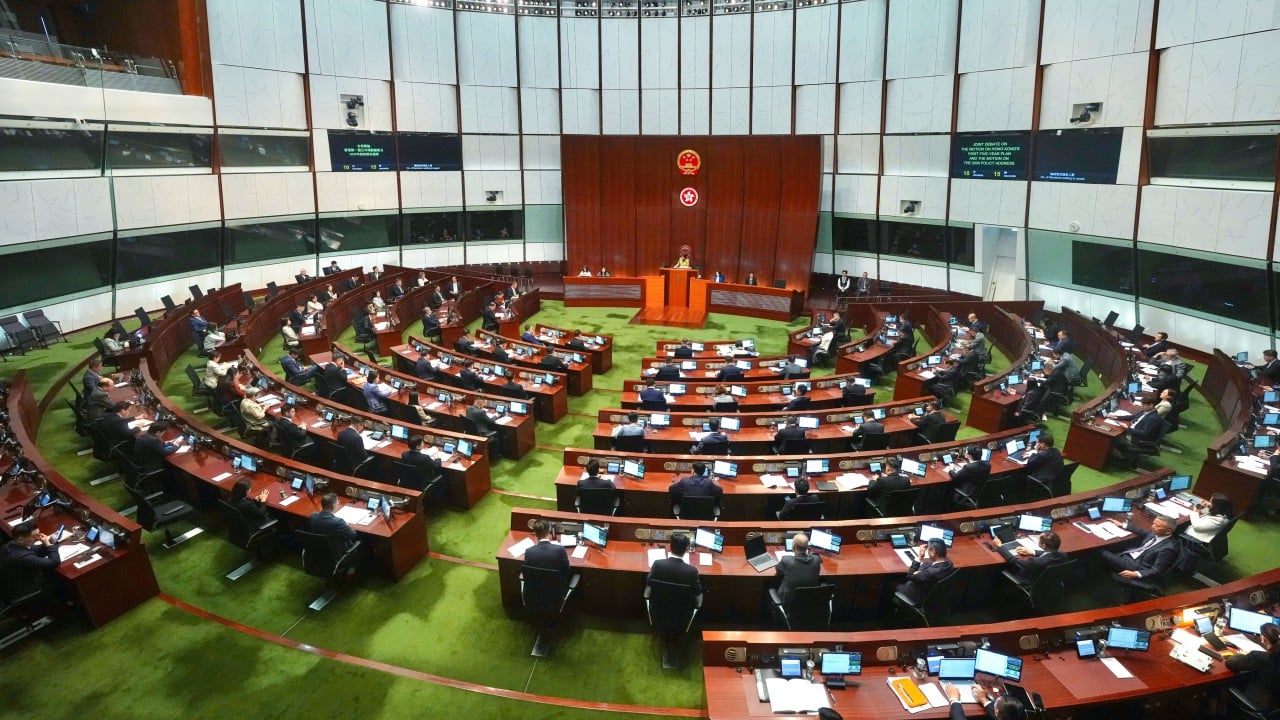
Legislative backing for five year economic blueprints in Hong Kong signals a profound shift in regional compliance priorities, forcing multinational corporations and local enterprises to align their operational models with state objectives or face systemic marginalization.
For decades, the special administrative region operated on a simple formula. Low taxes, minimal state intervention, and a predictable common law framework drew capital from every corner of the globe. That era is over. When lawmakers formally back a multi-year economic strategy, they are not merely issuing guidelines. They are redrawing the boundaries of corporate survival. Every board meeting in Central must now account for state priorities, turning traditional risk management on its head. Discover more on a connected issue: this related article.
The Mechanics of Alignment
Alignment sounds benign in a press release. On the ground, it is an aggressive restructuring of corporate governance. Enterprises find themselves squeezed between international compliance standards and local regulatory demands that prioritize integration with broader national strategies.
Consider a mid-sized financial services firm operating out of Admiralty. Historically, their primary concern was satisfying securities regulators regarding capital reserves and anti-money laundering protocols. Today, compliance officers spend equal time auditing supply chains, data residency compliance, and corporate social responsibility metrics to ensure they match the developmental milestones set by the five-year blueprint. More journalism by The Motley Fool explores comparable perspectives on this issue.
This is not optional. Companies that fail to demonstrate strategic alignment face subtle yet devastating administrative friction. Licences take longer to renew. Government contracts go to competitors with better ideological alignment. Banking partners become hyper-conservative, cutting ties with firms deemed misaligned with official policy directions.
The Multinational Dilemma
Global corporations built their Asian headquarters in Hong Kong because it served as a neutral bridge between East and West. That neutrality is evaporating.
Western head offices operate under stringent transparency laws, data protection regulations, and geopolitical sanctions that frequently clash with the operational demands of the new five-year plan. When local authorities expect firms to prioritize specific regional integration goals, corporate legal teams in New York and London panic. They see conflicting compliance mandates that expose them to liability in multiple jurisdictions.
Many firms are quietly executing contingency plans. They are splitting regional operations, moving sensitive data functions to Singapore or Tokyo, and reducing their physical footprint in Hong Kong. Others double down, hiring well-connected advisors to navigate the labyrinth of state-directed capitalism. This divergence creates a two-tiered business community. One group treats the blueprint as an existential threat, while the other views it as a roadmap for lucrative state-backed opportunities.
Capital Flight Versus State Capital
Traditional economists predicted mass capital flight when regulatory oversight tightened. The reality is far more nuanced. Western institutional money has slowed its entry, replaced rapidly by mainland capital seeking an internationalized springboard.
State-backed enterprises and domestic conglomerates are stepping into the vacuum left departing foreign firms. They have the risk appetite and the political backing to absorb compliance costs that would sink a traditional Western startup. However, replacing nimble international capital with state-aligned funding changes the character of the market. Efficiency takes a back seat to strategic compliance. Innovation cycles slow down as projects require multiple layers of bureaucratic approval to ensure they conform to the five-year vision.
The Operational Reality
Navigating this environment requires abandoning old assumptions about corporate autonomy. Executives must recognize that political risk in Hong Kong is no longer an external variable to be hedged with insurance. It is an internal operational metric.
Boards must restructure their executive committees to include individuals who understand the nuances of state planning documents. Supply chains require forensic audits to identify any vulnerability that might flag a company as non-compliant. Communication strategies must evolve to reflect the linguistic and political sensibilities of the new regulatory regime.
The five-year blueprint is not a temporary policy shift. It is the permanent architecture of the region's economic future. Enterprises that refuse to adapt, hoping for a return to the laissez-faire past, are walking blindfolded into a compliance trap. Success now belongs exclusively to those willing to rebuild their operational foundations from the ground up, accepting that the rules of engagement have changed forever


