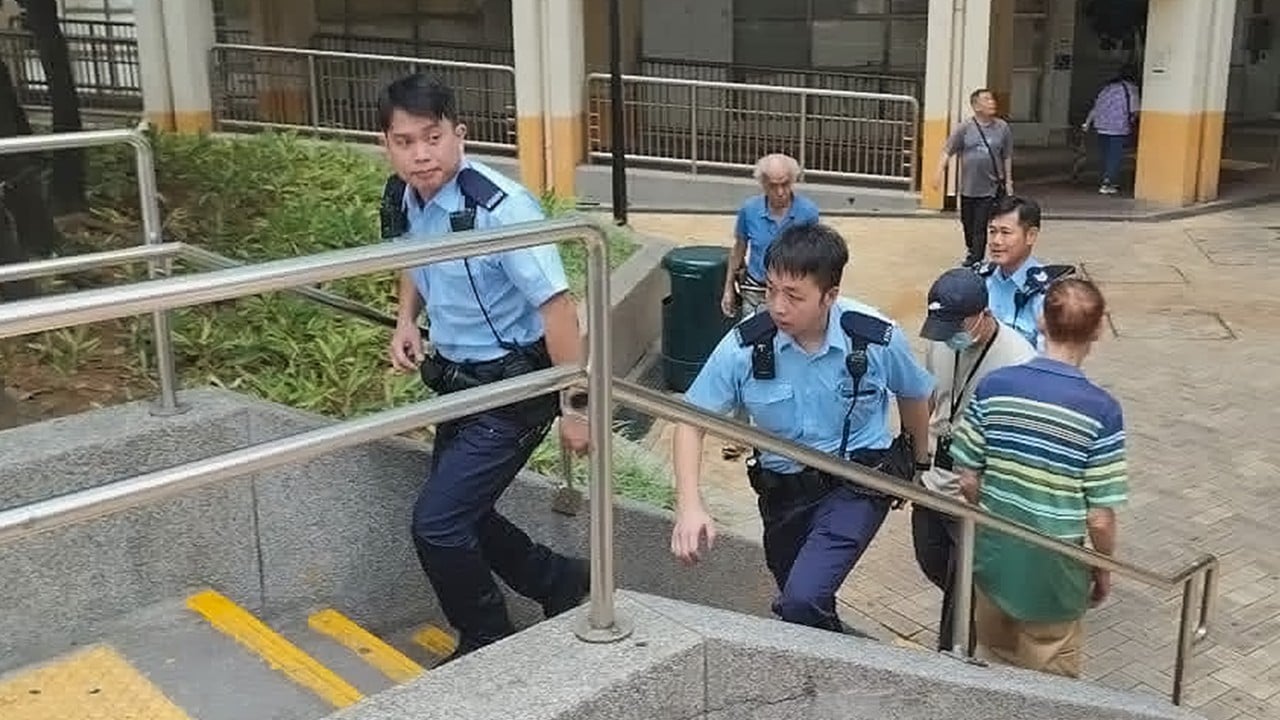
A horrific discovery in a public housing estate broke through the usual noise of Hong Kong news. Police officers forced their way into a flat in Shun Lee Estate, located in Sau Mau Ping. Inside, they found a 43-year-old woman living alongside the decomposing body of her 72-year-old mother. The mother had been dead for at least two days. The daughter, who struggles with severe mental illness, had remained inside the apartment the entire time, trapped in a state of profound isolation.
This isn't an isolated tragedy. It’s a systemic failure. The incident mirrors a broader, terrifying trend in one of the world's densest cities, where vulnerable residents regularly slip through the cracks of an overwhelmed social safety net. When we hear about these cases, the immediate reaction is shock. But if you look closely at how Hong Kong handles mental health and elder care, you quickly realize this tragedy was entirely predictable.
Why the Shun Lee Estate Tragedy is Part of a Pattern
The tragedy unfolded because neighbors noticed a foul smell coming from the unit. They called the management office, who then contacted the police. When emergency services entered, they found the daughter inside, unable to cope or seek help on her own. Emergency workers took her to United Christian Hospital in Kwun Tong for a psychiatric evaluation.
The case highlights a dangerous intersection of two massive social crises in the city: an aging population and an underfunded mental health infrastructure.
Hong Kong is aging fast. Government data projects that by 2046, more than one-third of the population will be elderly. Many of these seniors live with adult children who have chronic illnesses or psychiatric conditions. When the primary caregiver dies suddenly, the surviving dependent is left completely helpless.
We saw this exact scenario play out in May 2023, when a chronically ill man died in his public housing flat in Shatin, leaving his middle-aged son with intellectual disabilities alone for days. We saw it again in September 2023, when two elderly, mentally disabled brothers starved to death in their apartment after their mother, their sole caregiver, was hospitalized.
The pattern is obvious. The system relies entirely on family caregivers until they burn out or die. Then, the crisis hits.
The Illusion of Social Support in High Density Housing
You would think that living in a massive public housing block with thousands of neighbors means someone is always watching out for you. The opposite is true. High-density urban living in Hong Kong often breeds extreme social isolation.
People live packed together like sardines, yet they don't know the person on the other side of the concrete wall. This hidden isolation makes it incredibly easy for a vulnerable family to disappear in plain sight.
Social workers call these "hidden households." These are families where the members rarely leave the house, have no active social life, and don't know how to navigate the complex bureaucratic maze required to get government assistance.
The Caregiver Burden is Killing Families
In Hong Kong, cultural expectations dictate that families must take care of their own. Taking an elderly parent to a care home is often viewed as a failure. But the reality on the ground makes home care nearly impossible without professional help.
- Space constraints: The average public housing flat is tiny. Cramping a psychiatric patient and an elderly parent into a space smaller than a standard American parking spot creates immense psychological pressure.
- Financial strain: Many of these families survive on the Comprehensive Social Security Assistance (CSSA) scheme. It's barely enough to cover food and basic utilities, let alone private medical care or hiring a helper.
- Lack of respite care: If a caregiver gets sick or needs a break, finding a temporary care bed through official channels can take months.
A Broken Mental Health System That Can't Cope
The daughter in the Shun Lee Estate case was known to have a history of mental illness. Why wasn't she being actively monitored?
The answer lies in the severe shortage of psychiatric professionals in the public healthcare system. The Hospital Authority faces a perennial deficit of psychiatrists, clinical psychologists, and psychiatric nurses.
Because the public system is jammed, case managers are severely overworked. A single social worker or psychiatric nurse in Hong Kong often handles an absurd number of cases simultaneously—sometimes upwards of 50 to 80 patients at a time. When workloads are that high, "monitoring" a patient basically means checking a box during a brief phone call once every few weeks.
If a patient stops answering the phone or misses an outpatient appointment, it can take days or weeks for anyone to notice. In this case, those missing days meant a daughter sat on a sofa next to her mother's body, entirely lost in her own reality.
What Must Change to Prevent the Next Tragedy
We cannot keep treating these deaths as random, tragic anomalies. They are direct consequences of policy gaps. Fixing this requires shifting away from reactive policing and moving toward proactive community care.
Real-Time Data Sharing Between Departments
Right now, Hong Kong's government departments operate in silos. The Housing Department manages the flats, the Social Welfare Department handles welfare checks, and the Hospital Authority manages medical records. They rarely share data effectively.
If a tenant with a recorded psychiatric condition misses their rent payment or stops opening the door for building maintenance, that information needs to trigger an automatic alert to the Social Welfare Department. Community networks need a unified database to track high-risk, isolated households.
Empowering Neighborhood Networks
We can't place the entire burden on professional social workers who are already drowning in paperwork. The government needs to invest heavily in grassroots neighborhood networks.
Building management staff, security guards, and local volunteers should be trained to spot the signs of a household in distress. These are the people who see residents every day. If an elderly resident who usually walks the halls suddenly vanishes for 48 hours, the security guard should have a direct line to a crisis intervention team.
Expanding Mobile Crisis Teams
When a crisis occurs, a standard police response isn't always the best approach. Hong Kong needs dedicated, 24/7 mobile crisis psychiatric teams that can deploy immediately to homes when a vulnerable resident stops responding to outreach. These teams should consist of a psychiatric nurse and a social worker who can handle sensitive situations without escalating panic.
If you suspect a neighbor, a friend, or a family member is struggling with isolation or severe mental health challenges in Hong Kong, do not wait for a foul smell to investigate. Contact the Social Welfare Department's hotline at 2343 2255 or reach out to local NGOs like the Community Mental Health Support Services. A simple welfare check can be the difference between life and death.