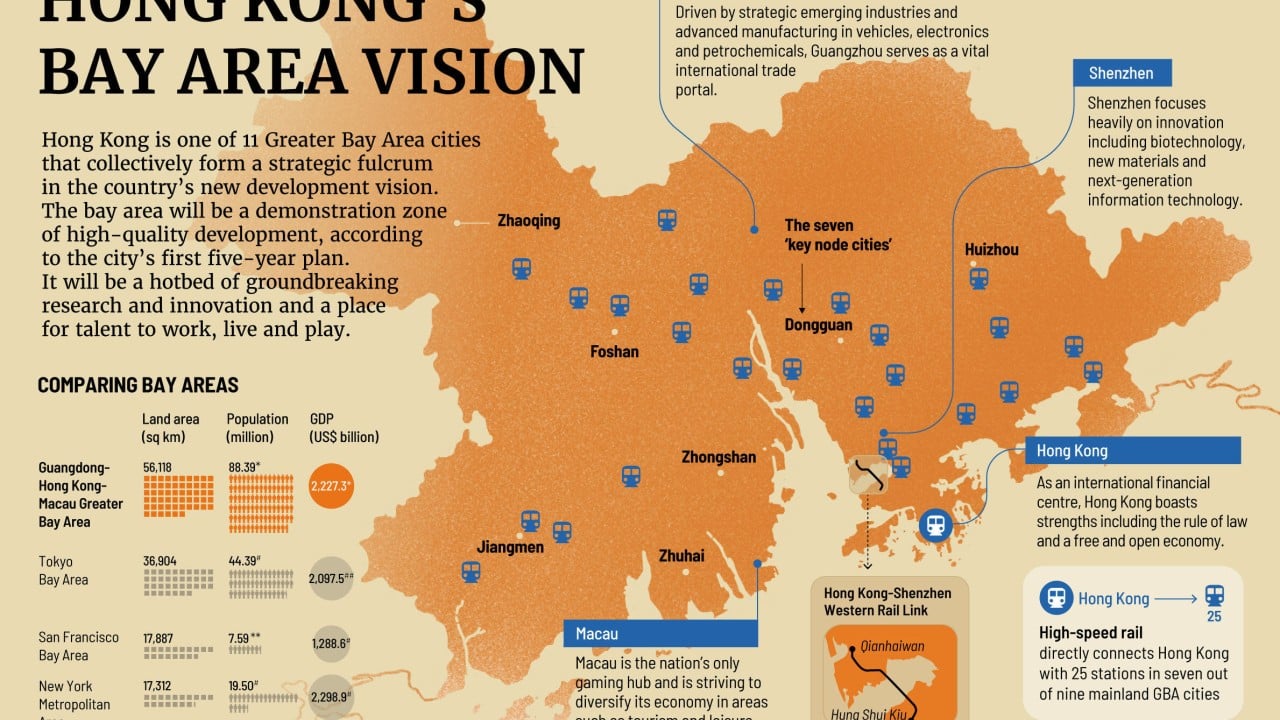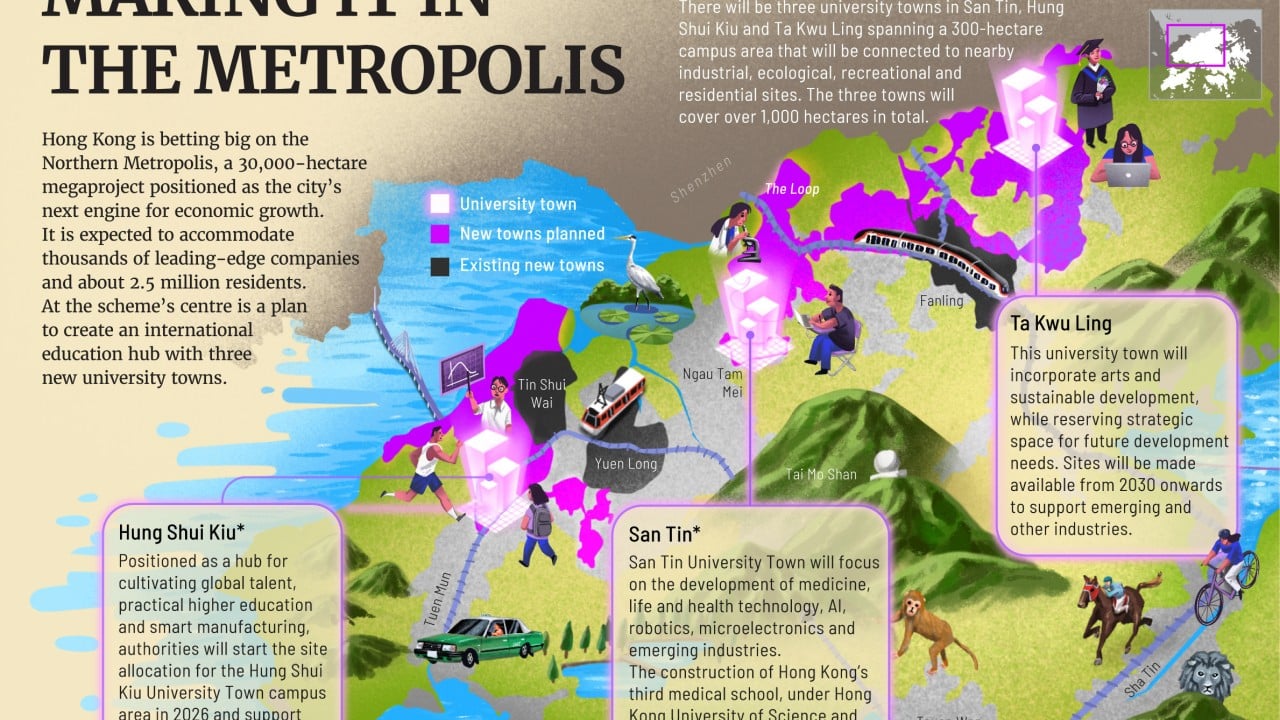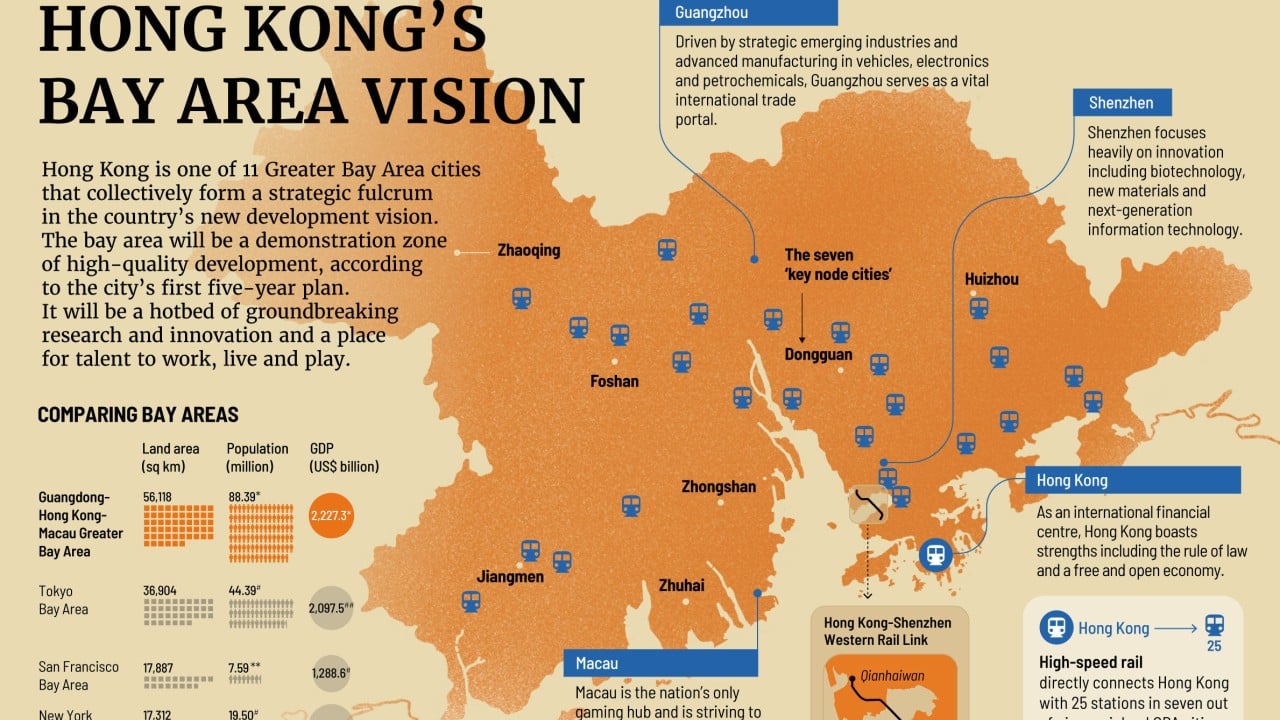
Every six months, a fresh stack of glossy brochures hits the desks of financial analysts across Central and Admiralty. They feature pristine computer-generated imagery of high-speed rail links, futuristic tech incubators, and cross-border innovation zones designed to merge Hong Kong seamlessly into the Greater Bay Area. The consensus is always identical. Integration is destiny. Scale is salvation. If Hong Kong simply builds enough physical bridges and signs enough administrative memorandums, its economic supremacy will lock into place for another century.
It is a comforting bedtime story for bureaucrats who mistake architectural renderings for commercial vitality. For a deeper dive into similar topics, we suggest: this related article.
I have watched corporate boards burn millions chasing cross-border synergy schemes that existed only on PowerPoint slides. They rented expensive co-working desks in Shenzhen, hired consultants to map out regulatory alignments, and waited for the magic of the megacity to materialize. Most of them quietly retreated back to Hong Kong island two years later, poorer and wiser, having realized that proximity to a manufacturing powerhouse does not automatically translate into a competitive advantage.
Hong Kong's primary handicap right now is not a lack of integration. It is an addiction to top-down orchestration. For broader details on the matter, comprehensive coverage can also be found at Forbes.
For decades, the city thrived not because the government orchestrated industrial policy, but precisely because it did the exact opposite. Low taxes, minimal bureaucracy, frictionless capital flows, and a legal system built on English common law created a commercial vacuum that sucked in talent and capital from every corner of the planet. Nobody needed a master plan to trade textiles in the seventies or execute complex financial derivatives in the nineties. Entrepreneurs spotted an arbitrage opportunity, executed quickly, and let the market decide winners and losers.
Today, the entire discourse has shifted toward state-directed agglomeration. We are told that Hong Kong must become a biotechnology hub, a cultural capital, and a semiconductor nexus simultaneously, all orchestrated through municipal coordination committees.
That is not how economic ecosystems evolve. Real clusters emerge from chaos, specialization, and failure, not from committee rooms in government headquarters.
Consider the Shenzhen comparison, which forms the emotional core of every Greater Bay Area pitch deck. People point to Shenzhen as the undisputed hardware capital of the world and conclude that Hong Kong must copy its manufacturing-adjacent innovation model. This is an analytical category error. Shenzhen succeeded because it was a blank slate capable of rapid industrial prototyping backed by a massive hinterland of factory floors. Hong Kong is an ultra-dense, service-heavy, high-cost common law financial center. Trying to turn Hong Kong into a hardware incubator is like trying to turn a Swiss watchmaker into an assembly plant for pickup trucks.
Instead of trying to out-Shenzhen Shenzhen, Hong Kong should lean aggressively into the structural frictions that make it uniquely uncomfortable.
Yes, capital controls across the border are annoying. Yes, immigration checks break the illusion of a borderless metropolis. But those very frictions are precisely what institutional investors and international corporations pay for. When capital can move anywhere instantly without legal verification, asset security collapses. Hong Kong's value proposition has never been its low cost or its physical scale. It has always been its status as an enforceable, rule-of-bound firewall between mainland capital markets and the rest of the world.
When you dilute that distinction in the name of seamless regional integration, you destroy the exact asset that made you indispensable in the first place.
The real question business leaders should be asking is not how to align their corporate strategy with municipal planning goals. The question is how to survive the administrative drag of those very goals while finding genuine pockets of high-margin arbitrage that bureaucrats have not yet regulated into irrelevance.
Let us look at the talent pipeline. The standard narrative claims that Hong Kong is losing its edge because young professionals are migrating elsewhere, drained by housing costs and lifestyle pressures. The prescribed antidote is a series of government talent attraction schemes handing out visas by the tens of thousands.
Handing out residence permits does not create an innovation economy. Talent goes where risk capital is deployed against high-upside problems. Hong Kong's venture capital ecosystem remains deeply conservative, heavily skewed toward real estate, traditional trade, and late-stage corporate debt rather than early-stage frontier technology or disruptive services. Until local capital allocators stop treating risk like a four-letter word, importing foreign engineers is just an expensive exercise in demographic reshuffling.
The corporate players winning in this environment are ignoring the grand macroeconomic blueprints entirely. They are treating the Greater Bay Area not as a unified political utopia, but as a complex matrix of distinct legal jurisdictions where regulatory arbitrage can be systematically exploited. They use Hong Kong for IP protection, international dispute resolution, and cross-border capital raising, while utilizing Shenzhen and Guangzhou for engineering velocity and operational scale.
They do not wait for the government to finish the high-speed ferry terminal upgrade. They route around the damage.
If you are currently drafting a three-year strategy based on the premise that regional harmonization will solve your margin compression, throw it away. The future does not belong to the region with the most ambitious master plan. It belongs to the operator who can navigate administrative friction faster than anyone else in the room. Stop waiting for the bridge to open. Build a better boat.