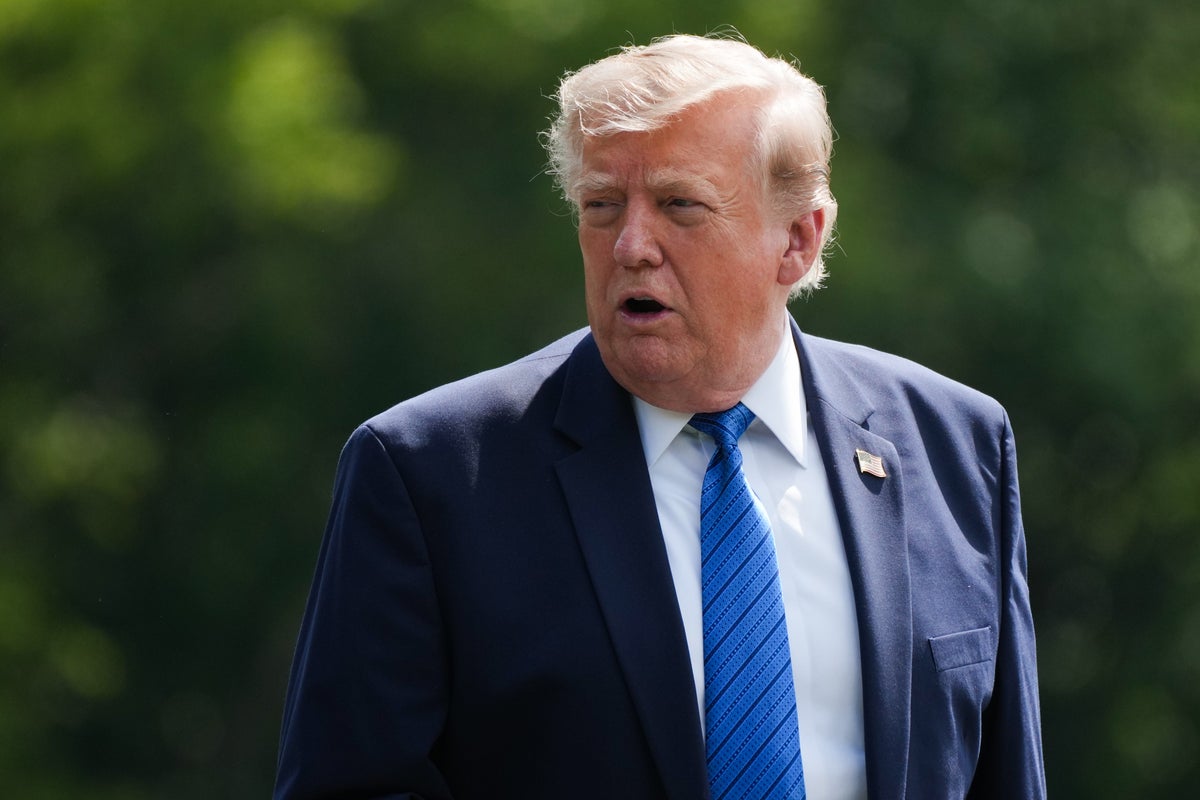
Political communication relies heavily on the illusion of progress, transforming structural return-to-status-quo into decisive breakthroughs. When a administration frames a negotiated settlement in the Strait of Hormuz as a historic diplomatic victory, the underlying reality often mirrors a different dynamic: a return to baseline containment achieved at a higher operational cost. Analyzing this scenario requires stripping away rhetorical framing and examining the transactional mechanics, economic friction, and power asymmetries that dictate maritime security in the Persian Gulf.
Negotiated settlements concerning critical shipping chokepoints do not alter underlying geographic vulnerabilities. The Strait of Hormuz remains a narrow maritime bottleneck through which a significant share of global petroleum passes daily. Any agreement that halts active escalation without structurally dismantling asymmetric anti-access and area-denial capabilities deployed by regional actors is merely a tactical pause.
To evaluate the true utility of any proposed Hormuz arrangement, analysts must separate political theater from strategic equilibrium. A standard diplomatic victory implies a permanent shift in the balance of power or a durable reduction in risk exposure. A managed return to baseline security, by contrast, expends significant diplomatic and military capital simply to neutralize threats that were previously managed at lower expenditure levels.
The Three Core Variables of Maritime Chokepoint Security
Assessing the stability of the Strait of Hormuz requires analyzing three distinct operational variables that dictate pricing, risk, and insurance premiums for global trade.
1. Asymmetric Maritime Interdiction Capacity
Regional actors possess minimal conventional blue-water naval power relative to global coalitions, yet they maintain high-density asymmetric deterrence portfolios. These include fast attack craft, coastal cruise missile batteries, subsurface mines, and loitering munitions. This portfolio is designed not to win a prolonged naval war, but to impose prohibitive economic disruption costs. When an agreement restricts active kinetic harassment but leaves the underlying production and deployment mechanisms of these assets intact, the threat vector is dormant rather than eradicated.
2. Global Energy Transit Elasticity
The economic vulnerability of the strait is a function of alternative route capacity and market liquidity. Global petroleum markets react to maritime risk through the pricing mechanism of marine war risk insurance and charter rates. A diplomatic accord that stabilizes the strait relieves upward pressure on tanker insurance premiums, creating an immediate, visible economic dividend. However, if the underlying threat environment remains volatile, underwriters continue to price tail risk into their policies, preventing a full return to historical cost baselines.
3. Escalation Dominance and Deterrence Credibility
Deterrence depends on the credibility of the retaliatory threat relative to the perceived value of the provocation. Strategic stability breaks down when an adversary calculates that incremental, sub-threshold disruptions carry negligible penalties. A negotiated settlement often blurs this line by providing sanctions relief or diplomatic normalization in exchange for the cessation of attacks that should not have occurred in the first place. This creates a moral hazard wherein actors are incentivized to generate friction to extract concessions, securing a baseline status-quo ante while shifting the geopolitical equilibrium in their favor.
The Cost Function of Tactical De-escalation
Evaluating the net value of a diplomatic accord demands a rigorous cost-benefit calculation that weighs immediate gains against long-term structural degradation.
Net Strategic Value = (Immediate Risk Reduction + Economic Dividend) - (Concessions Granted + Deterrence Credibility Decay)
When this equation is applied to typical Hormuz negotiations, the output frequently reveals a negative long-term yield. The short-term reduction in tanker interdiction risk provides immediate political capital and lowers spot-market shipping costs. Yet, the price paid—often involving sanctions relief, unfreezing of assets, or tacit acceptance of threshold nuclear or regional ambitions—degrades the broader deterrent posture.
Consider the operational burden placed on naval escorts. Maintaining a continuous carrier strike group presence or multinational maritime security patrols in the Persian Gulf consumes finite high-end naval readiness. If a diplomatic deal permits a drawdown of these assets without a corresponding institutional shift in regional security cooperation, the protecting power assumes a fragile posture. The moment political priorities shift, the capability vacuum invites renewed pressure from regional adversaries who recognize that the prior deterrence framework relied on unsustainable resource allocations.
Market Friction and Insurance Transmission Mechanisms
The economic impact of Hormuz security dynamics operates through precise financial channels that corporate strategy teams must decode. Shipping lines do not react directly to diplomatic communiques; they react to risk models generated by marine underwriters at Lloyd's of London and similar institutions.
When tensions rise, underwriters declare the Persian Gulf an Extended War Area. This triggers mandatory additional premiums per voyage, calculated as a percentage of the hull value. For a Very Large Crude Carrier valued at over one hundred million dollars, a fraction of a percent increase in war risk insurance translates to hundreds of thousands of dollars per transit.
A negotiated settlement that is heralded as a triumph often reduces these premiums only marginally if the underlying legal and enforcement framework remains ambiguous. Underwriters look past the political rhetoric of a deal to examine the enforcement mechanisms:
- Are multinational naval forces actively patrolling choke points?
- Is there an automated, rapid-response protocol for detained vessels?
- Does the agreement include binding arbitration or punitive snapback mechanisms for violations?
Without concrete operational answers to these questions, insurance markets price in persistent uncertainty. The headline may announce peace, but the balance sheet reflects continued friction.
Strategic Realignment and the Trap of the Status-Quo Ante
A common analytical error is treating the pre-crisis status quo as a desirable benchmark. If a regional adversary systematically erodes international norms over a multi-year period, forcing a crisis that requires high-level intervention to resolve, simply returning to the conditions that preceded the crisis represents a strategic failure.
The adversary has successfully shifted the baseline of acceptable behavior. Actions that were once treated as red lines—such as harassment of commercial shipping, seizure of flagged vessels, or proxy attacks on energy infrastructure—are normalized as routine diplomatic leverage points. When a settlement resets the environment to this degraded baseline, it validates the adversary's coercive methodology.
To outclass simplistic narratives of diplomatic triumph, strategic planners must measure outcomes against a counterfactual of proactive deterrence rather than the immediate prior crisis. A successful strategy alters the adversary's cost-benefit calculus permanently, raising the penalty for maritime disruption above the threshold of utility.
Navigating complex geopolitical chokepoints requires moving past the superficial metrics of political messaging. Sustainable maritime security is not a product of momentary diplomatic agreements that paper over structural asymmetries. It is the result of persistent operational readiness, credible deterrence architectures, and economic frameworks that make coercion unprofitable over the long term. When an administration sells a fragile return to baseline as a historic breakthrough, the underlying reality remains unchanged: the structural vulnerabilities are preserved, the deterrence posture is diluted, and the systemic risk is merely deferred to the next cycle of escalation.