The Myth of the Kill Switch
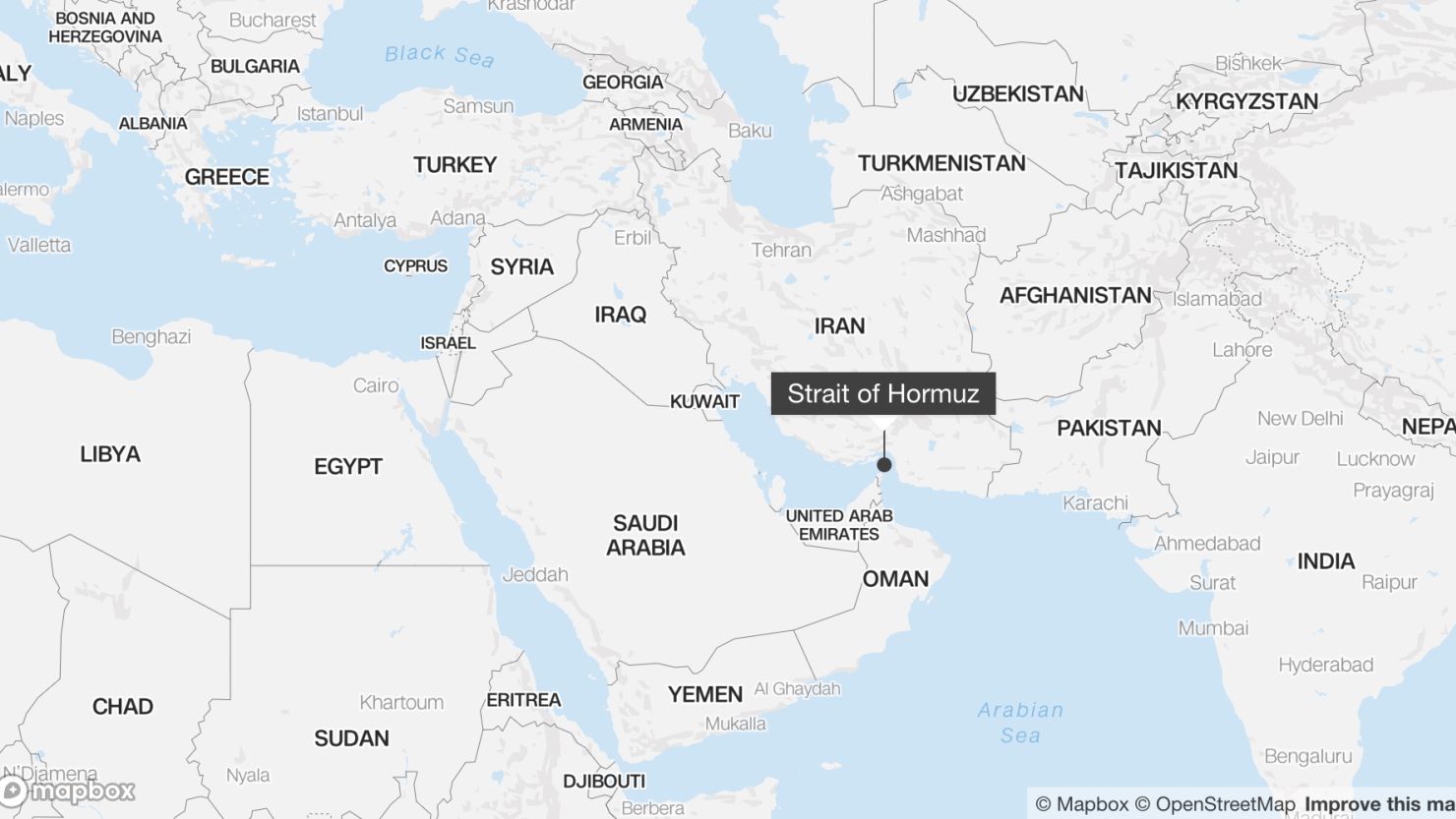
Geopolitical "experts" love to treat the Strait of Hormuz like a giant red button. They claim Iran sits with its finger hovering over the trigger, ready to collapse the global economy by choking off 20% of the world’s petroleum liquids. It is a terrifying narrative. It is also a fundamental misunderstanding of how power, logistics, and self-preservation function in the Persian Gulf.
The conventional wisdom suggests that "Hormuz control" is Iran’s greatest asset. In reality, it is their greatest liability.
While the media focuses on the physical width of the shipping lanes—barely two miles wide in each direction—they ignore the economic gravity that keeps those lanes open. Iran cannot "afford" to give up control of the Strait because they never truly had it. They have the ability to cause a temporary, violent spasm in the markets. They do not have the ability to sustain a blockade. To attempt it would be an act of national suicide, not a strategic masterstroke.
The Geography of Mutual Destruction
The argument for Iranian dominance rests on a 19th-century view of naval warfare. Yes, the geography is tight. Yes, the IRGC (Islamic Revolutionary Guard Corps) uses fast-attack craft, mines, and shore-based missiles. But the "Strait of Hormuz" is not a one-way valve.
Iran’s economy is a captive of the very water it threatens to close. Unlike the United States or even Saudi Arabia, which has the East-West Pipeline to the Red Sea, Iran has almost zero viable bypass infrastructure for its own exports. If the Strait closes, Iran stops breathing.
Consider the "Tanker War" of the 1980s. Iran tried to disrupt Iraqi oil exports. What happened? They ended up damaging their own ability to trade, invited the U.S. Navy (Operation Praying Mantis) to dismantle half their operational fleet in a single day, and gained exactly zero strategic leverage.
Why the "Oil Weapon" is a Blank Flirtation
The standard scare tactic is that oil will hit $200 a barrel if the Strait is blocked. This assumes the world is static. It isn't.
- Strategic Reserves: The IEA member countries alone hold over 1.5 billion barrels in public stocks. That is enough to cover a total Hormuz shutdown for months.
- Spare Capacity: Saudi Arabia, the UAE, and Kuwait maintain significant spare capacity. More importantly, they have spent the last decade building pipelines that terminate outside the Gulf.
- The China Factor: This is the point most analysts ignore because it ruins their "Iran vs. West" binary. China is the primary customer for Iranian oil. If Tehran shuts the Strait, they aren't just poking the "Great Satan"; they are cutting off the energy supply of their only major geopolitical patron.
Do you really think Beijing will sit idly by while their manufacturing base grinds to a halt because of a tactical stunt in the Gulf? Iran’s "control" of the Strait ends where China’s tolerance begins.
The Asymmetric Fallacy
I have watched analysts drool over Iran’s "asymmetric" capabilities for years. They point to the Millennium Challenge 2002 wargame where the "Red" team (Iran) supposedly sank a U.S. fleet. They forget that the exercise was a simulation with specific, rigid parameters that have since been mitigated by drone integration and advanced CIWS (Close-In Weapon Systems).
$Force = (Mass \times Velocity) \times Sustainability$
Iran has the mass and the velocity for a 48-hour firestorm. They have zero sustainability.
Closing the Strait involves more than just sinking a tanker. It requires the ability to prevent the world’s most sophisticated minesweepers from clearing the path. It requires air superiority that Iran hasn't possessed since the 1970s. Without air cover, those famed IRGC fast boats are just target practice for Hellfire missiles launched from platforms Iran can't even see.
The Hidden Cost of Sovereignty
The competitor’s piece argues that Iran can’t afford to give up control because it’s their "only card." This is a loser’s mentality.
By centering their entire national identity on the ability to threaten a waterway, the Iranian leadership has trapped itself in a cycle of diminishing returns. They spend billions on anti-ship missiles while their domestic infrastructure rots and their currency devalues.
The "control" they exert is actually a cage. Because they are seen as a permanent threat to the global commons, they are perpetually sanctioned. They are excluded from the global financial system. They have traded the potential to block the Strait for the certainty of economic isolation.
The Logistics of a Failed Blockade
Let’s run the numbers. Roughly 80 tankers pass through the Strait daily. To "close" the Strait, you need to do more than hit one ship. You have to create a persistent danger zone.
The moment insurance premiums (War Risk Insurance) spike, the global community doesn't just fold; it reroutes. We saw this in the Red Sea with the Houthi rebels. Despite months of missile attacks, global trade didn't die—it just got slightly more expensive and moved elsewhere.
The difference? The Houthis are a non-state actor with little to lose. Iran is a nation-state with refineries, power plants, and ports that are all stationary targets.
Stop Asking if They Can, Ask What Happens Next
The "People Also Ask" sections of the internet are obsessed with: "Can Iran close the Strait of Hormuz?"
The answer is: Yes, for about three days.
The better question is: "What does Iran look like on Day 4?"
On Day 4, the Iranian Navy is at the bottom of the Gulf. On Day 4, the terminals at Kharg Island are smoldering ruins. On Day 4, the Iranian government realizes that you cannot eat "dominance."
The persistence of this myth serves two groups: the Iranian regime, which needs to look powerful to stay in office, and the Western defense contractors, who need a "near-peer" threat to justify carrier groups.
The Truth About Regional Power
True power in the 21st century isn't the ability to stop a ship; it's the ability to own the cargo.
While Iran focuses on the Strait, its neighbors are focused on the "Land Bridge." From the UAE’s rail projects to Saudi Arabia’s Vision 2030, the region is actively engineering its way around the Persian Gulf. Iran is guarding a gate that the rest of the world is learning to walk around.
The more Iran threatens the Strait, the faster its neighbors build the bypasses. Iran isn't dominating the waterway; they are incentivizing their own irrelevance.
If you want to understand the future of the Middle East, stop looking at the map of the Strait. Look at the map of the pipelines. Look at the fiber-optic cables. Look at the trade agreements that bypass Tehran entirely.
The Strait of Hormuz is a 1970s problem in a 2020s world. Iran isn't holding the world hostage; it's holding itself at gunpoint and wondering why no one is rushing to negotiate.
Stop buying the hype. The "Map of Dominance" is actually a blueprint for a dead end.


