Some doors do not merely close; they lock out the world until the world forgets they ever existed.
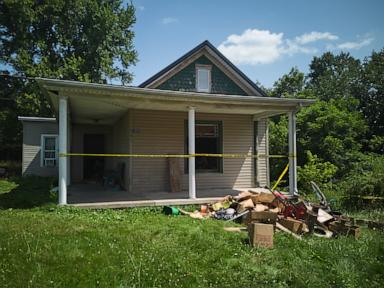
Drive down the county roads where the asphalt gives way to cracked gravel and choked brush, and you will find them. Houses that look ordinary enough from a distance, perhaps a rusted truck in the yard or a porch piled high with the detritus of decades. But step closer. The air changes. It carries a heavy, stagnant weight—the smell of old decay, unwashed laundry, and a desperate, suffocating isolation.
Inside one such house, sixteen children lived.
Or rather, they survived.
We talk about child welfare in boardrooms and courtrooms with clean carpets and polished oak benches. We speak of statutes, codes, and mandates. We use clinical terms like deplorable conditions and systemic neglect. But statistics do not breathe. Numbers do not crawl across a floor sticky with refuse, searching for a crumb of food or a patch of sunlight that never quite reaches the interior.
Let us be entirely honest about what that house looked like, based on the cold, hard entries scratched into police reports and social service logs.
Garbage stacked three feet high. Human waste marking the corners where plumbing long ago gave up the ghost. No running water. No electricity humming in the walls. Just darkness, broken only by the thin glare of a flashlight held by an officer who had seen plenty of horrors in his career, yet still had to turn his head to swallow the bile rising in his throat. Sixteen human beings, ranging from toddlers to teenagers, hiding in the shadows like feral animals. They did not scream when the authorities arrived. Trauma teaches you that sound only invites pain. They simply stared with wide, hollow eyes, unblinking, frozen in a perpetual state of defensive suspension.
At the center of this nightmare stood a man.
His name is rarely whispered without a shudder. He was the grandfather, the patriarch, the self-appointed king of a crumbling castle built on terror and control. For years, the outside world suspected nothing, or perhaps suspected just enough to look the other way, which is its own form of complicity. Neighbors heard strange noises. Schools noted absences that went conveniently unexplained. The machinery of community safety groaned, sputtered, and ultimately failed because isolation is a brilliant insulator against intervention.
When the raid finally came, it was supposed to be the beginning of justice.
That is how the script is written in our collective imagination. The villain is caught. The victims are rescued. The gavel falls, a prison door slams, and society breathes a collective sigh of relief, secure in the knowledge that balance has been restored to the moral universe.
Consider what happens next. Because reality is infinitely more complicated, and far more unsettling, than a movie script.
The man accused of orchestrating this living hell was brought before the bar of justice. He was supposed to stand trial. The prosecutors had their binders filled with photographic evidence, medical reports, and the heartbreaking testimonies of professionals who had spent weeks trying to coax language back into the throats of children who had forgotten how to speak.
The trial never happened.
Instead, a team of court-appointed psychiatric evaluators sat down with the aging patriarch. They tested his cognitive functions, probed his memory, and examined the wiring of his brain.
The diagnosis came down like a lead weight. Incompetent to stand trial.
The Chasm Between Guilt and Cognition
In our legal system, standing trial requires a specific threshold of capacity. A defendant must understand the charges against them. They must be able to consult with their attorney in a meaningful way. If the mind has frayed to the point where reality is a shattered mirror, the law steps back. You cannot try a ghost. You cannot hold a coherent conversation with a man whose brain is eaten away by severe cognitive decline, dementia, or profound psychological deterioration.
Public outrage was immediate and predictable.
People took to the comment sections and the airwaves, screaming about technicalities, loopholes, and a system built to coddle monsters. How could a man responsible for such unimaginable cruelty walk away from accountability simply because his mind was failing him? Where was the retribution for sixteen children whose childhoods were stolen and buried under mountains of garbage?
The anger is entirely justified. It comes from a deep, primal human need for balance. When a horrific wrong is committed, the universe demands a corresponding punishment.
Yet, the law operates on a different, colder set of mechanics. It cannot punish a vessel that no longer contains a functioning consciousness capable of comprehending the penalty. To put an incompetent man on trial is not justice; it is theater. It is a hollow ritual performed for the benefit of an angry crowd, devoid of any genuine legal meaning because the defendant lacks the basic hardware to understand why he is sitting in that chair.
This is where the true horror of the situation deepens. It shifts from a simple story of good versus evil into a complex, tragic meditation on the limits of human institutions.
The man is not walking free. Do not imagine him retiring to a sunlit porch with a glass of lemonade. In cases like this, incompetence to stand trial leads directly to civil commitment—secular confinement within a state psychiatric facility or a secure forensic hospital. He is locked away just as surely as he would be in a maximum-security prison, but the architecture of his confinement is medical, not penal. He is monitored by nurses, dosed with antipsychotics or memory medications, and kept under observation twenty-four hours a day until the end of his days.
Is that justice?
For the sixteen children now scattered across foster homes and therapeutic facilities, learning how to use a fork, how to sleep in a bed with clean sheets, and how to trust a human touch, a hospital room offers no real catharsis. No psychiatric ward can reconstruct the years stolen from them. No medication administered to an ailing grandfather can rewrite the muscle memory of terror stamped into their nervous systems.
The Anatomy of Invisible Suffering
We must ask ourselves a harder question. How does a tragedy of this magnitude happen in plain sight?
We like to comfort ourselves with the myth of the monster in the woods. We picture abusers as cartoonish villains who wear their malice on their sleeves, easily identifiable by their snarls and jagged teeth. Real life is rarely so accommodating. Abuse of this scale requires silence, and silence is maintained by a dense web of community apathy, institutional blind spots, and the terrifying insularity of dysfunctional families.
Think about the sheer logistics of hiding sixteen human beings.
Groceries bought in bulk, or scavenged. Medical needs ignored entirely. Dental pain managed with cheap liquor or silent endurance. The sensory overload of a home where refuse piled higher than the furniture must have created an alternate reality for everyone inside. Over time, the abnormal becomes the baseline. If you are a child born into that house, you do not know that other children live in homes with warm water, cartoons on Saturday mornings, and parents who read stories before bed. For you, the filth is the world. The man in the corner is god. The silence is the law.
When social workers finally breached the threshold, they weren't just uncovering a crime scene. They were stumbling across an ecosystem.
And that ecosystem was sustained by a society that preferred not to look too closely. We live in neighborhoods where we do not know the names of the people living three doors down. We mistake privacy for respect, and detachment for politeness. We tell ourselves that what happens behind closed doors is nobody's business, right up until the moment the door is kicked open by emergency responders and we express shock that such things could happen in our town.
They happen every day. In subtle ways. In whispered tones.
The legal system processed the case with clinical detachment. The competency hearings concluded. The medical holds were signed. The news vans packed up their equipment, folded their satellite dishes, and drove off to the next sensational headline, leaving behind the quiet, grinding work of human repair.
The Long Road Home
What happens to sixteen children whose foundation was built on absolute nothingness?
Recovery for them is not a straight line. It is a jagged, exhausting ascent up a mountain of glass. Therapists will spend years trying to undo the wiring of survival. A sudden loud noise is not just a sound; it is a trigger that sends a fifteen-year-old child diving under a table, heart hammering against their ribs as if the police had just breached the door all over again. The smell of garbage can induce panic attacks long after they have moved into homes with fragrant gardens and polished hardwood floors.
They carry an invisible backpack filled with a history they did not write and cannot easily put down.
And the grandfather? He sits in a sterile room with linoleum floors and security cameras mounted in the corners. He may not even remember his own name on some afternoons. He may look out the window at the manicured lawns of a state-funded facility, wondering where he is, entirely insulated from the storm of rage and sorrow he left in his wake.
There is no satisfying narrative bow to tie around this story. There is no moral lesson delivered with a clean smile that makes the world feel safe again.
Sometimes, the gears of justice grind to a halt not because someone beat the rap, but because the human mind involved had already disintegrated into ash before the law could reach it. Sometimes, the villains do not get their day in court, not because they are too powerful, but because they are too broken to understand the judgment being passed upon them.
We are left standing in the quiet aftermath, looking at the empty house at the end of the road. The police tape has blown away in the wind. The weeds have reclaimed the driveway. But the echo of what happened inside those walls remains, hanging heavy in the air, a reminder of how fragile our safety nets truly are, and how easily a human life can slip through the cracks when nobody is willing to listen to the silence.