Two detainees sitting in the backseat of a federal SUV during a high-stakes Houston pursuit could hold the clearest evidence in a state criminal probe. Yet their testimony risks disappearing if federal immigration authorities deport them before local prosecutors ever get a word.
That tension sits right at the center of Harris County District Attorney Sean Teare's push to interview two witnesses who were allegedly inside an Immigration and Customs Enforcement vehicle when an agent struck a fleeing man in northwest Harris County. When a local prosecutor warns that key witnesses could be removed from the country mid-investigation, it stops being a routine traffic-stop dispute and turns into a clash over jurisdiction, accountability, and evidence preservation.
What Happened During the Houston Pursuit and Crash
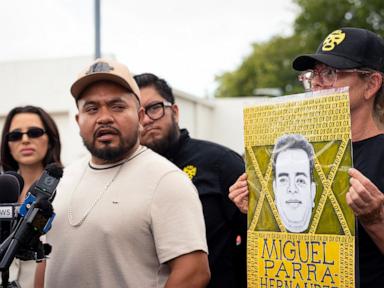
The collision occurred on a Saturday morning in mid-October 2026 near Clay Road and Highway 6 in northwest Harris County, according to reporting by FOX 26 Houston and KHOU 11. Federal agents were pursuing a white truck carrying two men, which allegedly traveled the wrong way on Clay Road before stopping. Both men got out and ran. One got away eastbound along Clay Road, while the second man—identified in coverage as Miguel Parra or Miguel Parra-Hernandez—was struck by an ICE vehicle and hospitalized with leg fractures.
Here is where the stories split sharply. ICE stated that agents attempted a vehicle stop, the men fled on foot, and Parra-Hernandez ran in front of an ICE vehicle during apprehension efforts, calling claims of an intentional hit false. District Attorney Sean Teare told FOX 26 that investigators uncovered evidence suggesting the agent's SUV appeared to intentionally strike him and that two detained individuals were already sitting in the backseat during the pursuit.
Speaking from two decades of prosecutorial experience and training at the Houston Police Department and Harris County Sheriff's Office academies, Teare called out the tactic directly, noting that officers do not launch another pursuit while already holding detainees inside their vehicle. Advocacy group FIEL Houston also raised alarms about whether newly issued ICE rules for traffic stops and vehicle chases—put in place just a week earlier—were ignored, and disputed ICE's account of the target's identity.
Why the Two Backseat Witnesses Are So Crucial
In a contested collision case, cameras only tell part of the story. Surveillance footage obtained by local outlets shows an ICE vehicle moving toward Parra-Hernandez before impact, while drone mapping, crash reconstruction, and canvassing help establish angles, speed, and braking. Still, video can miss what happened inside the cabin or right before a driver turned the wheel.
People seated inside the backseat of the SUV had a front-row view of how the pursuit unfolded and how the driver reacted. Because they were already in federal custody, they are uniquely vulnerable. If federal officials transfer or deport them before prosecutors interview them, a vital eyewitness account could vanish.
That is why advocates like FIEL Houston have urged officials to seek U visas or legal protections so potential detainee witnesses remain in the United States during the investigation. Under federal law, U nonimmigrant status exists to help law enforcement investigate and prosecute certain qualifying crimes when victims or witnesses cooperate, though securing those protections amid federal-state friction is rarely straightforward.
Federal Friction and State Prosecutors
One of the biggest takeaways from Houston isn't just the crash itself—it's how differently local agencies and federal immigration authorities interact during criminal inquiries. Teare told FOX 26 that local law enforcement agencies like HPD and the Harris County Sheriff's Office typically cooperate and open doors during investigations, whereas ICE and the Department of Homeland Security have not been cooperating in these probes.
Even earlier in the summer of 2026, after the fatal July shooting of motorist Lorenzo Salgado Araujo in Houston, Teare publicly pressed for witnesses and video while noting federal authorities were handling the investigation. That history shapes how people in Harris County view the October vehicle probe: skepticism runs high on all sides, and local officials feel forced to build cases independently.
To bridge gaps when official cooperation stalls, prosecutors have leaned on outside tools—canvassing neighborhoods, running crash reconstruction, and launching an online portal where witnesses can submit tips, photos, or video regardless of immigration status. Those steps help, yet they still leave a glaring question: can state investigators secure timely, uncoerced testimony from people held inside a federal agency's custody?
Common Misconceptions About State Probes Into Federal Agents
Whenever a local district attorney investigates a federal agent, rumors and misunderstandings spread fast. A few points deserve clear context so readers don't get tripped up by bad assumptions:
- Local prosecutors have zero authority to look into misconduct: Not true. State and county prosecutors can investigate potential violations of state criminal law, though constitutional doctrines like Supremacy Clause immunity can create sharp legal battles if charges are ever filed.
- Surveillance video settles everything automatically: A clip can show movement or impact, yet frame rates, camera angles, and distance often leave key details open to dispute. Eyewitnesses, physical evidence, and reconstruction all matter together.
- Detainees cannot serve as credible witnesses: Being in immigration custody does not erase what someone saw or heard. Investigators routinely weigh credibility, consistency, and corroborating evidence for any witness regardless of legal status.
Practical Next Steps for Following or Supporting Accountability
If you are following this case in Houston—or trying to make sense of how high-stakes investigations play out when agencies clash—focus on verifiable facts rather than social media clips. Check primary local reporting from outlets like the Texas Tribune and KHOU 11, and read official statements carefully rather than treating initial claims from any side as the final word.
If you or someone you know witnessed a law enforcement incident and has video or information, share it through official channels—such as the Harris County District Attorney's public tip portal mentioned by local officials—and speak with a qualified attorney before giving formal statements. Above all, keep watching whether those backseat witnesses are actually interviewed before any removal happens, because that single detail will tell you a lot about how much weight local accountability carries here.
Harris County DA details investigation into ICE pursuit tactics
This video interview with District Attorney Sean Teare directly explains his investigation into the ICE vehicle pursuit and why witness cooperation matters.