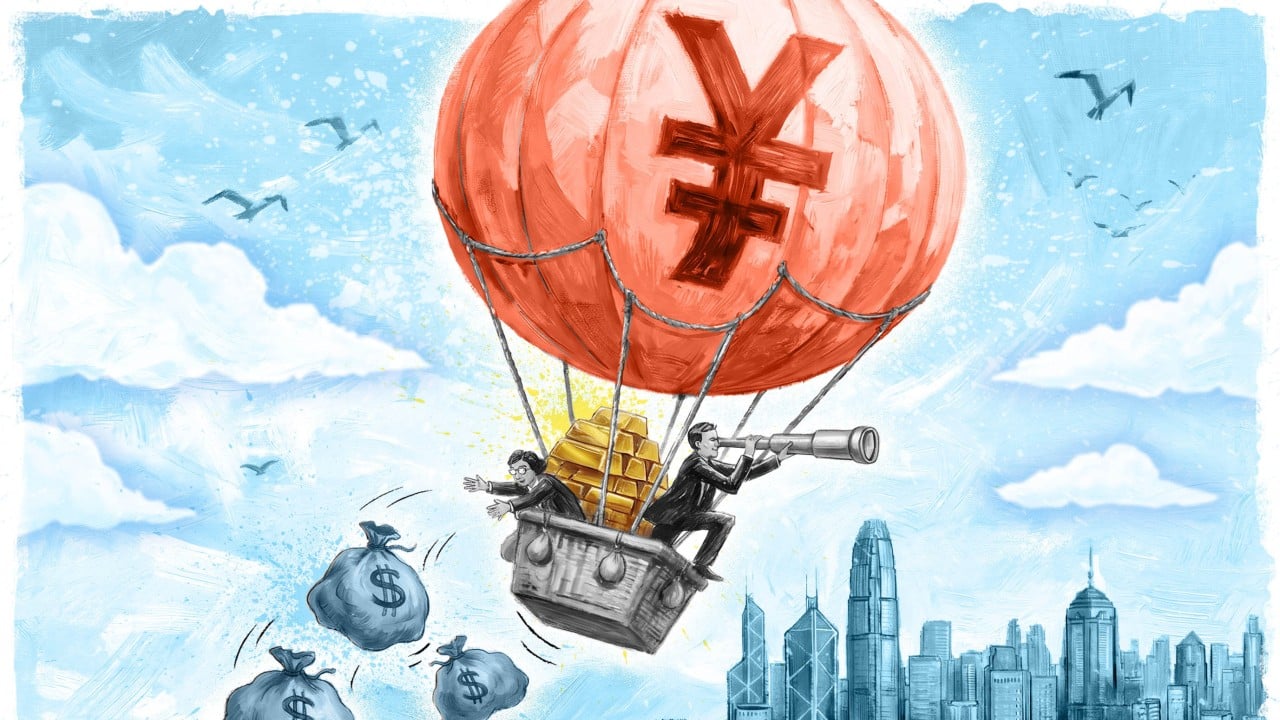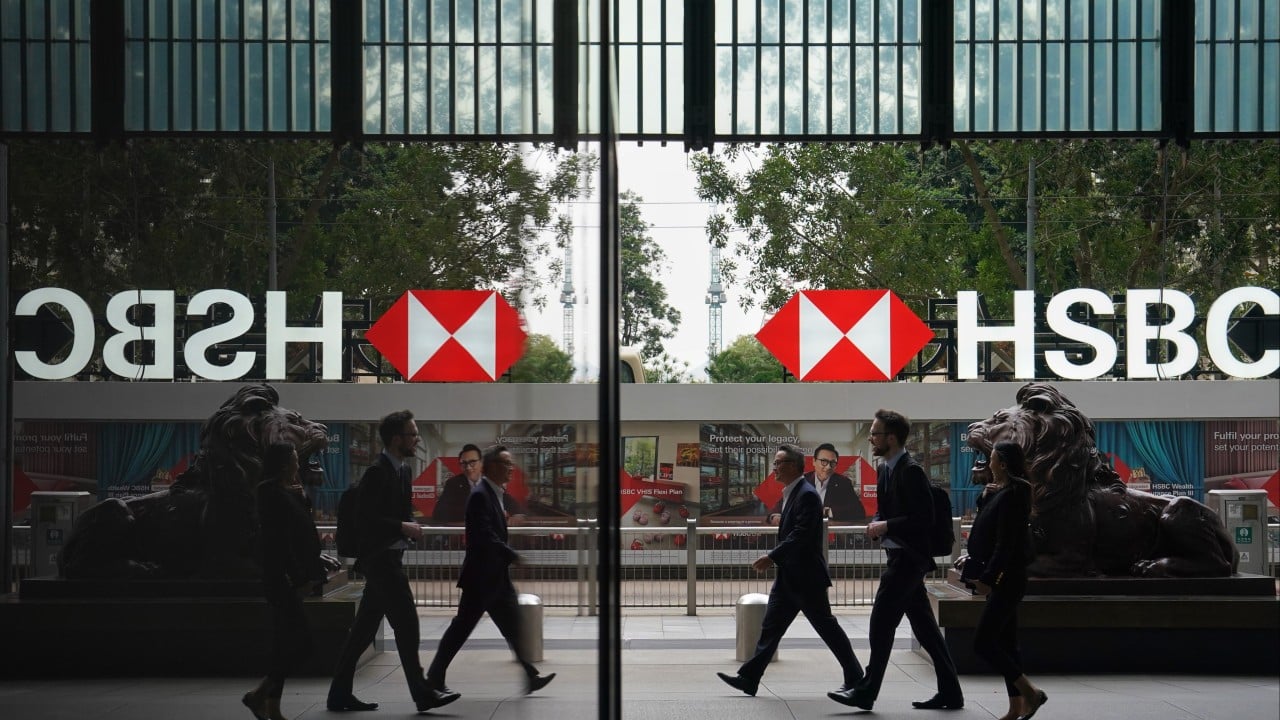
You'd think a 52% surge in pre-tax profit and a fresh $1 billion share buyback would send a bank's stock soaring. It didn't. When HSBC released its third-quarter earnings for 2021, investors dumped the stock fast enough to knock roughly 5% off its share price in Hong Kong and London trading.
If you're looking at those numbers and scratching your head, you aren't alone. Most retail investors see big profit headlines and assume green candles automatically follow. Wall Street and institutional desks operate on a completely different frequency. They don't care about the quarter that just ended. They care about what happens next, how clean the earnings actually were, and whether management is burning cash on problems they haven't fully disclosed yet.
Here is what actually triggered the sell-off, why the market looked right past that $1 billion buyback, and what you need to watch when major global banks report blowout numbers that still tank the stock.
The Headline Numbers Looked Great on Paper
Let's look at the raw figures HSBC put on the table for the third quarter of 2021. Reported pre-tax profit hit $5.4 billion, up from $3.1 billion in the same period a year earlier. That crushed the consensus analyst estimate of roughly $3.8 billion. Revenue climbed 1% to $12 billion, and the bank announced a share repurchase program of up to $1 billion set to begin shortly after the results.
On the surface, it looked like a victory lap for Chief Executive Noel Quinn. The bank had spent the previous two years slashing costs, exiting unprofitable retail operations in the United States and France, and pivoting aggressively toward wealth management in Asia.
So why did the market punish the stock?
Because institutional investors read past the first page of the earnings release. When you strip away one-off accounting boosts, the core banking engine looked far less impressive than the $5.4 billion headline suggested.
The Credit Loss Release Illusion
The biggest driver behind HSBC's massive profit beat wasn't a sudden explosion in lending or trading fees. It was an accounting reversal.
During the height of the COVID-19 pandemic in 2020, global banks set aside tens of billions of dollars to cover expected loan defaults. Those provisions crushed profits at the time. Fast forward to the third quarter of 2021, and the global economy had reopened faster than those worst-case models predicted.
HSBC released $700 million in expected credit loss reserves back onto its balance sheet during Q3. In the prior-year quarter, the bank had booked a $800 million charge. That single swing accounted for $1.5 billion of the year-over-year profit improvement.
Smart money discounts reserve releases immediately. You can't release the same pandemic rainy-day fund twice. Once those reserves are gone, the bank has to generate actual organic revenue growth to keep earnings climbing. When analysts stripped out the credit loss reversals and restructuring adjustments, underlying revenue growth was sluggish at best.
China Real Estate Exposure Spooked Institutional Desks
If you want to understand why HSBC trades the way it does, you have to remember where it makes its money. Despite being headquartered in London, HSBC is fundamentally an Asian banking powerhouse. Over two-thirds of its profit comes from Asia, with Hong Kong serving as its crown jewel.
At the exact moment HSBC reported these results, China's property sector was in the middle of a historic liquidity crunch. China Evergrande Group was teetering on the edge of default, and contagion was spreading to other major developers like Fantasia Holdings and Sinic Holdings.
Investors combed through HSBC's Q3 disclosures looking for reassurance that the bank wasn't sitting on a ticking time bomb of defaulted developer loans. What they found made them nervous.
HSBC disclosed roughly $19.6 billion in direct exposure to mainland China commercial real estate. Management insisted that the vast majority of this lending was to high-quality, state-owned enterprises or top-tier developers with solid balance sheets. Chief Financial Officer Ewen Stevenson told analysts the bank wasn't seeing significant stress in its specific book yet.
The market didn't buy the calm tone. Even if HSBC didn't hold massive direct loans to Evergrande, a broader freeze in Chinese property values threatens collateral values across the entire region, slows down Hong Kong wealth management inflows, and dampens consumer confidence. Traders sold first rather than waiting to see if the contagion would show up in Q4 write-downs.
Why the $1 Billion Share Buyback Felt Underwhelming
Share buybacks usually put a floor under a falling stock price. By reducing the total share count, a company boosts earnings per share and signals that management believes the stock is undervalued.
HSBC's $1 billion buyback failed to spark any enthusiasm for two simple reasons.
First, $1 billion sounds huge until you compare it to HSBC's market capitalization, which hovered well above $110 billion at the time. A $1 billion repurchase retires less than 1% of the company's outstanding shares. For a bank generating billions in excess capital, institutional shareholders had hoped for something closer to $2 billion or $3 billion.
Second, management paired the buyback announcement with cautious guidance on future capital returns. Stevenson explicitly warned investors not to expect another buyback announcement alongside the full-year results in February. The bank wanted to keep plenty of powder dry to fund potential bolt-on acquisitions in Asian wealth management and absorb any regulatory headwinds.
When investors realize a capital return program is a modest one-off rather than the start of an aggressive quarterly cash-return cycle, the initial excitement evaporates instantly.
Net Interest Margins Were Still Stuck in the Mud
Banks make their bread and butter on the spread between what they pay depositors and what they charge borrowers. This metric is called net interest margin, or NIM.
Throughout 2021, central banks in the United States, the United Kingdom, and Hong Kong kept benchmark interest rates pinned near zero to support the post-pandemic recovery. That low-rate environment acted like a wet blanket on HSBC's core lending profitability.
In Q3 2021, HSBC's net interest margin sat at just 1.19%, down slightly from 1.20% in the previous quarter. Even though loan volumes ticked up modestly in mortgages and commercial banking, the razor-thin spread meant the bank was working twice as hard to make the same dollar of interest income.
Investors knew interest rate hikes were eventually coming from the Bank of England and the Federal Reserve, which would act as a massive tailwind for HSBC's margins. The frustration in Q3 came down to timing. The rate hikes hadn't arrived yet, meaning the bank had to slog through at least one or two more quarters of compressed margins before seeing real relief on the top line.
Rising Costs and the Pivot to Asia
Restructuring a 150-year-old global banking giant isn't cheap, and the bills were piling up in the third quarter.
HSBC had committed to cutting billions in structural expenses while simultaneously pouring money into technology and hiring thousands of relationship managers across Singapore, Hong Kong, and mainland China. In Q3, adjusted operating expenses crept up by 2% compared to the prior year, driven largely by higher performance-related pay accruals and technology investments.
At the same time, its global banking and markets division—the investment banking arm—saw revenue slip as market volatility cooled off from the frantic trading days of 2020.
When revenue is flat, margins are compressed, and operating costs are ticking higher, you get what analysts call "negative jaws." That's banking jargon for costs growing faster than income. Institutional funds hate negative jaws because it forces them to rely on hope rather than current execution.
How to Spot a Value Trap vs. a Buying Opportunity in Bank Stocks
Watching a profitable company drop 5% on earnings day is one of the best learning experiences you can get in the stock market. It forces you to separate accounting noise from business reality.
If you're evaluating HSBC or any other major financial institution after a post-earnings drop, ignore the headline net income number for the first ten minutes. Go straight to three specific metrics in the quarterly release.
- Pre-provision operating profit. Strip out credit loss provisions and reserve releases completely. Look at what the bank earned purely from taking deposits, making loans, and collecting fees minus its operating expenses. If pre-provision profit is shrinking, the headline beat is an illusion.
- Net interest margin trajectory. Check whether NIM is expanding or contracting quarter over quarter. A bank with rising loan volume and falling margins is running on a treadmill. Look for management commentary on "rate sensitivity"—specifically how many billions in extra annual revenue they project for every 25-basis-point hike in central bank interest rates.
- CET1 capital ratio. Common Equity Tier 1 (CET1) measures a bank's core capital against its risk-weighted assets. HSBC ended Q3 with a very healthy CET1 ratio of 15.9%, well above its target range of 14% to 14.5%. A bloated CET1 ratio tells you the bank has plenty of excess cash sitting around, which eventually has to go toward dividends, buybacks, or acquisitions once regulatory clouds clear.
Don't chase a bank stock solely because it announces a flashy share buyback or beats consensus earnings estimates on the back of accounting reversals. Wait for the dust to settle after the earnings call, read the breakdown of underlying pre-provision revenue, and check where the bank's regional loan book is most exposed. When a global lender like HSBC drops 5% on strong headline numbers, the market is telling you to look closely at the risks sitting on the balance sheet rather than celebrating the quarter that just passed.