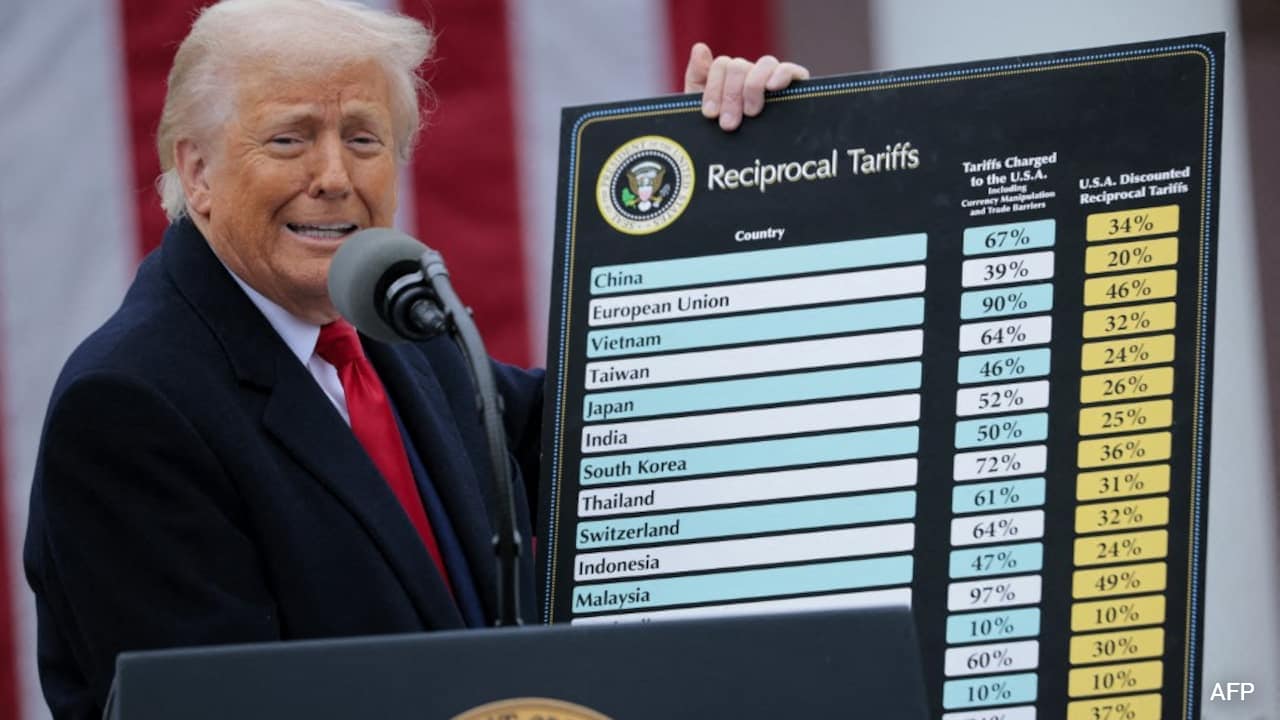
Everyone is losing their minds over the hundred billion dollar tariff refunds heading back to importers after a federal court ruling. Corporate lobbyists are popping champagne. Pundits are shouting about government overreach and executive miscalculation. The lazy consensus says this is a massive victory for free trade, a stinging rebuke of protectionist hubris, and a welcome cash injection for companies that fought the system.
It is a complete mirage.
I have watched companies burn millions on legal fees chasing these exact claims, treating court dockets like lottery tickets while completely ignoring their own supply chain fundamentals. Focus on the refund check and you miss the structural trap entirely. The real story is not that Washington has to write a nine-figure check. The real story is that the money you think is coming back has already been spent three times over in structural adjustments, pricing shifts, and operational overhead that no court order will ever reverse.
The Accounting Fiction Of Getting It All Back
Let us clear up the core delusion immediately. When a court decides that certain Section 301 duties were levied unlawfully, corporate finance departments treat the prospective payout as windfall revenue. They plug it straight into forward-looking models.
That is not how inventory economics work.
Imagine a scenario where an importer paid a twenty-five percent tariff on machinery components back in two thousand eighteen. Did they swallow that cost out of pure altruism? Of course not. They passed it down the line. They raised wholesale prices. They squeezed domestic Tier-2 suppliers. They cut marketing budgets. They delayed plant automation.
By the time the Court of International Trade rules against the government, the economic friction of that tariff has already rippled through the entire ecosystem. The importer who paid the tariff did not bear the full burden. The consumer did. The distributor did. The contract manufacturer in Ohio who had to renegotiate margins did.
Now, the original importer gets a check from the Treasury. Do they track down every downstream client and refund the exact micro-fraction of the price hike passed on during a Tuesday morning purchase six years ago?
Do not be absurd.
That money goes straight onto the balance sheet as unexpected earnings, rewarding short-term equity holders while the actual economic damage remains absorbed by every link in the chain that never had standing to sue. Calling this a correction of justice is like burning down a neighborhood, paying the primary homeowner for the insurance value of the front door, and pretending the fire never happened.
Why The Legal Victory Is A Trap
The litigation machine driving these refunds is brilliant at billing hours and terrible at strategy. Law firms spent years convincing mid-sized manufacturing and retail outfits that they could claw back every penny if they just signed an expensive retainer and joined the plaintiff queue.
Here is what the legal briefs leave out: the administrative drag of compliance.
To secure your share of these refunds, you need pristine documentation showing exact entry numbers, liquidated duties, protest timelines, and proof that you did not shift the burden completely. I have seen firms spend twelve million dollars in legal fees across five years of court battles to secure an eighteen million dollar payout. After factoring in internal resource drain, executive distraction, and the opportunity cost of tying up capital in legal limbo, the net return on that victory approaches zero.
Worse, chasing the refund creates a dangerous psychological dependency. It trains management teams to look backward at regulatory arbitrage rather than forward at operational resilience. While your legal counsel is arguing statutory interpretation before a panel of judges in Washington, your competitors are redesigning their bills of materials to bypass the tariffed jurisdiction altogether. One approach relies on the mercy of a judge. The other makes tariffs irrelevant. Which one sounds like a real business strategy?
The Fallacy Of Retrospective Protection
Politicians love tariffs because they are a hidden tax that sounds like patriotism. Importers love fighting tariffs because winning in court sounds like vindication. Both groups are playing a game of three-card monte with the public trust.
The lazy consensus argues that these refunds prove the executive branch overstepped its authority and that the free market is snapping back into equilibrium. That ignores the reality of how global supply chains adapted while the lawsuits dragged on through the court system.
Companies did not sit around waiting for a judicial epiphany. They moved production out of Shenzhen and into Guadalajara, or Vietnam, or domestic automated hubs. They re-engineered products to shift tariff classifications legally. They built entirely new operational models that factored trade friction as a permanent cost of doing business.
If you built your entire strategic roadmap around the hope that a federal court would eventually bail you out of a tax policy, you deserve the margin compression you are trying to escape.
The Uncomfortable Truth About Who Really Pays
Let us address the elephant in the room that neither protectionists nor free-traders want to admit. Tariffs are rarely about pure national security, and refunds are rarely about pure justice. Both are mechanisms of wealth transfer disguised as legal philosophy.
When the state levies a tariff, it extracts capital from productive commercial enterprises and redirects it toward political priorities or general revenue pools. When the court orders a refund, it extracts capital from the general revenue pool and hands it back to the specific corporate entities with the cash flow and risk tolerance to finance a multi-year federal lawsuit.
Notice who is missing from that transaction. The end consumer who paid twenty percent more for a refrigerator during a supply chain crunch is not getting a check in the mail. The factory worker whose plant deferred a hiring wave because input costs spiked is not getting a dividend.
The system operates to enrich intermediaries, legal technicians, and corporate treasuries, all while maintaining the illusion that the rule of law is fixing a broken market.
What You Should Be Doing Instead
Stop waiting for the appellate courts to rescue your profit margins. Stop treating regulatory disputes as your primary profit center. If you have a claim pending in the current refund wave, treat it found money—a pleasant surprise to be swept into a reserve fund, not operational fuel for next quarter's growth projections.
Real operational resilience does not come from winning a lawsuit against the United States Trade Representative. It comes from building a cost structure robust enough to absorb government incompetence without blinking. Diversify your sourcing footprints. Optimize your product architecture so a single stroke of a pen in Washington cannot instantly obliterate your unit economics.
The hundred billion dollar refund is not a triumph of the free market. It is a monument to how deeply tangled government policy and corporate compliance have become.
Let the lawyers fight over the scraps. Build something they cannot tax.