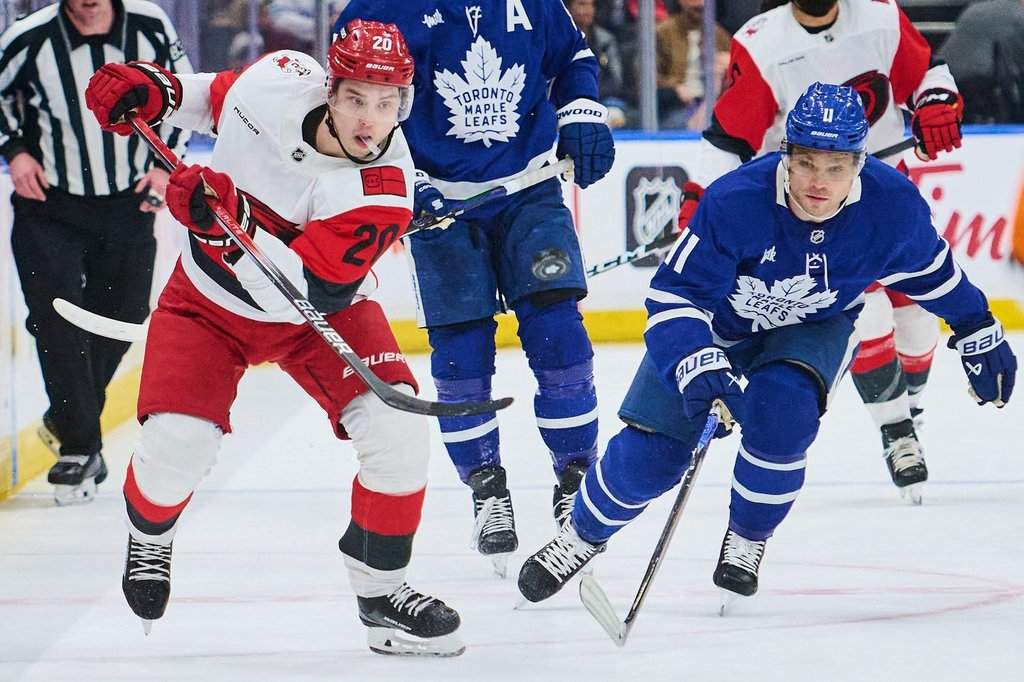
The Toronto Maple Leafs just learned a hard lesson about playing against a relentless puck-pressure system. It doesn't matter how much high-end skill you have on the roster if you can't clear your own zone under duress. The Carolina Hurricanes walked into Scotiabank Arena and snatched a victory in a game that felt more like a chess match played at 100 miles per hour. This wasn't just another mid-season matchup. It was a clash of philosophies that ended with the Hurricanes proving why their structured chaos is so difficult to beat in a seven-game series.
Watching the Hurricanes play is exhausting. They don't give you a second to breathe. They don't care about your highlights or your payroll. They just want the puck. When they secured that overtime winner, it felt like the inevitable result of sixty-plus minutes of sustained territorial dominance. For another perspective, read: this related article.
The breakdown of a tactical masterclass
Toronto started with the kind of energy you expect from a home team. They were sharp. The transitions looked clean for about ten minutes. Then the Hurricanes' forecheck started to bite. Rod Brind'Amour has his team playing a style that requires every single player to buy in, and it showed. Every time a Leafs defenseman touched the puck behind his own net, two Hurricanes were already there.
That pressure forces mistakes. It turns world-class playmakers into panicked puck-movers. The Leafs struggled to find their rhythm because the Hurricanes took away the middle of the ice. You saw Mitchell Marner and Auston Matthews trying to create something out of nothing, but the passing lanes were consistently clogged with sticks and bodies. Related analysis regarding this has been published by The Athletic.
Carolina’s defensive structure is a nightmare. They play a man-to-man system that essentially dares you to beat your defender one-on-one. If you can't do that, you're stuck on the perimeter. The Leafs stayed on the perimeter for far too long. While Toronto had their chances, most of them were "one and done" opportunities. They didn't get those second and third looks that wear a goalie down.
Frederik Andersen and the revenge narrative
There's always an extra layer of tension when Frederik Andersen returns to Toronto. He knows those boards. He knows the shooters. More importantly, he knows the pressure that comes with playing in that building. Andersen was calm. Even when the Leafs pushed late in the third period, he didn't look rattled.
Goaltending often gets boiled down to "who made the big save," but for Andersen, it was about positioning. He didn't have to make many "desperation" saves because he was already in the right spot. He forced the Leafs to be perfect with their shots. They weren't.
Pyotr Kochetkov has been getting a lot of the spotlight lately, but games like this remind everyone why Andersen is still a vital piece of this Hurricanes puzzle. He provides a veteran presence that settles the team down when the opposition starts to find a groove. His performance was the foundation that allowed the Hurricanes to hang around long enough to find that overtime magic.
Why the Leafs struggle against heavy forechecking teams
It’s a recurring theme for Toronto. They have the talent. They have the power play. Yet, when they face a team that refuses to let them skate through the neutral zone, they stall. The Hurricanes aren't the biggest team in the league, but they play heavy. They finish checks. They make you pay for every inch of ice.
This game highlighted the gap in grit between the two rosters. It’s not about fighting; it’s about winning battles along the wall. In the third period, when the game was tied and the intensity ramped up, the Hurricanes won more of those 50/50 pucks. That is the difference between winning in regulation and hoping for a bounce in overtime.
The Maple Leafs rely heavily on their top stars to bail them out. That works against bottom-ten teams. It doesn't work against a Carolina squad that rolls four lines and expects everyone to play the same way. The Hurricanes' depth was on full display. Even their bottom-six forwards were generating pressure and keeping the puck deep in the Toronto end.
The overtime winner was a clinical finish
Overtime in the NHL is often a chaotic mess of three-on-three breakaways. This one felt a bit different. The Hurricanes controlled the puck with a level of patience that you don't always see in the extra frame. They waited for the Leafs to overcommit.
The winning goal was a result of a broken play that the Hurricanes recovered faster than Toronto. It was a quick transition—a hallmark of their system. One mistake by a Leafs defender, a slight hesitation in coverage, and the puck was in the back of the net. Game over.
You could see the frustration on the faces of the Toronto players. They felt they played well enough to win, and in some ways, they did. But "well enough" isn't the standard when you're facing a Cup contender. The Hurricanes don't wait for you to make a mistake; they manufacture the environment where mistakes are inevitable.
Lessons for the postseason
If you’re a Leafs fan, this game should be a wake-up call. It’s the same blueprint that has haunted the team in previous playoff runs. A structured, aggressive team can neutralize high-end scoring if they stay disciplined. The Hurricanes stayed disciplined. They took very few penalties and didn't give the Toronto power play much room to breathe.
Carolina, on the other hand, looks ready. They have the goaltending, the defense, and a relentless mentality. They don't seem to care who they are playing or where. They play "Canes Hockey" and let the chips fall where they may.
The Metropolitan Division is a gauntlet, but Carolina's ability to win these tough road games against elite talent is exactly why they are favorites. They didn't just win a game in Toronto; they sent a message to the rest of the Eastern Conference.
If you want to understand how the Hurricanes keep winning, stop looking at the box score and start looking at the puck battles. They win the small wars that decide the big ones. Toronto has some soul-searching to do regarding their ability to handle that kind of pressure.
Watch the tape of the second period. Count how many times the Leafs tried to dump the puck out and it was intercepted at the blue line. That’s the game right there. Fix that, or get used to these kinds of overtime losses. Next time these two teams meet, look for Toronto to try and stretch the ice more, but unless they find a way to break that first wave of the Hurricanes' forecheck, the result will likely be the same.