Federal immigration crackdowns are no longer just quiet, middle-of-the-night deportations. They're playing out in broad daylight on busy commuter roads, and sometimes, the bullets fly.
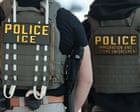
On Monday morning around 9:30 a.m., an attempted arrest by Immigration and Customs Enforcement (ICE) agents on Route 72 near Mermaid Drive in Manahawkin turned chaotic. Stafford Township police confirm that an ICE agent tried to apprehend a suspect. Instead of complying, the suspect fled in a vehicle, striking the federal agent. In response, the injured agent drew his firearm and shot directly at the fleeing vehicle, reportedly hitting it before the suspect sped away.
The suspect is still at large. The agent was taken away on a stretcher with unknown injuries. This wasn't a coordinated task force operation with local police. Stafford Township officers didn't even know it was happening until the shots were fired. They arrived only to direct traffic and manage the crime scene.
This high-profile confrontation highlights a massive, high-stakes standoff happening across America right now. It is a direct result of federal mandates slamming headfirst into strict state sanctuary laws, and the tension is reaching a breaking point.
Why Local Police Stayed Out of the Route 72 Standoff
If you're wondering why local police weren't helping federal agents lock down Route 72 to catch a fleeing suspect, the answer lies in New Jersey state policy. Under the Immigrant Trust Directive, local law enforcement officers in New Jersey are strictly prohibited from participating in federal immigration operations.
The directive is designed to build trust between local police and minority or immigrant communities. The theory is simple. If immigrants fear that calling local police to report a crime will get them deported, they won't report crimes, making communities less safe.
Because of this rule, local departments don't get a heads-up when ICE rolls into town. We saw the exact same dynamic play out in Morris County, New Jersey, when an ICE agent fired at a suspect's tires during an arrest in Roxbury Township. Local authorities are left to clean up the traffic jams and secure the perimeter after federal operations turn violent.
This creates an incredibly dangerous operational environment. Federal agents are working completely in the blind without local backup, and local police are caught entirely off guard by gunfire in their own jurisdictions.
The Massive Scale of the 2026 Enforcement Surge
What happened in Stafford Township isn't an isolated incident. It's the inevitable outcome of a massive, heavily funded surge in federal immigration enforcement. Just last week, a new law was signed granting ICE and other Department of Homeland Security (DHS) agencies roughly $70 billion in additional funding. This money is explicitly earmarked to scale up the nationwide mass deportation campaign.
The funding bill passed only after the longest DHS shutdown in U.S. history. That legislative gridlock was sparked by intense outrage from opposition lawmakers following a January incident in Minneapolis, where immigration agents shot and killed two U.S. citizens, Alex Pretti and Renee Good.
The federal government is throwing unprecedented billions into rapid enforcement, while blue states like New Jersey are actively passing laws to shut federal agents out. New Jersey Governor Mikie Sherrill even signed an executive order restricting immigration agents from staging enforcements on state property, while creating a public portal for witnesses to upload videos of ICE operations.
Escalating Violence on Both Sides of the Line
The data shows that these interactions are getting much more volatile. According to recent disclosures from DHS, federal immigration officers have seen an unprecedented spike in resistance. The agency reports a 1,300% increase in general assaults against officers, a 3,300% spike in vehicle assaults—exactly like the hit-and-run on Route 72—and a massive surge in death threats. Just this month in Washington state, a man was federalized and charged after threatening agents with an AR-15 during a dynamic vehicle pursuit.
The tension is real, and the margin for error is non-existent. When federal agents are ordered to aggressively ramp up arrests in states that refuse to cooperate, situations go sideways fast. Agents feel isolated and under attack, leading to quick decisions to pull triggers. Meanwhile, targets of these operations are taking more desperate risks to evade capture, using vehicles as weapons.
If you live or commute through areas seeing high enforcement, you need to understand that the rules of engagement have changed. Dynamic arrests are happening on major thoroughfares like Route 72, not just at private residences.
If you encounter an active law enforcement scene, do not attempt to drive around the perimeter or get close to film the interaction. With local and federal agencies operating under completely conflicting rules, these scenes are highly unpredictable and can turn into active shooting environments in seconds. Keep your distance, expect major traffic delays as local police secure the aftermath, and let the state and federal investigators sort out the legal fallout.