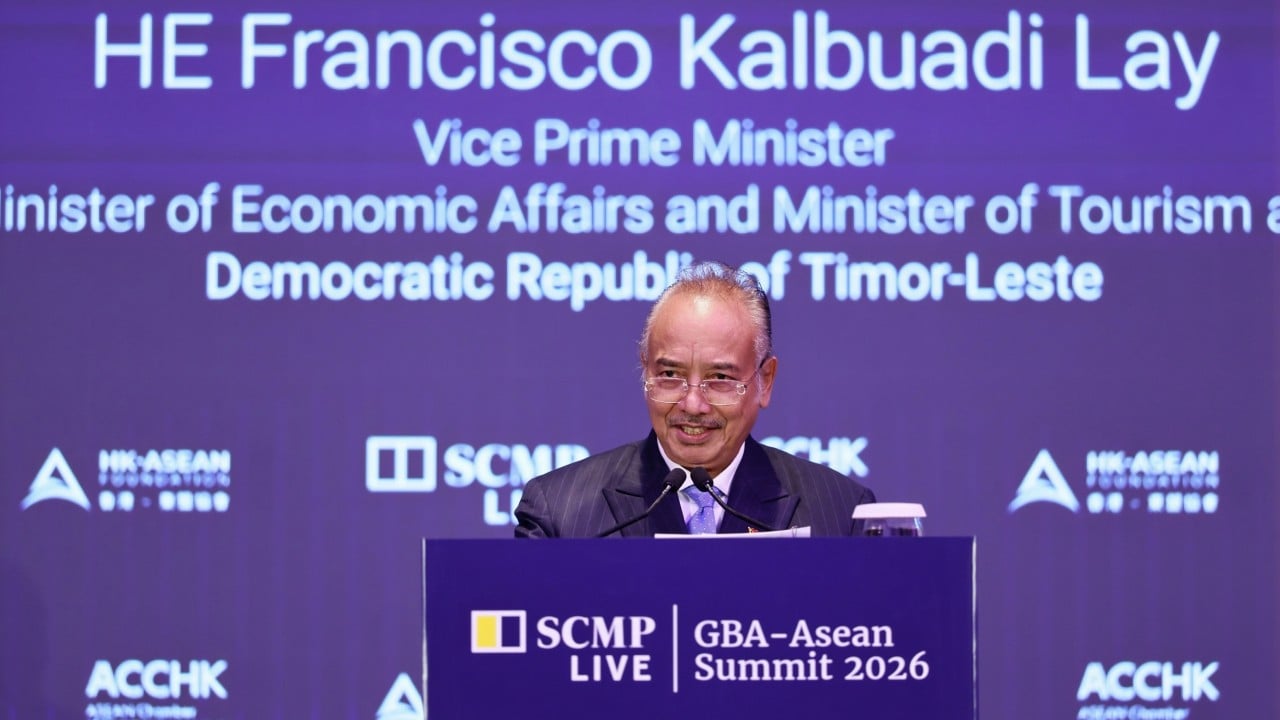
East Timor became the eleventh full member of the Association of Southeast Asian Nations in late 2025. In the months since, political rhetoric in Dili has shifted toward an ambitious economic narrative, pitching the half-island nation as a strategic maritime link between Southeast Asia and China's Guangdong-Hong Kong-Macao Greater Bay Area. State officials frequently cite Hong Kong's role as a financial pipeline and massive mainland production hubs as the ultimate answers to East Timor's development slowdown.
However, this outward-facing strategy obscures a harsher domestic reality. East Timor cannot use regional trade pacts to cure its systemic economic vulnerabilities. The country faces an imminent fiscal cliff driven by the depletion of its primary oil and gas reserves, a civil service ill-equipped for global market integration, and a severe mismatch between foreign infrastructure investments and domestic employment generation. Without dramatic internal restructuring, tying the country closer to hyper-competitive northern markets risks turning it into a passive consumer of foreign goods rather than an active economic participant. You might also find this related story interesting: Why 70 Indian Exhibitors at a New York Food Show is Actually a Failure of Strategy.
The Sovereign Wealth Mirage
For two decades, the economic foundation of East Timor has been the Petroleum Fund. Established in 2005, this sovereign wealth fund captures receipts from offshore fields and finances up to 88 percent of the national budget. It was designed to act as a permanent financial cushion. It is now running dry.
The active Bayu-Undan field has reached the end of its commercial lifespan. This leaves the government heavily dependent on the development of the Greater Sunrise gas fields, a project shared with Australia that holds an estimated 75 billion dollars in reserves. But Greater Sunrise has been stalled for years by political disputes over where the gas should be piped and processed. Dili insists on a domestic processing facility under the Tasi Mane project along its southwest coast, while corporate partners have historically favored existing infrastructure in northern Australia. As discussed in detailed reports by Harvard Business Review, the results are notable.
While politicians wait for a megaproject breakthrough, the structural spending deficit widens. The state spends more out of the Petroleum Fund each year than the fund earns in sustainable investment income. Looking north to the Greater Bay Area for capital does not solve this fundamental math problem. Chinese state-owned enterprises are highly effective at building hardware, but they do not provide ongoing budgetary support to foreign governments facing structural revenue collapses.
Concrete Hubs and Jobless Growth
Walk through the outskirts of Dili, and the physical footprint of Chinese capital is impossible to miss. The flagship achievement of this relationship is the Tibar Bay Port, a 700 million dollar deepwater facility constructed by the China Harbour Engineering Company. It is a world-class piece of maritime infrastructure capable of handling container traffic that the old city port could never dream of touching.
The problem is what happens after the concrete dries.
The oil and gas industry is capital-intensive and highly specialized; it creates substantial revenue but few long-term local jobs. Infrastructure construction follows a similar pattern when reliant on foreign engineering firms that bring their own supply chains and technical teams. Meanwhile, more than 70 percent of East Timor's population is under the age of 35. Urban youth unemployment is a volatile socioeconomic pressure cooker.
A deepwater port only generates wealth if a country has goods to export. Currently, East Timor's primary non-oil export is organic coffee, supplemented by tiny volumes of vanilla and spices. These are high-quality agricultural products, but their aggregate value is a drop in the ocean compared to the billions of dollars in manufactured goods flowing out of Shenzhen or Guangzhou. Opening up trade routes via Hong Kong and the wider regional network means that ships arriving at Tibar Bay will be full, but they will leave mostly empty. This dynamic risks worsening a trade deficit that drains national wealth rather than expanding it.
The Administrative Capacity Gap
Joining the regional bloc was heralded as a diplomatic triumph, but it has triggered an immediate operational crisis within the halls of government in Dili. The regional association operates through a grueling calendar of 600 to 800 working groups, ministerial summits, and technical committees every year. These meetings govern everything from phytosanitary standards for agricultural trade to complex cross-border financial regulations.
For a young bureaucracy with limited technical staff, the sheer volume of compliance paperwork is overwhelming. Senior officials are constantly in transit, stretching domestic ministries thin. If a country cannot field qualified experts to negotiate the fine print of customs harmonization or rules of origin, it cannot defend its domestic industries from being swamped by cheaper, more efficient regional competitors.
Furthermore, the legal and regulatory framework inside East Timor remains unpredictable. International analysts have noted a worrying trend where transnational criminal networks, pushed out of tighter regulatory environments in mainland Southeast Asia, have attempted to establish footholds for cyber-fraud and illicit financial flows in remote zones like the Oecusse Enclave. If the state cannot police its own territory or maintain basic regulatory oversight, institutional capital from major financial hubs will stay away, leaving the field open to more predatory actors.
Realities of the Niche Economy
If the grand vision of becoming a global logistics node is unrealistic in the near term, East Timor's path out of the fiscal trap must be built from the ground up, focusing on sectors that absorb local labor.
- High-Value Agro-Processing: Exporting raw coffee beans leaves the most profitable parts of the value chain abroad. Investing in domestic roasting, packaging, and certified organic supply chains could double agricultural returns while providing formal employment in rural communities.
- Strictly Managed Eco-Tourism: With 900 kilometers of pristine coastline and some of the highest marine biodiversity in the Coral Triangle, the country can position itself as an alternative to mass tourism. Direct flight connections, such as the three-times-weekly route between Xiamen and Dili, offer an initial pipeline. However, this requires local hospitality training, not just luxury hotels owned by foreign consortia.
- The Blue Economy: Developing sustainable domestic fisheries and marine resource management offers a direct line to improving national food security while building a stable, non-oil export base.
The dream of transforming Dili into a glittering gateway for northern capital makes for excellent political speeches at regional summits. But international trade agreements are not charity. They are competitive arenas that reward efficiency, regulatory clarity, and export capacity. Until East Timor confronts its internal bottlenecks, fixes its broken public administration, and diversifies away from dwindling hydrocarbon revenues, closer integration with the world's most aggressive manufacturing hubs will remain a one-way street.