Consider a map of the world where lines aren’t drawn in ink, but in the heat signatures of container ships. Near the foot of Iran, the Strait of Hormuz pinches global commerce into a throat so tight that twenty percent of the world’s petroleum must squeeze through it daily. When that throat closes, a family in Ohio pays forty cents more for a gallon of milk because the delivery truck cost more to fill. A factory in Munich slows its assembly line. An apartment building in Tokyo dims its corridor lights.
Geopolitics is rarely about the grand declarations spoken into microphones. It is about the friction of these invisible gears.
For less than a month, those gears turned with a fragile, artificial smoothness. The Islamabad Memorandum, signed with grand expectations in mid-June, was supposed to act as a pressure valve for a conflict that had already cost thousands of lives and throttled global energy markets. It established a temporary truce, a brief period where the guns went quiet and commercial vessels could breathe.
Then came the flashpoints in the water. Hardline factions within the region, moving like phantom actors detached from their central governments, opened fire on tankers. Tit-for-tat strikes followed. The illusion shattered.
The Language of the Ultimatum
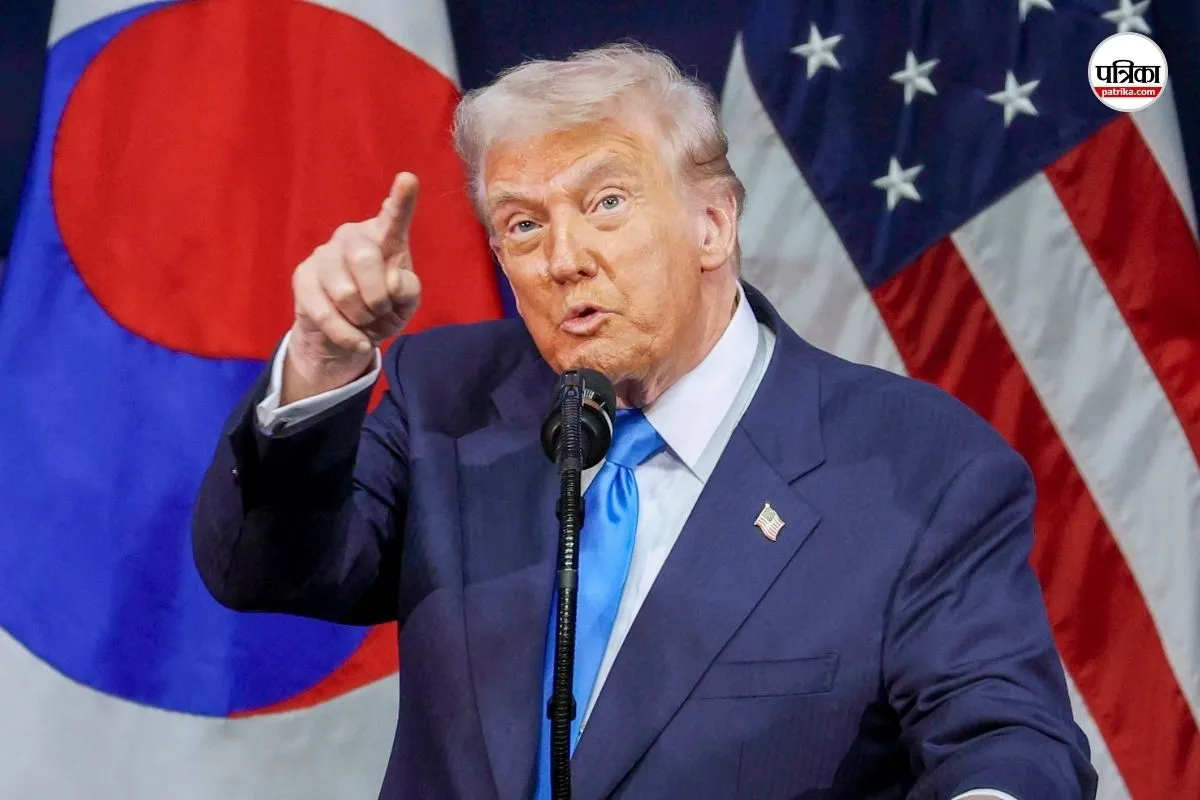
When a truce breaks, the rhetoric that fills the vacuum can feel contradictory, designed more for theater than diplomacy. On a Friday evening, Donald Trump took to his social media platform to deliver a message that felt simultaneously like a door slamming shut and a window being left open.
The text was unequivocal in its aggression, yet pragmatic in its fine print. The Islamic Republic of Iran had requested to continue negotiations. The United States agreed. But the caveat was delivered in uppercase finality: the ceasefire is over.
To the casual observer, this sounds like an impossibility. How do you negotiate peace while actively abandoning the mechanism that stops the killing?
The answer lies in a strategy of leverage that treats diplomacy not as a peaceful alternative to war, but as an extension of it. By declaring the truce dead while keeping his team engaged through Qatari and Omani intermediaries, Trump attempts to strip Tehran of the psychological comfort of stability. It is the diplomatic equivalent of keeping an engine running at maximum RPM while the vehicle is parked; the heat is immense, the vibration is terrifying, but the wheels haven't moved forward yet.
The Human Geometry of the Table
Behind the screen of public statements are people who must translate anger into syntax. Imagine the intermediaries from Qatar arriving in Tehran, carrying messages from a White House that is balancing an impending domestic midterm election against a volatile Middle East.
These diplomats do not sit in cavernous, dimly lit war rooms. They sit in standard conference spaces with stale coffee, reviewing satellite data of burning hulls and trying to determine if an attack was an authorized act of state or the rogue action of an "errant" faction trying to burn the table down. Behind closed doors, Iranian officials privately signaled to American advisers that the maritime attacks were a mistake, a miscalculation by hardliners looking to torpedo the diplomacy.
But in public, the posture must remain rigid. No sovereign nation can afford to look like it is begging for mercy when its population is watching. Mohammad Bagher Ghalibaf, Iran’s chief negotiator, broadcasted that defiance clearly, noting that the confrontation would never end with a surrender.
This is the psychological trap of modern conflict. Both sides are playing to two entirely different audiences. Trump writes for an American electorate that demands strength and lower gas prices; Iranian leaders speak to a domestic base internalizing the grief of recent losses and a deep-seated resistance to Western dictate.
The Math of the Friction
The breakdown of the truce isn't just an abstract political failure. It has immediate, measurable physical consequences.
- Maritime Velocity: Shipping intelligence groups note that even when a ceasefire is technically active, the psychological fear of sudden escalation keeps commercial traffic through the Strait of Hormuz at a fraction of its normal volume. Insurance premiums for cargo ships skyrocket, a cost that is quietly passed down to consumers globally.
- The Nuclear Shadow: While the immediate battle is fought over shipping lanes and regional dominance, the underlying current is always nuclear capacity. The White House maintains a firm boundary against Iranian nuclear development, using economic sanctions as a slow-moving siege weapon to enforce it.
- The Price of Crude: For all the aggressive posturing, economic realities dictate the boundaries of the theater. A full-scale return to open warfare drives energy prices to levels that democratic leaders cannot tolerate during election seasons.
This creates a strange, high-stakes dance. The United States uses its military and economic weight to push Iran to the brink, while Iran uses its geographic positioning over the world's primary energy artery to remind the West that an explosion in the Gulf leaves everyone in the dark.
The Unending Echo
We often look at international agreements as permanent structures, like buildings erected to mark the end of an era. In reality, they are more like sandcastles built on a beach where the tide is constantly shifting. The Islamabad Memorandum was not a solution; it was merely a pause to find out if a solution was even possible.
Now, delegations are moving toward Oman. The indirect conversations continue because the alternative is an uncontrolled descent into a regional fire that neither side truly wants to ignite. The ceasefire as a formal agreement may be dead, buried under the weight of broken promises and sudden missile strikes, but the necessity of the conversation remains absolute.
The guns are loud again, the rhetoric is fierce, and the ships are rerouting to avoid the danger zones. Yet, the diplomats keep their briefcases packed. They know that in this theater, the most dangerous moment isn't when the talking stops—it is when the silence becomes absolute, leaving nothing but the sound of the fuse burning down in the dark.