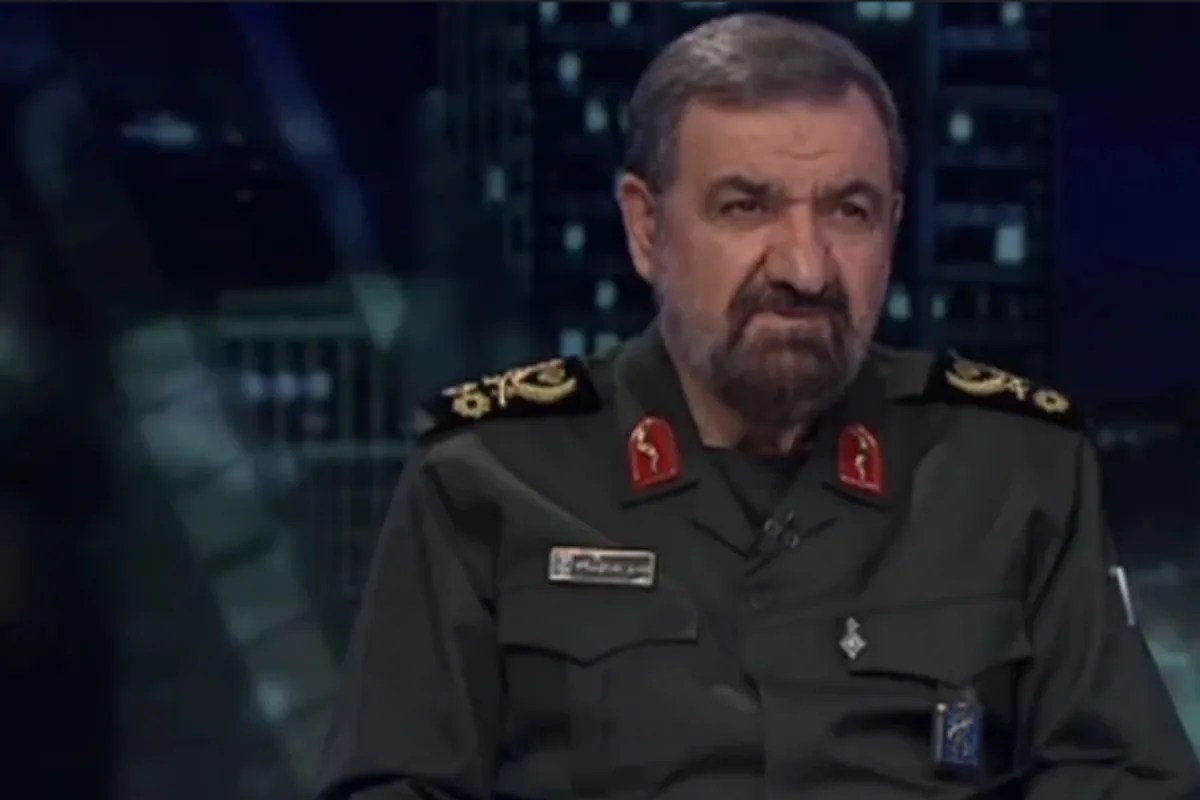
Mohsen Rezaei, the former commander of Iran’s Islamic Revolutionary Guard Corps (IRGC), recently declared a definitive triumph over the United States and Israel, claiming Tehran has forced its global adversaries to their knees. This rhetoric serves as a classic geopolitical smoke screen. While Tehran broadcasts messages of absolute triumph to its domestic audience and regional proxies, the reality on the ground tells a completely different story. Iran is not operating from a position of undisputed strength; rather, it is managing a compounding series of internal economic failures and external military vulnerabilities that threaten its long-term stability.
The core premise of Rezaei’s statement hinges on the idea that Iran’s "Axis of Resistance" has successfully altered the balance of power in the Middle East. From a purely rhetorical standpoint, the narrative is powerful. It consolidates support among hardliners and projects an image of defiance. But aggressive speeches cannot substitute for structural stability.
To understand why these claims of victory are premature, one must look at the mechanics of Iranian state survival.
The Price of Permanent Confrontation
Tehran’s foreign policy relies heavily on asymmetric warfare and proxy networks. This strategy has allowed Iran to project power far beyond its borders without engaging in direct, conventional warfare with superior military powers.
It is a low-cost, high-yield model. Until it isn't.
The financial infrastructure supporting this network is cracking under the weight of international sanctions. Inflation in Iran has hovered at staggering levels for years, eroding the purchasing power of the average citizen. The national currency, the rial, frequently hits historic lows against the US dollar.
When a state prioritizes external influence over domestic economic health, a dangerous disconnect develops. The government spends scarce capital maintaining regional supply lines while its own citizens struggle to afford basic commodities like meat and medicine. This is a structural vulnerability that no amount of military posturing can fix.
The Domestic Fractures
The Iranian leadership faces an existential dilemma at home. The population is young, highly educated, and increasingly disconnected from the ideological foundations of the 1979 revolution.
Widespread protests in recent years have demonstrated that the internal security apparatus is under constant strain. These demonstrations are not merely political; they are driven by economic desperation and a lack of social freedoms.
By declaring an external victory, figures like Rezaei attempt to redirect domestic anger toward a common foreign enemy. It is a time-tested political tactic. If the nation is perpetually at war, dissent can be framed as treason. However, this strategy has a expiration date. When the state can no longer guarantee basic economic security, the ideological appeals lose their potency.
The Reality of the Regional Balance
Iran’s claims of forcing its enemies to their knees ignore the shifting alliances in the region. The Middle East is undergoing a profound diplomatic realignment.
Security cooperation between Israel and several Arab states has deepened significantly over the past few years, driven by a shared apprehension of Iranian hegemony. Iran now faces a more organized, integrated intelligence and defense apparatus along its western flank.
Furthermore, relying on proxy forces carries inherent risks. These groups have their own local agendas, political survival instincts, and domestic constraints. They are not mindless extensions of Tehran's will. If a regional conflict escalates beyond a certain point, the costs for these proxies may exceed the benefits of their alliance with Iran, leading to fragmentation.
The Military Asymmetry
The assertion that Western powers have been defeated overlooks the nature of modern deterrence. The United States maintains a massive, sophisticated military footprint in the region, capable of rapid power projection.
Iran's conventional military capabilities are severely limited by decades of arms embargoes. Its air force relies on aging airframes from the pre-revolutionary era, and its navy is largely built around fast-attack craft suited for coastal defense rather than sustained blue-water operations.
Tehran’s primary conventional deterrent is its ballistic missile and drone arsenal. While formidable, these systems are defensive and retaliatory in nature. They can inflict damage, but they cannot win a conventional war against a superpower or a highly technologically advanced regional adversary. Acknowledge the gray area here: Iran has achieved a level of deterrence that makes direct invasion highly unlikely, but deterrence is not the same as victory. It is a stalemate.
The Economic Mirage of New Alliances
To counter Western isolation, Tehran has leaned heavily into partnerships with Moscow and Beijing. This "look to the East" policy is framed as a strategic masterstroke that invalidates Western sanctions.
The economic reality is far more transactional.
China purchases vast quantities of Iranian crude oil, but it does so at a steep discount, leveraging Iran’s isolation to secure favorable terms. This is not an alliance of equals; it is a lifeline thrown by a superpower extracting maximum economic value from a desperate partner.
Similarly, military cooperation with Russia involves the supply of Iranian drones and technology. While this provides Iran with hard currency and potential access to advanced Russian military hardware, it also entangles Tehran further into European conflicts, alienating potential diplomatic partners in the West and complicating any future sanctions-relief negotiations.
The Succession Question
The aggressive rhetoric from the old guard of the revolution also signals an internal struggle for the future direction of the state. The current supreme leadership is aging, and the question of succession looms large over every political faction in Tehran.
Hardliners use declarations of victory to solidify their positions ahead of the inevitable transition of power. By positioning themselves as the architects of a triumphant resistance, they attempt to marginalize more moderate or pragmatic factions who might advocate for economic reform and diplomatic engagement.
This internal maneuvering creates a rigid foreign policy framework. When a regime predicates its legitimacy on absolute victory over an external foe, compromise becomes politically impossible. This lack of flexibility makes the state brittle, unable to adapt to sudden geopolitical shifts or internal shocks.
The triumphalist declarations coming out of Tehran are designed for consumption by a specific audience: domestic supporters and regional proxies who need reassurance that their sacrifices are yielding results. Look past the rhetoric. The structural deficits, economic isolation, and domestic discontent indicate that Iran is locked in a costly, exhausting stalemate rather than celebrating a definitive victory.