Rain. That is what everyone who stood near Victoria Harbour at midnight on June 30, 1997, remembers first. It did not merely fall; it hammered down in warm, relentless sheets, blurring the neon reflections of Kowloon into bleeding streaks of red and gold on the black water. Inside the glass-walled Convention and Exhibition Centre, damp wool suits smelled faintly of wet sheep, and the air conditioning hummed against the breath of four thousand dignitaries, generals, and nervous local tycoons.
Chris Patten wept as the Union Jack came down. Prince Charles looked grim beneath his medals. And standing just steps away from Jiang Zemin, blinking behind thick, square-rimmed glasses with a smile that looked equal parts polite and slightly bewildered, was a sixty-year-old shipping magnate named Tung Chee-hwa.
He had never run a city. He had never won a popular vote. Yet at the stroke of midnight, he became the first Chief Executive of the Hong Kong Special Administrative Region, inheriting a seven-million-person metropolis balanced on a geopolitical razor's edge.
History books tend to treat Tung Chee-hwa’s tenure as a dry administrative footnote—a list of housing targets missed, economic downturns endured, and protests misread. That is a failure of imagination. To understand what happened to Hong Kong between 1997 and 2005, you have to step inside the shoes of a man handed the steering wheel of a Formula One car, told to keep it at two hundred miles an hour, and informed that half the crew wanted him to turn left while the other half demanded he drive straight into a wall.
A Captain Without a Map
Think of a harbor pilot boarding a supertanker in the middle of a typhoon, only to discover that the compass spins wildly because someone placed a massive magnet beneath the bridge. That metaphor gets close to the daily reality of Tung Chee-hwa’s office at Government House.
Before 1997, Hong Kong had been governed for more than a century and a half by British colonial administrators—career civil servants trained in London, insulated from local elections, and backed by the quiet authority of an empire. When Britain left, Beijing did not want a firebrand politician or a populist reformer taking over. It wanted stability. It wanted a businessman who spoke the language of capital and understood the delicate etiquette of deference to the mainland.
Tung fit that mold so neatly it almost looked scripted. Born in Shanghai in 1937, the eldest son of shipping tycoon Tung Chao-yung, he had spent a decade living in the United States, earning an engineering degree from the University of Liverpool and working for General Electric before returning to rescue his family’s debt-crippled shipping empire, Orient Overseas, in the mid-1980s. When that rescue required a $120 million lifeline backed partly by Beijing-linked entities, a quiet bond of trust was forged.
To Beijing, Tung was a safe pair of hands. To Washington and London, he was a cosmopolitan executive who understood Western markets. To the people on the wet pavements of Mong Kok and Central, however, he was an enigma—a polite uncle figure whose instincts were forged in corporate boardrooms rather than street-level politics.
And here lies the flaw at the very heart of the design.
Under the "One Country, Two Systems" framework enshrined in the Basic Law, Hong Kong was promised a high degree of autonomy, its capitalist way of life unchanged for fifty years. Yet the Chief Executive was chosen by a four-hundred-member Selection Committee heavily weighted toward pro-Beijing business elites, while the legislature remained only partially elected through direct universal suffrage. Tung was expected to act like a democratic leader accountable to an outspoken, fiercely independent public, without actually possessing a democratic mandate to shield him when things went wrong.
It was a structural trap. When policies succeeded, credit belonged to Hong Kong’s resilient market spirit. When they failed, the blame landed squarely on one pair of narrow shoulders.
The Numbers That Broke the Spell
In the summer of 1997, nobody in Hong Kong wanted to hear about structural traps. People were busy getting rich.
Walk through any tea restaurant—a cha chaan teng—in Causeway Bay during those heady months, and the air buzzed with property prices. Waiters traded stock tips between pouring condensed-milk tea; secretaries took lunch breaks to queue outside sales offices for unfinished apartments in Tseung Kwan O. A modest five-hundred-square-foot flat could cost more than a sprawling suburban house in California.
Consider a hypothetical young couple from that era—let’s call them David and Mei, a secondary school teacher and a bank clerk who scraped together every dollar from both sets of parents in May 1997 to put a down payment on a cramped two-bedroom apartment in Sha Tin. To them, property wasn't an investment; it was survival, dignity, and proof that their children would climb higher than they had.
Tung saw the same overheating market and viewed it through the lens of an engineer and a paternalistic planner. He believed runaway housing costs were hollowing out Hong Kong’s competitiveness and breeding quiet social resentment. So in his maiden policy address in October 1997, he unveiled an ambitious pledge: the government would build 85,000 new residential flats every single year to cool prices and make homeownership accessible.
On paper, it sounded bold. Even compassionate.
Then, almost on cue, the floor vanished beneath Asia.
On July 2, 1997—less than forty-eight hours after the handover fireworks faded—Thailand abandoned its currency peg, igniting the Asian Financial Crisis. Within months, speculative shockwaves slammed into Hong Kong. Hedge funds attacked the Hong Kong dollar, betting that Beijing and the local monetary authority would buckle under pressure. Interest rates spiked overnight to defend the peg, choking off credit and freezing consumer spending.
Property values did not gently cool. They cratered. Over the next six years, home prices in Hong Kong plunged by roughly sixty-five percent.
For David and Mei in Sha Tin, the math turned brutal overnight. Their apartment was suddenly worth less than half of what they owed the bank—a condition known in Cantonese as fu zi caan, "negative equity," a phrase that became the defining curse of the Tung era. Tens of thousands of middle-class families found themselves trapped in mortgages they could never pay off, terrified of losing their jobs, furious at a Chief Executive whose 85,000-flat target looked, in hindsight, like pouring gasoline onto a collapsing roof.
Tung did not cause the Asian Financial Crisis. No single leader in a city of seven million could have stopped a regional currency contagion. Yet in politics, timing is indistinguishable from guilt. When Tung quietly abandoned the 85,000-unit target years later without a clear public explanation, he managed to alienate both sides at once: homeowners blamed him for crashing their wealth, while working-class renters saw a leader who buckled under pressure from powerful property developers.
The Invisible Fault Line
If economics bruised Tung Chee-hwa’s authority, identity and law fractured it beyond repair.
You could feel the tension shifting in small, unsettling ways by the turn of the millennium. Hong Kong had always been a city of refugees and migrants—people who had fled civil war, famine, or political upheaval on the mainland to build a sanctuary governed by British common law and fierce press freedom. Their loyalty to China was real, cultural, and deeply emotional, yet their trust in Beijing’s political apparatus was thin as rice paper.
Tung never quite grasped that distinction. To him, loving China meant trusting its leadership and harmonizing Hong Kong’s rhythms with the mainland’s grand national revival. He spoke often of Confucian values—harmony, duty, respect for authority—ideas that sounded comforting in a Shanghai family parlor but rang hollow, even patronizing, in a hyper-modern financial hub where skepticism toward power was a civic religion.
The clash came to a head in 2002 and 2003 over three seemingly dry digits: Article 23.
Under Article 23 of the Basic Law, Hong Kong was required to enact its own national security legislation prohibiting treason, secession, sedition, and subversion against the central government. For five years, Tung had wisely left the issue on the back burner, sensing the public’s unease. By late 2002, however, under growing expectations from Beijing, his administration pushed forward with a sweeping bill.
Around the same time, another invisible threat crept across the border from Guangdong province.
Spring 2003 brought SARS—Severe Acute Respiratory Syndrome—a mysterious, lethal respiratory virus that turned Hong Kong into a ghost town masked in surgical white. Hospitals overflowed; doctors and nurses died on the front lines; Amoy Gardens, a dense housing estate in Kowloon, saw hundreds infected through faulty plumbing pipes. For weeks, Tung’s government appeared hesitant, reluctant to impose aggressive quarantines or challenge the reassuring narratives coming out of mainland health authorities in the early stages of the outbreak.
Fear has a way of stripping away polite deference. By the time SARS finally subsided in June 2003, having claimed 299 lives in Hong Kong and pushed unemployment to a record high above eight percent, the city’s patience had evaporated.
Half a Million Footsteps
July 1, 2003, was blistering hot—the kind of humid, breathless afternoon where asphalt softens beneath your shoes and sweat soaks through cotton shirts before you reach the corner.
Government officials expected perhaps thirty or forty thousand protesters to march from Victoria Park to Central against the Article 23 national security bill. Instead, an estimated 500,000 people poured into the streets.
There was no smashed glass. No burning cars. Just an endless, silent-then-chanting river of ordinary families pushing strollers, elderly retirees leaning on umbrellas, lawyers in dark suits, and students carrying hand-lettered cardboard signs. It took hours simply to enter the starting park because every surrounding street was packed shoulder to shoulder.
That march changed everything. Within days, James Tien, leader of the pro-business Liberal Party, resigned from Tung’s Executive Council, depriving the government of the legislative votes needed to pass Article 23. Humiliated and cornered, Tung shelved the bill indefinitely.
From that afternoon onward, his administration was effectively paralyzed. Key ministers resigned. Beijing, alarmed that a supposedly compliant business leader could lose control of the streets so completely, began sending quiet signals of impatience. When Chinese President Hu Jintao publicly urged Tung and his cabinet in late 2004 to "look for inadequacies" in their governance—a diplomatic phrasing that landed in Hong Kong like a thunderclap—everyone in the city understood the message.
In March 2005, citing "foot pain" and deteriorating health after years of working grueling hours, Tung Chee-hwa stepped down two years before the end of his second term.
What History Still Misses
It is easy, looking back across more than two decades of turbulent Hong Kong history, to paint Tung Chee-hwa either as an inept administrator out of his depth or as a tragic figure crushed by forces beyond any mortal’s control. Neither portrait tells the whole truth.
Tung’s real story is about the illusion of effortless transition. In 1997, the world watched a graceful handover ceremony and assumed that two radically different political systems could be stitched together simply by appointing an honorable, well-meaning man to stand at the seam. Nobody wanted to admit that "One Country" and "Two Systems" were not static pillars—they were tectonic plates grinding against each other in slow motion.
Tung tried to manage a seismic shift with the tools of a corporate turnaround specialist: committee meetings, five-year plans, appeals to consensus, and quiet loyalty to the board of directors. He genuinely loved Hong Kong. Even his fiercest critics rarely accused him of personal corruption or malice; they saw a decent, stubbornly old-fashioned man trying to please a demanding parent in Beijing while pacifying a restless household at home, only to earn the resentment of both.
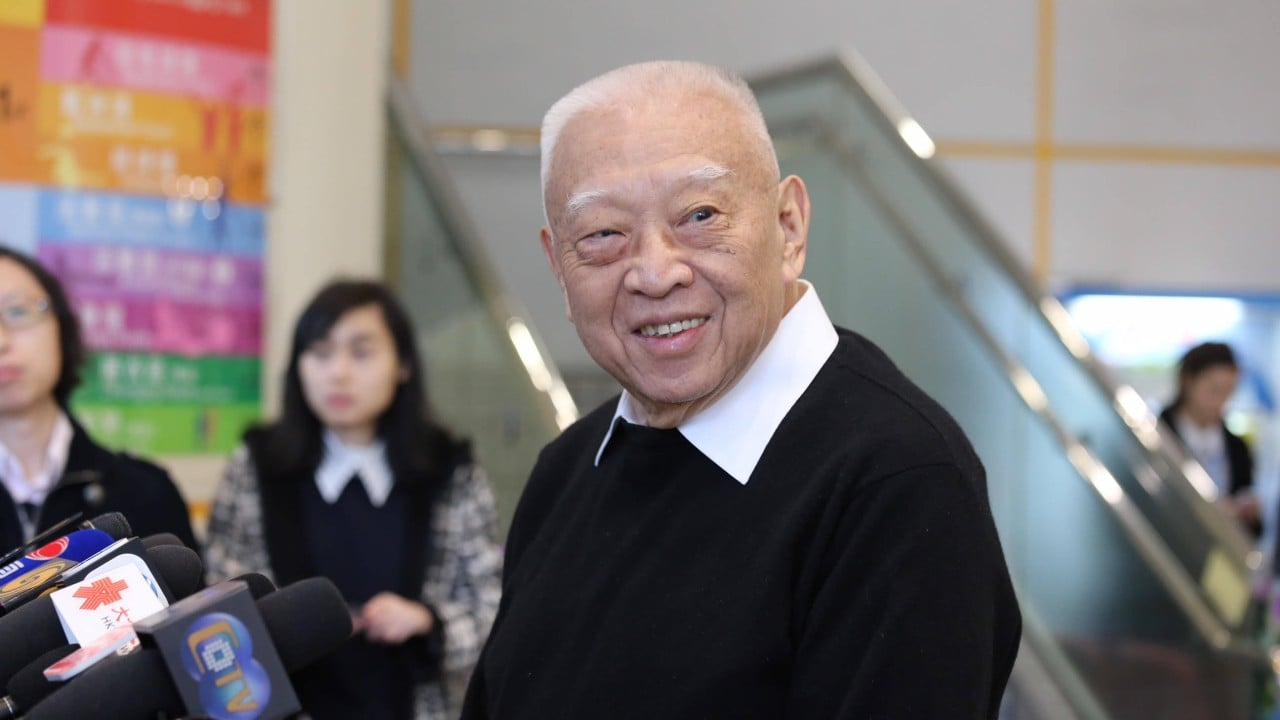
Years after leaving office, long after the protests of 2014 and 2019 reshaped Hong Kong in ways few could have imagined in 1997, Tung would occasionally appear at official ceremonies—older, thinner, leaning slightly on a cane, still wearing that same polite, slightly distant expression.
Think back to that rainy midnight in June 1997, when the British band played Auld Lang Syne and the green-and-white flags were lowered for the last time. Four thousand guests clapped politely in the dry warmth of the hall while outside, unseen behind rain-streaked glass, seven million people waited to discover what their lives would become. Standing between the past and the future was one man in a dark suit, smiling bravely into the flashbulbs, holding a compass that was already spinning.