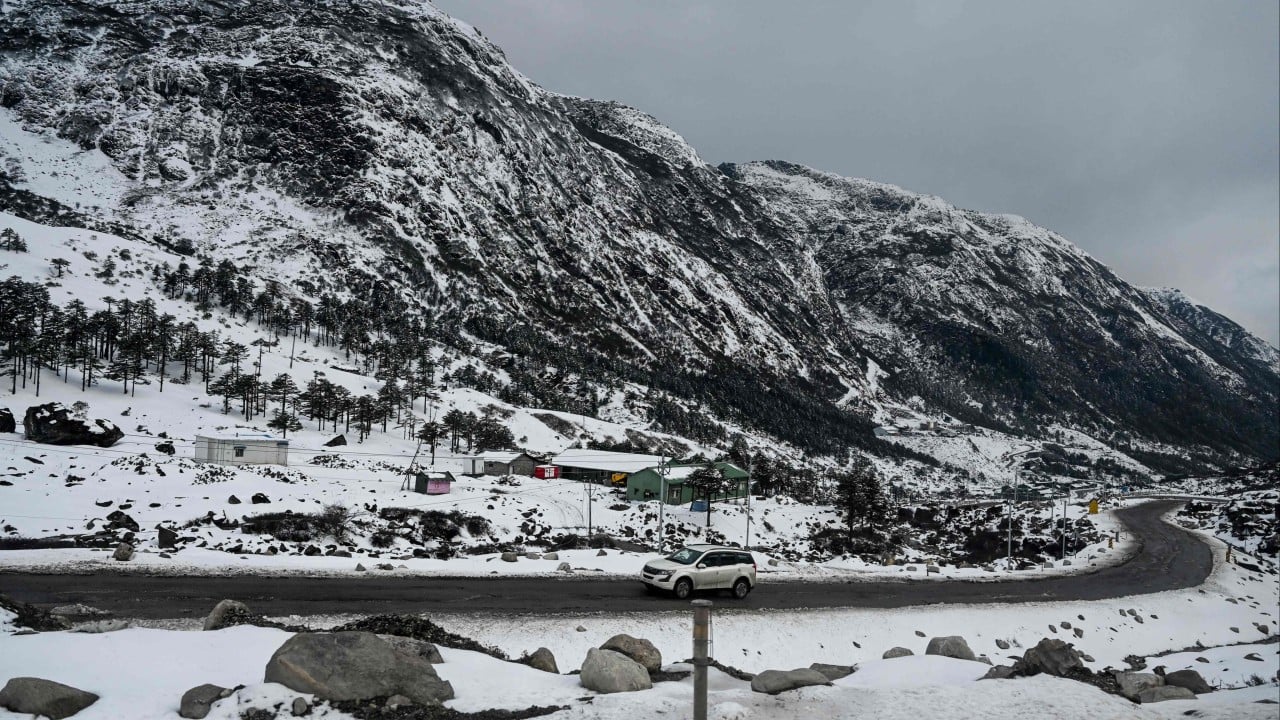
Putting heavily trained police commandos on a disputed Himalayan frontier sounds contradictory until you look at the ground rules in Ladakh.
India has moved to create and deploy specialist police commando units alongside the Indo-Tibetan Border Police (ITBP) to patrol the Line of Actual Control (LAC) with China. This isn't just another routine troop rotation. It's a calculated response to a bizarre, high-stakes reality where soldiers aren't allowed to shoot each other, yet territory is won or lost by the meter.
If you've followed the border standoff since the 2020 Galwan Valley clashes, you know the rules of engagement along the LAC are unlike almost any other modern conflict zone. Bilateral agreements signed in 1996 and 2005 strictly prohibit the use of firearms and explosives within two kilometers of the boundary. When patrols collide at 15,000 feet, they fight with fists, iron rods, wooden clubs wrapped in barbed wire, and sheer physical endurance.
Conventional army infantry units train to win firefights with rifles, artillery, and air support. Police commandos, specifically those drawn from state police forces in Ladakh and paramilitary special tactics wings, bring a completely different skill set to high-altitude policing.
What Makes Police Commandos Different From Regular Border Troops
Standard border guarding falls primarily to the ITBP, a central armed police force under India's Ministry of Home Affairs, backed in deeper sectors by the Indian Army. Both organizations are tough. Neither was originally designed for sustained, close-quarters riot-style brawls on frozen ridgelines while simultaneously acting as local law enforcement for nomadic herders.
Specialist police commandos bridge that gap.
First, they're trained in non-lethal crowd control, close-quarter hand-to-hand combat, and rapid tactical intervention without relying on lethal force. When an opposing patrol tries to push past a contested grazing ground or dismantle a temporary observation post, you don't want troops whose muscle memory reaches for a trigger. You want operators conditioned to hold a line physically, detain or push back intruders, and de-escalate before someone fires a shot that triggers a full-scale war.
Second, local recruitment matters enormously in Ladakh. Many personnel inducted into specialized Ladakh Police commando units grew up at elevations above 10,000 feet.
Altitude sickness destroys unacclimatized soldiers. Even fit plains-born recruits need weeks of staged acclimatization before they can sprint up a steep scree slope without risking high-altitude pulmonary edema. Local Ladakhi commandos already possess higher baseline hemoglobin levels and intimate knowledge of the mountain passes, winter wind patterns, and seasonal yak grazing routes.
The Real Reason Behind the Shift in Border Tactics
Most commentators focus on satellite photos of bridges over Pangong Tso or new airstrips in Tibet. Those infrastructure upgrades are massive, sure. Yet the daily friction along the 3,488-kilometer LAC happens at the micro level.
Chinese People's Liberation Army (PLA) border defense regiments have increasingly used specialized martial arts instructors, mountain climbers, and coordinated civilian-military logistics to probe gray zones. India's security establishment realized that matching a gray-zone tactic with regular army battalions creates an escalation trap.
Deploying specialist police units solves three distinct operational headaches at once:
- Escalation management. Under international diplomatic framing, deploying police rather than regular military units signals law-and-order maintenance on sovereign territory rather than offensive military mobilization.
- Friction point saturation. Smaller, fast-moving commando teams can cover blind spots between major ITBP outposts, stopping small incursions before they turn into permanent camps.
- Civil-military coordination. Border villages in eastern Ladakh sit right next to contested buffer zones. Local police commandos speak the local dialects, understand land disputes among Changpa nomads, and gather human intelligence that outside army units simply miss.
Honestly, this mirrors a broader global trend in gray-zone warfare. When nuclear-armed neighbors want to assert control without crossing the threshold into conventional war, paramilitary and specialized police forces become the primary instruments of statecraft.
Life and Training on the World's Highest Battlefield
Don't picture a standard SWAT team raiding a suburban house. Operating along the eastern Ladakh sector means functioning in temperatures that plunge to minus 40 degrees Celsius during winter blizzards.
Training pipelines for these specialist border units put candidates through brutal conditioning. Recruits spend months learning rock climbing, glacier navigation, survival without fire, and unarmed combat techniques tailored for bulky cold-weather gear. Fighting in heavy down parkas, thick mittens, and snow boots changes everything about balance and leverage. A standard martial arts throw fails completely when both fighters are wearing forty pounds of winter layers on black ice.
Equipment has evolved right alongside the training. Following the 2020 clashes, Indian forces began fielding specialized riot shields, polycarbonate body armor, spiked batons, and tasers adapted for sub-zero battery performance.
Intelligence gathering is the other half of the job. Specialist police teams work closely with technical intelligence units, operating short-range reconnaissance drones and thermal imagers to track movement along ridges where radio signals bounce unpredictably off granite walls.
Where the Strategy Faces Serious Limits
It would be naive to pretend police commandos are a magic fix for the India-China border dispute. They aren't.
For starters, there's a command-and-control friction that Indian defense analysts have debated for decades. The ITBP reports to the Ministry of Home Affairs, Ladakh Police reports to the Union Territory administration under the same ministry, and the Indian Army reports to the Ministry of Defence. During a crisis, overlapping chains of command can slow down decision-making if local commanders aren't tightly integrated.
There's also the sheer scale of the terrain. The LAC stretches from the Karakoram Pass in the west all the way to Arunachal Pradesh in the east. Specialist commando units are small by design. They can plug tactical gaps in sensitive sectors like Depsang, Demchok, or the fingers of Pangong Tso, but they can't replace the heavy deterrent of armored brigades and artillery divisions stationed just behind the front lines.
Another reality check involves winter attrition. Even for locals, continuous patrolling above 16,000 feet wears down the human body. Frostbite, snow blindness, and chronic hypoxia take a toll, meaning units require frequent rotation and massive logistical tail support just to stay fed and warm.
What This Means for Regional Security Going Forward
By standing up dedicated police commando units for border patrols, New Delhi is acknowledging that the standoff with Beijing isn't ending anytime soon. Even when diplomatic talks produce disengagement agreements at specific friction points, the underlying boundary remains un-demarcated.
Watch how India structures its border management over the next few years. You'll likely see tighter operational fusion between state police special units, the ITBP, and Army intelligence, alongside heavier investment in all-weather roads and local border village infrastructure under programs like the Vibrant Villages Programme.
If you're tracking South Asian security or studying modern gray-zone conflict, stop looking exclusively at tank deployments and fighter jet squadrons. Pay attention to who holds the mountain passes on foot, without firing a single bullet. Check official updates from India's Ministry of Home Affairs and independent defense analyses from institutions like the Manohar Parrikar Institute for Defence Studies and Analyses (IDSA) to see how these specialized police formations expand across other Himalayan sectors.