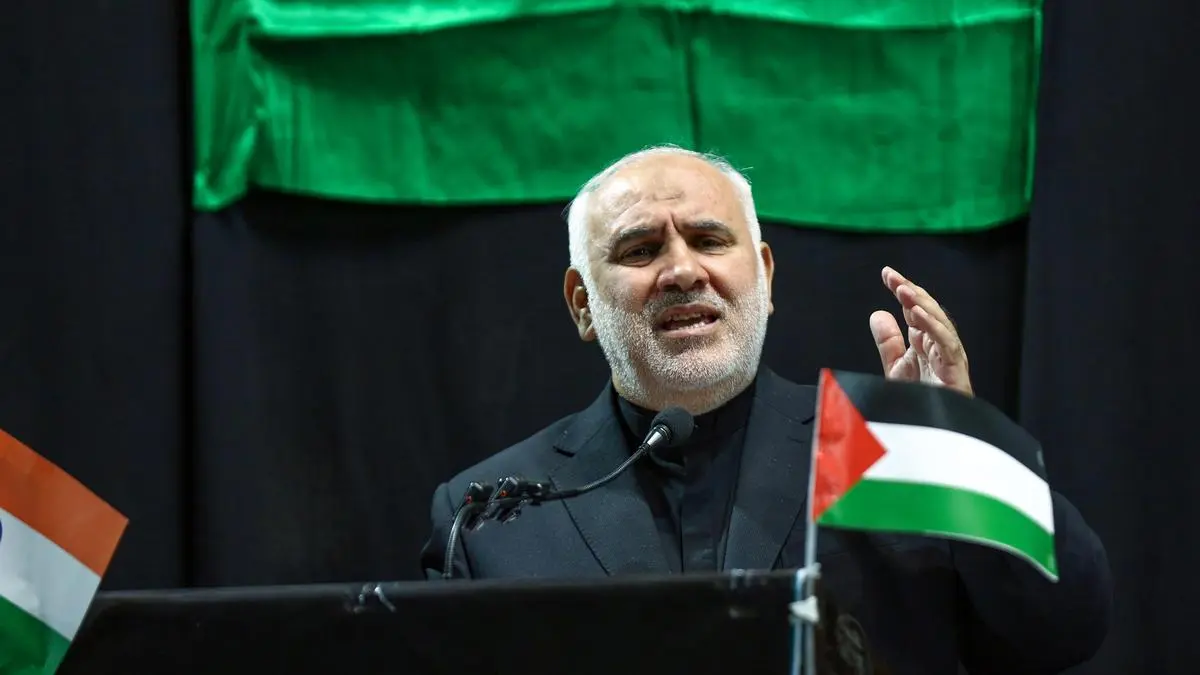
India’s unique position in the Middle East isn't just about trade or oil anymore. It’s about survival and stability. When Iran’s Ambassador to India, Iraj Elahi, recently praised New Delhi’s call for restraint, he wasn't just being polite. He was acknowledging a hard truth. India is one of the few global powers that can talk to everyone without looking like it's picking a side for the sake of a proxy war.
The tension between Iran and Israel has reached a boiling point that feels different this time. We’ve seen the missile exchanges. We’ve seen the rhetoric. But in the middle of this chaos, New Delhi stands as a calm, pragmatic voice. This isn't the typical "non-aligned" stance from the history books. It’s a modern, high-stakes diplomatic strategy.
Ambassador Elahi’s comments underscore a shift. Iran wants a partner that understands the regional nuances, and India fits that bill perfectly.
The Weight of the Iranian Envoy’s Message
When an envoy like Elahi speaks, every word is measured. He specifically highlighted that India can play a "highly effective role" in de-escalating the situation. This matters because it shows Iran trusts India’s intent. Iran isn't asking for a military ally. It’s asking for a mediator that carries enough weight to be heard in Tel Aviv and Washington.
India’s Ministry of External Affairs has been consistent. They’ve called for an immediate return to the path of dialogue. They haven't joined the Western chorus of total condemnation, nor have they ignored the gravity of Iran's actions. It’s a tightrope walk. You don't see many countries pulling this off.
The ambassador pointed out that India’s influence comes from its growing economic stature. It’s true. When you’re one of the world's largest economies, your "request" for restraint sounds a lot more like a demand for regional sanity.
Why Israel and Iran Both Listen to New Delhi
It’s easy to wonder why these two rivals would care what India thinks. The answer is simple. India has skin in the game.
Look at the numbers. Millions of Indian citizens work in the Gulf. Any massive flare-up puts their lives and livelihoods at risk. Then there’s energy. Even as India diversifies its energy sources, any disruption in the Strait of Hormuz sends global oil prices into a tailspin. India’s economy would feel the burn immediately.
Israel views India as a strategic defense partner. They share intelligence, technology, and a deep-seated concern about terrorism. Meanwhile, Iran sees India as a gateway to Central Asia through the Chabahar Port. India isn't just a bystander. It’s a stakeholder.
I’ve watched this relationship evolve over decades. It used to be that India had to hide its ties with Israel to keep the Arab world and Iran happy. Those days are gone. Prime Minister Modi’s government has mastered the art of "de-hyphenation." They deal with Iran on Iranian terms and Israel on Israeli terms. It shouldn't work, but it does.
The Chabahar Factor and Regional Connectivity
You can't talk about Iran-India relations without mentioning Chabahar. This port is India’s answer to Pakistan’s Gwadar. It’s how India bypasses its land-locked neighbors to reach Afghanistan and beyond.
The ambassador’s praise for India’s restraint comes at a time when the port’s development is hitting high gear. Iran knows that for Chabahar to succeed, the region needs to be stable. They also know that India is the only country willing to invest billions despite the threat of US sanctions.
This gives India leverage. If Iran escalates too far, they risk losing the very infrastructure that helps them breathe under economic pressure. India knows this. Iran knows this. It’s a silent understanding that keeps the diplomacy moving even when the missiles are flying.
Dissecting the Call for Restraint
"Restraint" is a boring word in diplomacy. It’s used so often it usually loses its meaning. But when India says it, it’s backed by a track record of not interfering in the internal affairs of other nations.
New Delhi doesn't preach. It doesn't try to export its version of democracy or its social values. It focuses on the "Three Cs": Connectivity, Commerce, and Cooperation. This approach makes India a palatable mediator for a country like Iran, which is weary of Western "interventionism."
Ambassador Elahi’s call for India to be more active isn't a sign of Iranian weakness. It’s a strategic move to bring a "rational" third party into a room filled with hot-headed actors. He mentioned that India’s voice is respected in the Global South. That’s a huge point. If India leads a coalition of developing nations calling for peace, it puts immense pressure on the major powers to stop the escalatory cycle.
Realities of the India Israel Partnership
Don't think for a second that India is going to ditch Israel. The bond between Modi and Netanyahu is well-documented. India relies on Israeli tech for its agriculture and its border security.
The Iranian envoy is aware of this. He isn't asking India to stop being friends with Israel. He’s asking India to use that friendship. If India can pick up the phone and talk to the Israeli leadership, they can relay messages that might get lost in the noise of American politics.
Sometimes, the best peace-making happens in the shadows. We might not see the transcripts of these calls, but the fact that both sides continue to engage with New Delhi says everything. India has managed to become the "grown-up" in the room.
Challenges to India’s Mediatory Ambitions
It’s not all smooth sailing. The biggest hurdle is the United States. Washington’s "maximum pressure" campaign against Iran often puts India in a tough spot. If India gets too close to Iran, it risks CAATSA sanctions or a chilling of ties with the White House.
Then there’s the sheer volatility of the Middle East. One miscalculation by a local militia or a lone-wolf attack can undo months of diplomatic legwork. India has to be careful not to get stuck in the middle of a fight it can't stop.
Critics say India is too cautious. They argue that New Delhi should be more vocal and take a firmer stand. But look at the alternatives. Taking a firm stand usually means alienating one side. In this region, that’s a recipe for irrelevance. India’s power lies in its ambiguity and its ability to keep all channels open.
Moving Beyond Words to Action
If India wants to live up to the envoy's expectations, it needs to do more than issue press releases. We should expect to see more high-level visits to both Tehran and Tel Aviv. India might even suggest a "security corridor" or a multilateral forum where these issues can be discussed without the baggage of UN resolutions.
The focus should stay on the economy. By tying the prosperity of Iran and Israel to regional stability—and by extension, to India’s growth—New Delhi creates a "peace dividend" that makes war too expensive to contemplate.
Watch the maritime security space. India has already deployed warships in the Arabian Sea to protect commercial shipping from pirate attacks and drone strikes. This physical presence shows that India isn't just talking about security; it’s providing it. This "net security provider" role is exactly what the Iranian envoy was hinting at.
Why This Matters to You
You might think a diplomat’s praise for India is just fluff. It’s not. It’s a signal that the global order is shifting. The era where only the US or Russia could dictate terms in the Middle East is over.
India is emerging as a bridge-builder. For anyone invested in global markets, this stability is crucial. For anyone worried about the spread of conflict, India’s "highly effective role" is one of the few bright spots on the horizon.
Keep an eye on the official statements from the Ministry of External Affairs over the next few months. If they start moving from "calls for restraint" to specific "proposals for dialogue," you’ll know that the Iranian envoy’s hail wasn't just a compliment—it was a prophecy.
Pay attention to the development of the International North-South Transport Corridor (INSTC). This project is the physical manifestation of India’s commitment to Iran. If construction speeds up despite the tensions, it’s a sign that New Delhi is doubling down on its diplomatic leverage. Don't expect a sudden peace treaty, but expect a steady, quiet effort to keep the fire from spreading. That’s the India way. It’s slow, it’s deliberate, and right now, it’s exactly what the world needs.